💰 Budget
Tortuguero costs more than most of the Caribbean coast because everything arrives by boat. Many visitors buy packages that bundle the transfer, a lodge, meals and guided canal and turtle tours; the village guesthouses and sodas, reached by public bus and boat, are the cheaper way to stay. Guided tours are the main extra cost.
- Daily Budget Midrange
- USD 100–200 (lodge package with transfers and meals, or a village room plus guided tours)
- Daily Budget Shoestring
- USD 40–70 (village guesthouse, soda meals, public bus and boat)
Turtle tours must be taken with a certified local guide; ask to see a guide's certification card before paying.
📅 Best Time to Visit
Turtle nesting sets the calendar: green turtles come ashore in the second half of the year, most reliably from about late July to mid-September, and leatherbacks earlier in the year. Rain falls in every month, but September, October and February to April are usually the driest spells. Rooms fill up during the turtle season.
⏳ Suggested Number of Days
Most visitors stay two or three nights, since the journey in takes much of a day. Allow longer for more time on the water, a stop in another canal village or a slower trip by boat along the coast.
- First Visit
- 2–3 days
- With Surroundings
- 3–4 days
🚆 Transportation
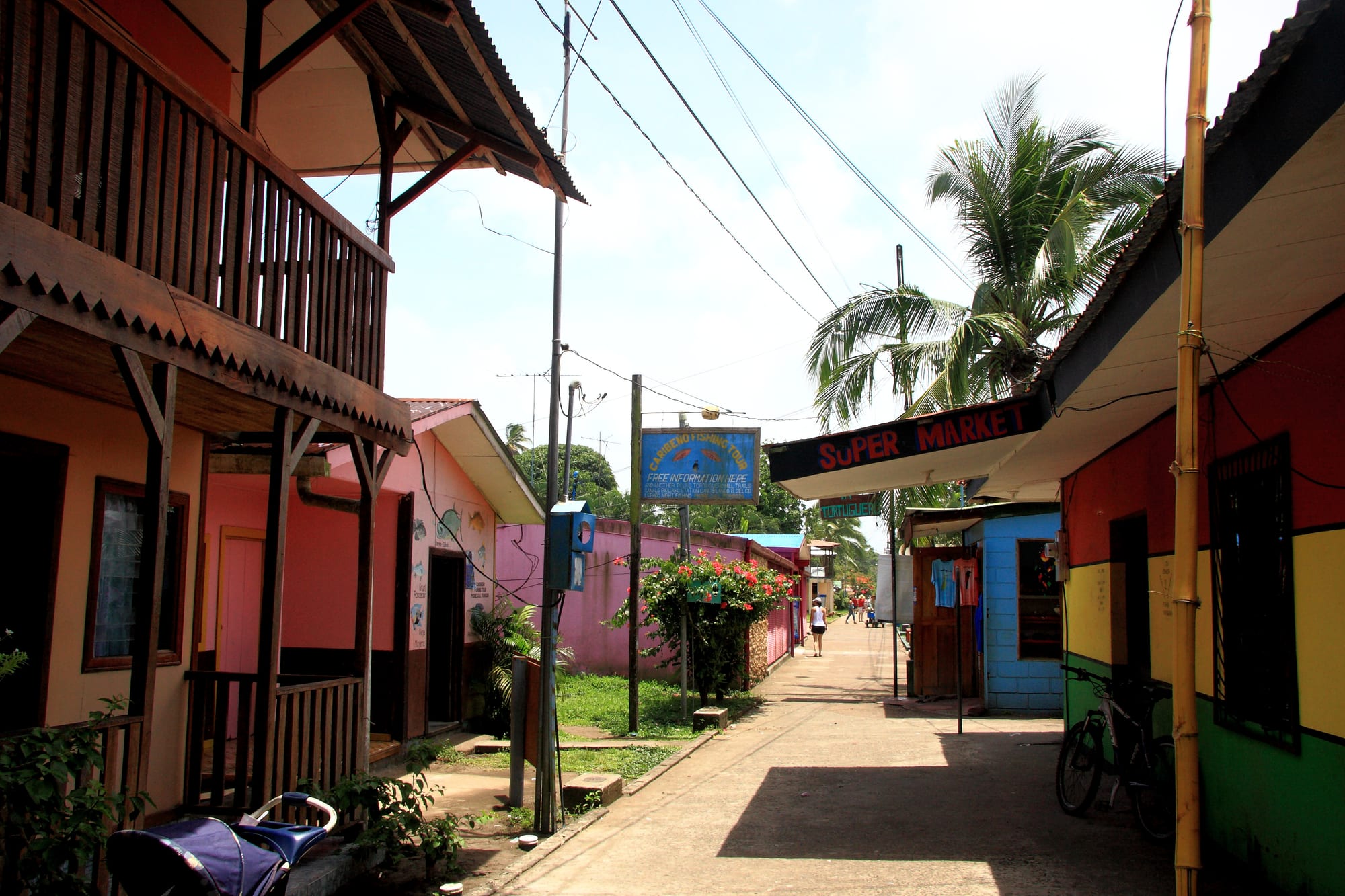
There are no cars in Tortuguero. The village is covered on foot or by bicycle, and boats do everything else: water taxis link the village with the lodges, and guided boats and canoes run into the park's canals.
Bring a torch: the paths are dark after nightfall and power cuts are common.
🛬 Airport & Station Connections
Tortuguero is reached only by boat or plane. Public buses run from San José to Cariari and on to the La Pavona dock, where boats continue up the river to the village; boats also run along the canals from Moín, near Limón, about 80 km to the south. A small airstrip 3 km north-west of the village has flights from San José, and lodge packages usually include the transfers.
🚶 Walkability
The village is small enough to walk anywhere, along sandy paths with no traffic. Paths run from the boat landings to the beach and south to the park entrance. The lodges outside the village are mostly reached by boat rather than on foot.
🛡️ Safety
Costa Rica still compares well with its Central American neighbours, and crime that reaches visitors is usually petty theft or the occasional armed robbery — break-ins to parked rental cars, bag-snatching on beaches, and pickpocketing in San José. On the Caribbean coast, crime has risen sharply in recent years in Limón city, while the sea at Tortuguero is dangerous for swimming, with rough surf and strong currents. Touts on the way in sometimes claim that boats are not running or rooms are full in order to sell packages.
Do not swim off the village beach, book turtle tours only with certified guides, and confirm boat times directly. Check current official travel advice before travelling.
🌦️ Climate
A very wet tropical rainforest climate with heavy rain all year. There is no true dry season, but September, October and February to April are usually drier, and heat and humidity are constant.
- Summer
- September–October and February–April: the drier spells, around 29–31°C along the Caribbean coast, with calmer seas
- Winter
- July and November–January: frequent heavy rain, rough seas and occasional flooding, around 26–29°C along the Caribbean coast
🤝 Local Customs
Turtle-watching has strict rules: visitors go to the beach at night only with a certified guide and use no white lights or flash. Digging up nests or touching hatchlings is not allowed, whatever a self-styled guide may offer. Greetings are expected in shops and on the paths.
Ask before photographing residents, and keep to the guide's instructions on the nesting beach.
💳 Common Payment Methods
The currency is the Costa Rican colón, and US dollars are widely accepted, with change usually given in colones. Prices in the village run higher than elsewhere because of its remoteness, and with only small shops and sodas it is sensible to carry colones in cash.