💰 Budget
Roskilde is noticeably cheaper than Copenhagen, and many visitors come for the day by train. The cathedral and the Viking Ship Museum are the main entry costs; the old town, the harbour and the walk between them are free. During the festival week rooms are scarce and prices rise sharply.
- Daily Budget Midrange
- USD 240–420 (mid-range room, restaurant dinners, cathedral and museum tickets, regional trains)
- Daily Budget Shoestring
- USD 110–170 (hostel bed, bakery and supermarket food, local buses)
Visiting from Copenhagen by train is easy; during the festival, book any room or campsite far in advance.
📅 Best Time to Visit
May to September, when the harbour, the fjord sailing and the city park are at their best. Late June or early July brings the festival, which fills the city with music fans; avoid that week for a quiet visit. The cathedral and museums are open year-round, so a winter day trip also works.
⏳ Suggested Number of Days
The main sights fit into a day trip from Copenhagen. Two or three days allow time for the Lejre area and the fjord at an easy pace; the festival is a separate trip of several days in itself.
- First Visit
- 1 day
- With Surroundings
- 2–3 days
🚆 Transportation
The centre and the harbour are walkable, and local buses leave from the bus station beside the railway station. Roskilde lies on the main line between Copenhagen and Jutland, with branch lines to Køge and Næstved and to Kalundborg, so trains connect it with much of Zealand. Cycling is easy on mostly gentle slopes.
Use the Rejsekort on trains and buses; the festival site lies 4 km south of the station along Køgevej.
🛬 Airport & Station Connections
Roskilde is about 30 km west of Copenhagen, and most visitors arrive by train on the main line from the capital. The station is on the edge of the old town. By road the Holbæk Motorway links the city to Copenhagen.
🚶 Walkability
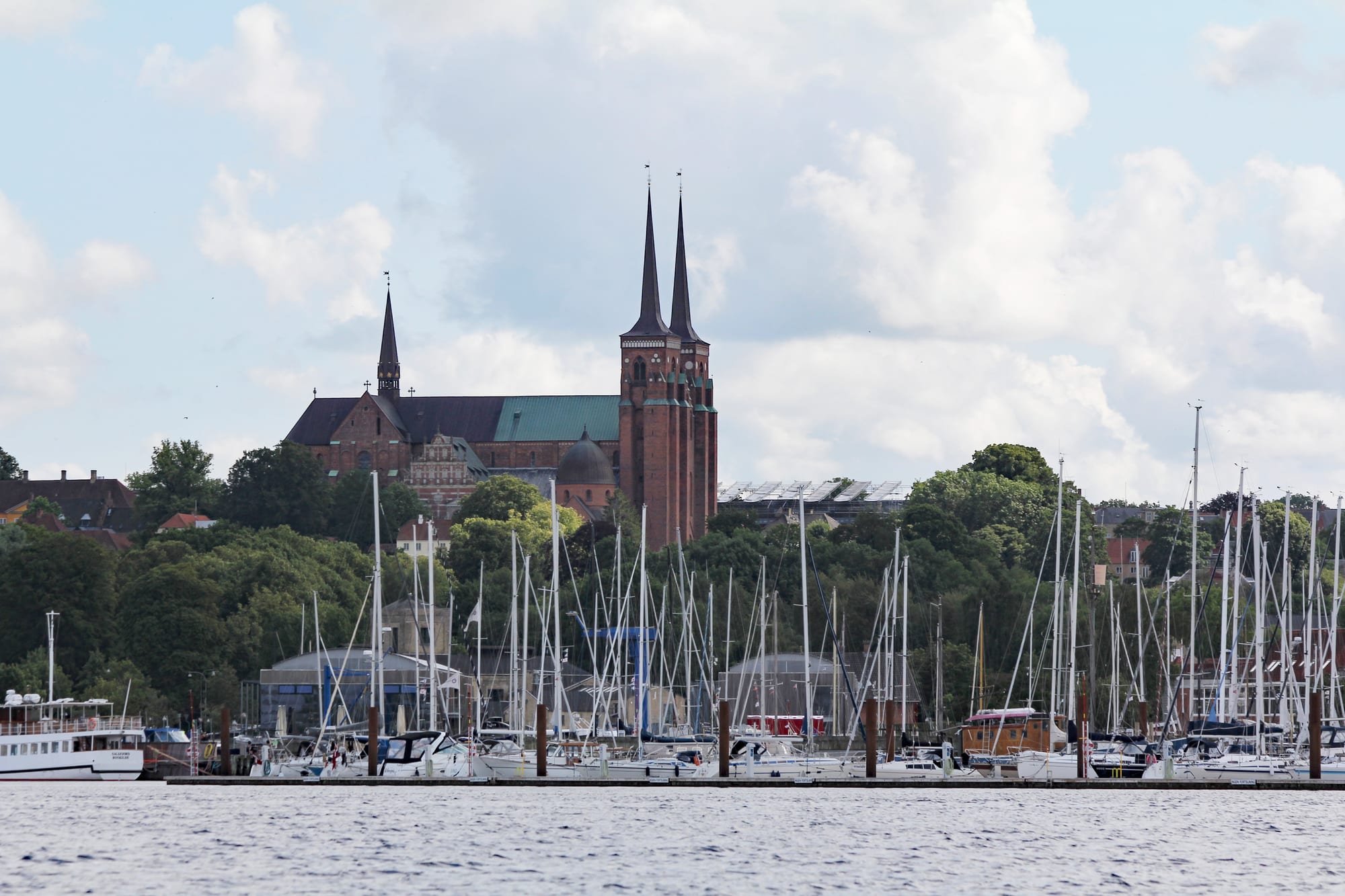
Compact and walkable. The station, Stændertorvet and the cathedral are a few minutes apart, and the harbour lies down the slope north of the cathedral, about 1.3 km away. The festival grounds and the university are in outlying districts best reached by bus or bike.
🛡️ Safety
Denmark is a very safe country with low levels of violent crime. Roskilde is a calm city for most of the year; the exception is festival week, when huge crowds and camping areas bring the usual risks of theft and drunkenness, and cyclists in the cycle lanes need watching at all times.
At the festival, keep valuables locked away or on the person and drink plenty of water; elsewhere, keep out of cycle lanes on foot. Check current official travel advice before travelling.
🌦️ Climate
Maritime and changeable, with mild summers, cold grey winters and rain in every season; daylight swings from long summer evenings to short winter days.
- Summer
- mild — in nearby Copenhagen, July is the warmest month, with average daytime highs of 21°C
- Winter
- cold and grey — in nearby Copenhagen average temperatures stay above 0°C, with snow mainly from late December to early March
🤝 Local Customs
Manners are informal and first-name, as across Denmark, and tipping is not expected. The cathedral is a working church as well as a royal burial place and tourist site, and services and concerts take priority over sightseeing.
Dress modestly and keep voices low in the cathedral, especially during services; ask before photographing people.
💳 Common Payment Methods
The currency is the Danish krone (DKK). Cards are the usual way to pay and cash is rarely needed; many businesses also take MobilePay, though it requires Danish identification. ATMs are widely available.