💰 Budget
Turku costs a little less than Helsinki but is still Nordic in price. Restaurant dinners and drinks are the big expense; weekday lunch menus, market food and the free Föri ferry soften it. Rooms are dearer during Ruisrock, the Medieval Market and other big summer events.
- Daily Budget Midrange
- USD 160–280 (central hotel, restaurant dinners, museum tickets, a river or archipelago cruise)
- Daily Budget Shoestring
- USD 75–110 (hostel bed, lunch menus and market food, buses and bike share)
Walking the riverside, the cathedral and the Old Great Square costs nothing, and a single public transport ticket also covers the summer water bus to Ruissalo.
📅 Best Time to Visit
June to August, when the riverside terraces fill, the water bus runs to Ruissalo and the archipelago cruises sail. Late June brings the Medieval Market. December is the other season: the city styles itself Finland's Christmas City, with a market on the Old Great Square and the Christmas Peace declaration on 24 December.
⏳ Suggested Number of Days
Two or three days cover the city itself. Four or five allow time for the nearby coast and islands as well; more is needed for a slow island tour by road ferry and bicycle, and summer timetables make a big difference to what is possible.
- First Visit
- 2–3 days
- With Surroundings
- 4–5 days
🚆 Transportation
The centre is compact, and the Föli buses cover the rest of the city and the neighbouring towns. The Föri ferry crosses the river, the Kakola Funicular climbs the hill on the west bank, a water bus runs to Ruissalo in summer and the Fölläri bike share operates in the warmer months. Signed regional cycle routes lead to Ruissalo, Naantali and beyond.
Bike-share cycles are not set up for winter; in snow and ice, use the buses.
🛬 Airport & Station Connections
Turku Airport is 8 km north of the centre, with a small number of airlines. Many travellers arrive by train from Helsinki or Tampere — the central station's platforms are reached by a footbridge from the Logomo side — or by the Silja Line and Viking Line ferries from Stockholm and Mariehamn, which dock at the harbour near the castle. Long-distance coaches arrive at the Turku bus station.
🚶 Walkability
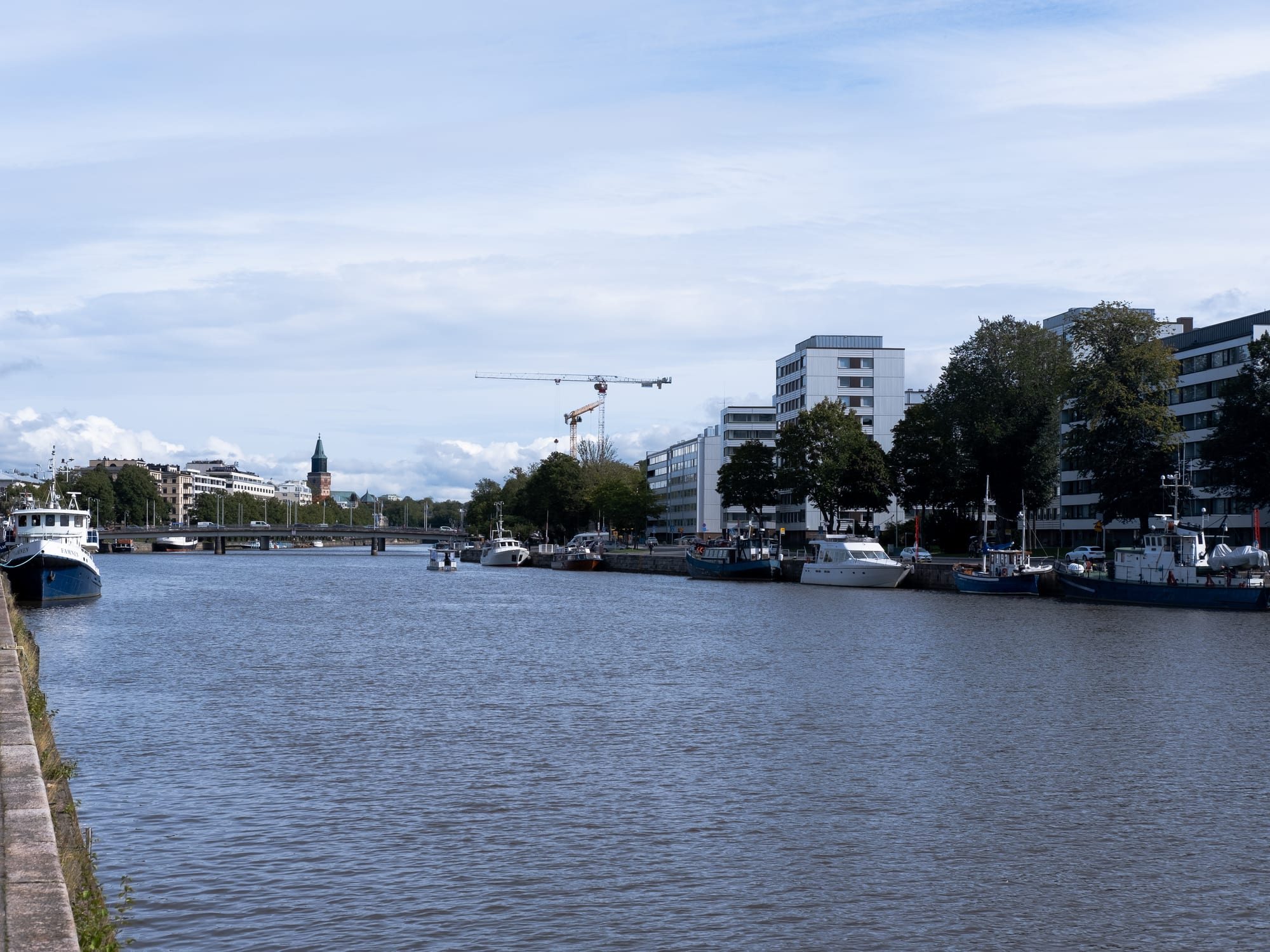
Very good. Most sights, restaurants and shops lie within a kilometre of the Market Square, and the riverside paths link the cathedral with the castle and harbour. Bridges, including the pedestrian Library Bridge, and the Föri make it easy to cross the Aura. In winter pavements can be icy, and in hard winters the river may freeze.
🛡️ Safety
Finland is consistently rated one of the safest countries in the world, with very low crime. Turku is calm, including the centre at night, though the riverside bars get loud on summer weekends. The real hazards are cold water, river and sea ice in winter, and wind and weather for anyone out in small boats.
Keep off river and sea ice unless it is known to be safe, wear a life jacket on small boats and watch for cyclists on the riverside paths. Check current official travel advice before travelling.
🌦️ Climate
A humid continental climate tempered by the Baltic and the islands. Summers are warm, winters relatively cold with frequent snow; winter usually begins in early December and spring in late March. The sea keeps the city a little milder in winter than its airport.
- Summer
- warm — July averages 17.5°C, and temperatures can reach 30°C
- Winter
- relatively cold, with frequent snowfall; February is the coldest month, and winter temperatures are mostly between 0 and −15°C
🤝 Local Customs
Turku is officially bilingual, in Finnish and Swedish, and the city's Swedish name is Åbo. People are reserved and punctual, and small talk is limited. Tipping is not expected, though rounding up is welcome. The cathedral is a working church: dress respectfully and keep quiet during services.
Stronger alcoholic drinks are sold in the state Alko shops. Sauna is taken seriously — follow local habits on washing first and on nudity.
💳 Common Payment Methods
The currency is the euro. Cards and contactless payment are widely accepted, including on buses, though some stalls on the Market Square take only cash. ATMs are easy to find in the centre.