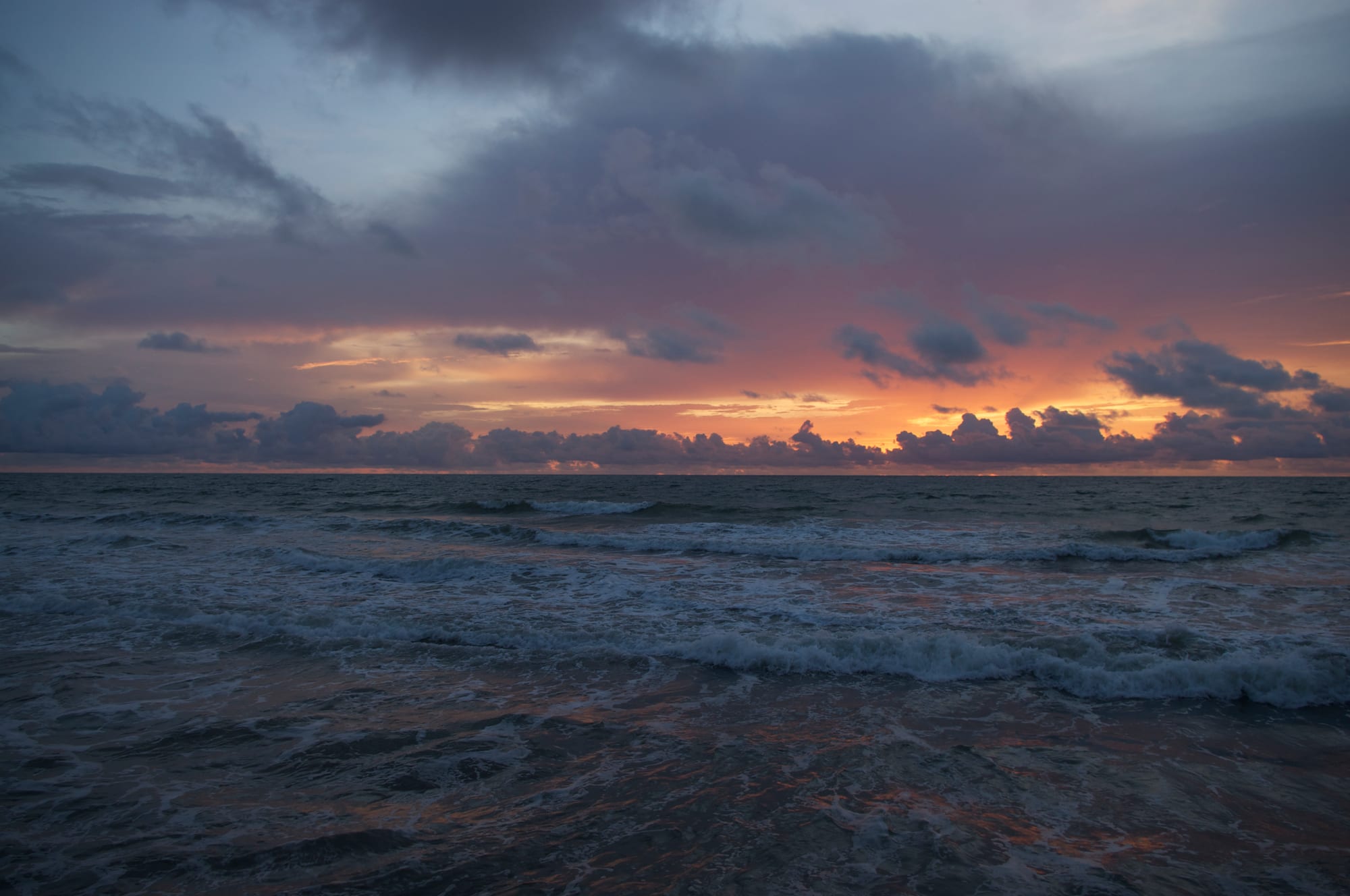
Breaking waves rolling onto the shore at Kololi under a wide bank of cloud lit orange and pink by the setting sun

The Gambia

Kololi

Sunset over the Atlantic from the beach at Kololi. (Ben Tatlow bentatlow / Wikimedia Commons · CC0)

The Gambia's main beach resort, on the Atlantic coast a short drive west of Banjul. Built up from the 1970s around the Senegambia hotel strip, it packs hotels, bars, craft stalls and restaurants into a few streets behind a long sandy shore, with a monkey-filled coastal forest park at one end.

Neighbourhoods

  • The Senegambia strip
    • First-time visitors
    • Nightlife
    • Best for food

    The short road running down to the beach that gives the resort its shape, lined with hotels, restaurants, bars, craft stalls, exchange bureaux and taxi ranks. It is the busiest and most tourist-oriented place in the country, lively after dark and easy to walk.

    Open in Maps
  • Kololi beach
    • Beaches
    • Quiet and residential

    The stretch of shore either side of the strip, backed by beach bars and a growing scatter of guesthouses and apartments, part of the coastal belt set aside for tourism since the 1970s.

    Open in Maps
  • Bijilo
    • Quiet and residential
    • Nature

    The area at the southern end of the resort, beside the coastal forest park of the same name. Newer hotels and residential compounds stand among rhun palms, and it is quieter than the strip just to the north.

    Open in Maps
  • Kotu
    • Beaches
    • Birdwatching
    • Close to the city

    A smaller resort area a short way north, where the Kotu Stream reaches the sea behind the beach. Hotels here sit closer to Serekunda and the road to Banjul.

    Open in Maps

Things to do

Beaches and the strip

  • Kololi Beachbeach

    The resort's wide sandy Atlantic beach, lined with beach bars at the foot of the strip; the beaches and the sunny climate are the main reason visitors come to the Gambia.

    Open in Maps
  • Kotu Beachbeach

    A quieter stretch of sand a short way north of the strip, backed by some of the country's main beach hotels.

    Open in Maps

Nature and birdwatching

  • Bijilo Forest Parkpark

    A small coastal reserve of closed-canopy forest, rhun palm and coastal scrub just south of the strip, gazetted in 1952, with a 4.5 km nature trail and troops of green monkeys, red colobus and patas.

    Open in Maps
  • Kotu Creektrail

    The small stream that flows into the Atlantic at Kotu, behind the beach and the resort's hotels.

    Open in Maps

Short trips from the resort

  • Serekundaneighborhood

    The Gambia's largest urban area, about 5 km inland, whose market and trading streets show the everyday country behind the hotels.

    Open in Maps
  • Bakauneighborhood

    A coastal town about 5 km away with the Kachikally sacred crocodile pool, botanical gardens and the beaches of Cape Point.

    Open in Maps
  • Brikamamarket

    A large inland town about 20 km south, known for wood carving and its craft market, and the centre of the Gambian music industry.

    Open in Maps
  • Tanjibeach

    A fishing town about 13 km down the coast, where much of the catch is landed on the beach, with a village museum of traditional crafts.

    Open in Maps
  • Tanji Bird Reservepark

    A protected area of lagoons, mangrove, dune scrub and the offshore Bijol Islands about 12 km south, established in 1993, with around 300 recorded bird species.

    Open in Maps
  • Makasutu Culture Forestpark

    A forest reserve near Brikama, about 20 km away, listed among the town's attractions and home to a small number of Guinea baboons.

    Open in Maps
  • Banjulneighborhood

    The capital, about 15 km east on its island, with Arch 22, the National Museum, Albert Market and the ferry to the north bank.

    Open in Maps

Seasonal events

  • The winter tourist seasonOctober to April

    The dry months when charter flights arrive from northern Europe, the beach bars and restaurants are fully open and the strip is at its busiest.

  • Koriteh and Tobaskivaries with the Islamic calendar

    Eid al-Fitr and Eid al-Adha, the major Muslim festivals, when Gambian staff and families mark the day with prayers, new clothes and shared meals.

  • Independence DayFebruary

    The national day on 18 February, celebrated across the coastal towns as well as in the capital.

Eat and drink

Long-standing places and food districts in Kololi. Hours, ratings and directions come from your maps app, always current.

Where people eat

  • The Senegambia strip restaurantsneighborhood

    A concentration of grills, seafood restaurants and international kitchens along one short road, with beach bars at the bottom of it serving fish, prawns and cold beer.

    Open in Maps
  • Kololi beach barsneighborhood

    Simple open-sided bars along the sand, cooking barracuda, ladyfish and prawns over charcoal and staying open into the evening.

    Open in Maps
  • Serekunda street foodneighborhood

    Benachin and domoda from lunchtime pots, afra barbecued meat in tapalapa bread, and akara bean fritters at the roadside in the town inland.

    Open in Maps

Experience Kololi

History

Kololi was a small Kombo village of farms and palm bush until the 1970s, when the Gambian government began developing the coast south-west of Banjul as a tourist area. Swedish tour operators had started flying winter-sun holidaymakers into the country in 1965, and in 1970 an 800-metre-wide coastal strip from Kololi south to Kartung was reserved for tourism development. The hotels at the foot of the road gave their name to the Senegambia strip, which came to stand for the whole resort in visitors' minds.

Growth continued as visitors from Britain, the Netherlands, Belgium and Germany joined the Scandinavians, and the strip filled with restaurants, craft stalls, bars and tour operators. Tourism became one of the Gambia's largest sources of foreign earnings, and Kololi its shop window, employing large numbers of people from Serekunda and the villages inland. The trade proved fragile: political crises and the Ebola epidemic in neighbouring countries in 2014–15 each emptied the hotels for a season.

The strip today is still the centre of Gambian tourism, though development has spread south towards Bijilo and along the coast beyond, and the Kololi area has grown into a residential suburb of the wider Serekunda conurbation as well as a holiday destination.

Culture & Customs

Kololi is the point where the Gambia, known as the Smiling Coast, meets its visitors, and much of its culture is about that meeting. Craft stalls sell batik, carved masks and fabric; drumming and dance troupes perform at the hotels; kora players from griot families, many of them from Brikama inland, play in restaurants and bars. The results are commercial, but the skills are real and the musicians are often from long lines of professional performers.

The hassle that visitors most often mention is part of the same economy. Young men known locally as bumsters attach themselves to tourists on the beach and the strip, offering guiding, friendship or romance in the hope of money or a visa; a polite but firm refusal is the usual advice.

Away from the strip the customs are those of the rest of the country: Islam observed by nearly everyone, long greetings that ask after family before anything else, food shared from a common bowl, and attaya, green tea brewed in three increasingly sweet rounds, drunk slowly over an afternoon. Sunday and public holidays fill the beach with Gambian families and football games on the sand.

Daily Life

Kololi is not a town with its own centre so much as a district of the built-up coastal area around Serekunda, which holds several hundred thousand people. Its own population is modest and hard to separate from the neighbouring settlements of Bijilo and Kotu. Most of those who work in the hotels, bars and stalls live inland and come in by minibus or shared taxi.

The economy runs on the seasons of the charter flights. Between October and April there is work in hotels, restaurants, taxis, guiding and crafts; in the rains many businesses close, staff are laid off and the strip goes quiet. That pattern makes household income unpredictable, and many families combine tourism work with farming, fishing or trade. Remittances from relatives in Europe are important here as everywhere in the Gambia.

Behind the hotels the area is ordinary Gambian suburb: compounds of concrete rooms around a shared yard, small shops, mosques, tailors and a scatter of newer apartment blocks built for returnees and for rent. Electricity cuts are frequent and generators common. The day starts before dawn with prayer and the first minibuses, the middle of it belongs to the beach and the shade, and the evening brings grilled fish, attaya and football on television.

Food

Eating in Kololi splits in two. The strip serves what package visitors expect — grilled barracuda, ladyfish, snapper and prawns, chicken and chips, pizza, Lebanese mezze and full English breakfasts — usually well done and cheap by European standards, with Atlantic seafood the thing worth ordering. Beach bars cook the same fish over charcoal a few steps from the sand and pour cold beer.

A few streets inland the food is Gambian and Senegalese. Benachin, called thieboudienne in Senegal, is rice cooked in a thick tomato and fish sauce with vegetables, and is the classic midday dish; domoda is a groundnut stew over rice; yassa is chicken or fish in a sharp onion, lemon and mustard sauce; superkanja is okra and palm oil with smoked fish. Afra — meat barbecued over wood, chopped with onions and chilli and stuffed into tapalapa bread — is the standard late-night food, and akara bean fritters and egg sandwiches are the standard breakfast.

Fruit sellers work the strip with mango, papaya, pineapple and small sweet bananas, and cashew fruit appears in season. The drinks that matter locally are attaya green tea, wonjo made from hibiscus flowers, baobab juice and ginger drinks, all sold chilled in bottles or knotted bags. Oysters from the mangrove creeks nearby, harvested by women, are sold roasted.

Planning tools

Budget

Kololi is where Gambian tourism concentrates, so prices here are the highest in the country while still being low by European standards. Beach-front hotels, restaurant meals and excursions are the main costs; eating where Gambians eat, a few streets back, costs a fraction of the strip. Many visitors arrive on a package that covers the room and flights.

Daily Budget Midrange
USD 60–130 (beach hotel, some tours, a river excursion, a driver)
Daily Budget Shoestring
USD 25–45 (guesthouse behind the strip, local food, shared 'gelli-gelli' minibuses)

Agree taxi and excursion prices before starting, and carry small dalasi notes; the strip has exchange bureaux and several ATMs.

Best Time to Visit

November to February is the peak: dry, sunny, less humid and the best time for birdwatching, with European migrants adding to the resident species. March to May stays dry but grows hotter. From June to September the rains bring humidity and storms, many beach businesses close and prices fall sharply.

Suggested Number of Days

Three or four days are enough for the beach, the forest park and a look at the towns nearby. A week or more suits those combining the coast with birdwatching, craft markets and a trip up the river. Package holidays here usually run one or two weeks.

First Visit
3–4 days
With Surroundings
7–10 days

Transportation

Green tourist taxis wait at the hotels and the top of the strip and are hired by the trip, the hour or the day. Shared yellow taxis and 'gelli-gelli' minibuses run along the main coastal road for a few dalasi, and the coastal highway links the resort with Serekunda, Banjul and the villages to the south. Bicycles and hired cars with drivers are also common.

Fares are negotiated before getting in; a driver hired for a day is the usual way to combine several places inland.

Airport & Station Connections

Banjul International Airport at Yundum is a short drive inland, and most arrivals are seasonal charter flights from Britain and elsewhere in northern Europe, along with scheduled regional services. Transfers are included in package holidays and taxis wait outside the terminal. Banjul and its ferry to the north bank are about 15 km east.

Walkability

The strip itself is a short, flat walk, and the beach gives an uninterrupted route north towards Kotu and Bakau at low tide. Beyond that the resort thins into sandy side roads with little lighting and no pavements, so walking after dark is limited to the main road. Bijilo Forest Park lies just south of the strip.

Safety

Kololi is the centre of the Gambia's tourist trade and the place where the approaches to visitors are most persistent: young men on the beach and the strip offer guiding, friendship or romance in the hope of money or a visa, and petty theft and overcharging occur. Violent crime against visitors is uncommon, and the strip is busy and lit at night.

The Gambia is generally safe and welcoming, with low levels of violent crime. A polite but firm refusal is the standard response to unwanted approaches, valuables are better not carried onto the beach, hotel or arranged taxis are worth using at night, and modest dress is appreciated away from the resort. Swimmers should be aware of strong currents on this coast. Check current official travel advice before travelling.

Climate

Hot and coastal, with one rainy season and a long dry season cooled a little by the Atlantic breeze. The Harmattan can carry dust from the interior between December and February, softening the light and hazing the horizon.

Summer
the rains, roughly June to September — humid, around 27–32°C, with heavy showers and thunderstorms, often clearing quickly
Winter
the dry season, November to February — warm and sunny, typically 24–32°C by day, cooler by the sea at night

Local Customs

The Gambia is a Muslim country and the resort is an exception rather than the rule: swimwear belongs on the beach, and shoulders and knees are best covered elsewhere, including in Serekunda and the villages. Greetings are long and matter, the right hand is used for eating and giving, and tipping is expected in restaurants and for guides and drivers.

Ask before photographing people, and do not photograph military or government buildings. Alcohol is sold freely on the strip but is out of place in the towns inland, and beach guides should be paid what was agreed, not more.

Common Payment Methods

The currency is the Gambian dalasi, obtainable only in the country. Kololi has more banks, ATMs and exchange bureaux than anywhere outside Banjul, and euros, pounds and US dollars are easily changed. Larger hotels and some restaurants take cards, but cash is the norm for taxis, markets, beach bars and craft stalls.