💰 Budget
Costs are low. Guesthouses and small hotels in the town are inexpensive, meals are cheap, and the fortress charges only a modest entry fee for its museum and citadel. The significant expense is a car or hired driver for Vardzia, Khertvisi and the monasteries, since public transport to them is infrequent and slow.
- Daily Budget Midrange
- USD 60–120 (mid-range hotel, restaurant meals, a driver for Vardzia and the monasteries)
- Daily Budget Shoestring
- USD 25–45 (guesthouse room, bakeries and simple restaurants, marshrutkas)
Sharing a driver with other travellers is the usual way to see Vardzia in a day; agree the price and the waiting time in advance.
📅 Best Time to Visit
Late May to early October, when the roads to Vardzia and the Javakheti plateau are clear and the valleys are green. September and early October are settled and quieter, with harvests in the markets. Winters are long and cold at this altitude, and snow can slow or close the mountain roads, though the fortress itself is open all year.
⏳ Suggested Number of Days
The town and its fortress take a day. Most visitors stay two or three nights to use it as a base for the valleys to the south and the monasteries nearby. How long depends mainly on whether transport is hired or left to marshrutkas.
- First Visit
- 1 day
- With Surroundings
- 2–3 days
🚆 Transportation
The town is compact and walkable, with taxis cheap for the climb to the fortress or the hillside districts. Marshrutkas link Akhaltsikhe with Borjomi, Khashuri, Tbilisi, Batumi and Akhalkalaki, and a small number run south towards Aspindza and Vardzia each day. The railway line through the south carries little passenger traffic.
Check return times before taking a marshrutka to Vardzia, as the last service back can leave early in the afternoon.
🛬 Airport & Station Connections
Akhaltsikhe lies about 210 kilometres west of Tbilisi, roughly four hours by marshrutka or car, and around an hour and a half from Borjomi through the Mtkvari gorge. Batumi is some four to five hours away over the Goderdzi pass in summer or by the longer lowland route. Tbilisi and Kutaisi airports are the usual entry points, and the Turkish border at Vale is close by.
🚶 Walkability
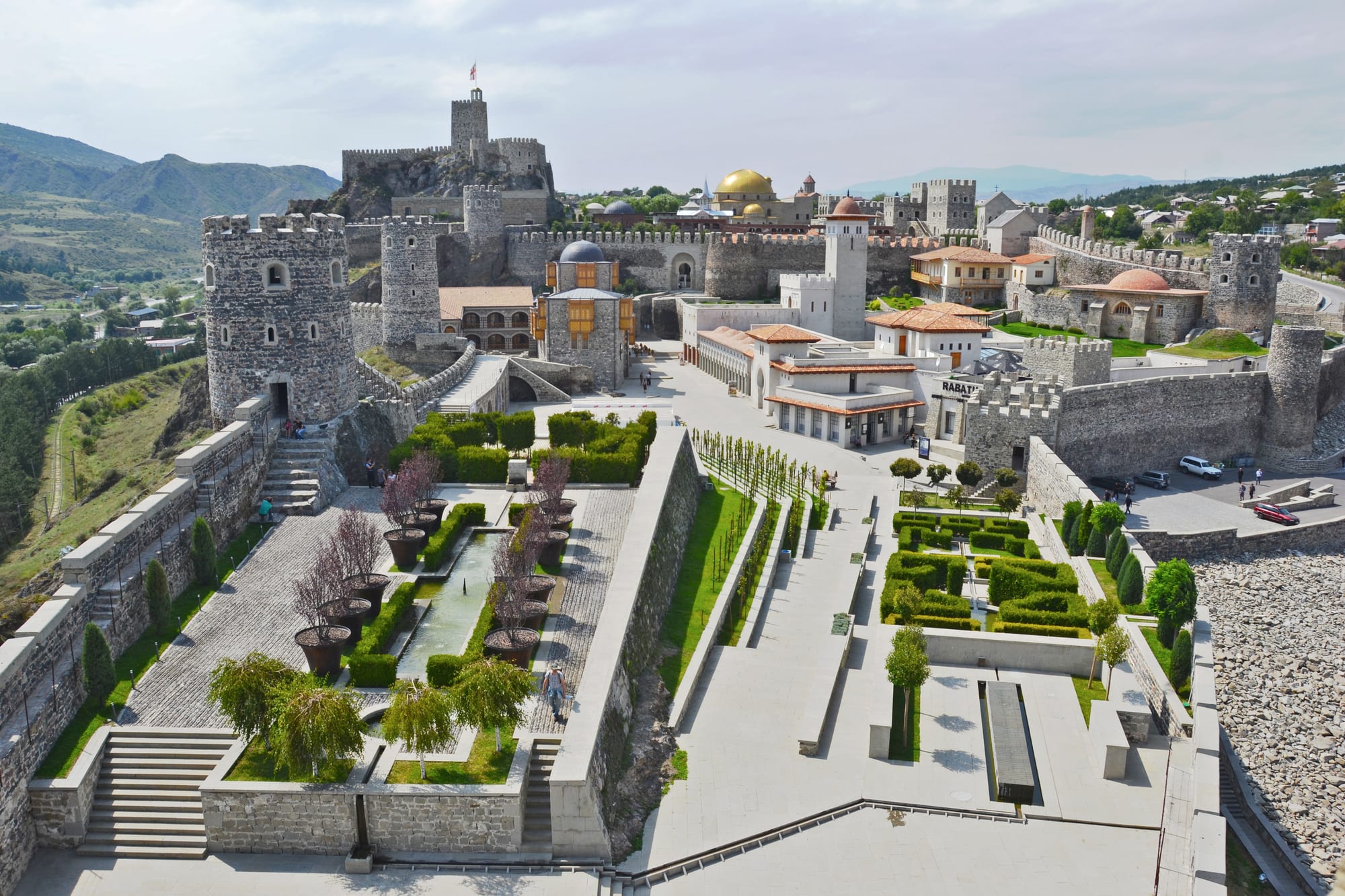
Small enough to cross on foot in half an hour, with the new town centre flat and the old town and fortress on a slope above the river. The climb from the bridge to the fortress gates is steep but short, and the cobbles and steps inside the walls are uneven. Pavements thin out on the edges of town, and snow and ice make the hill slippery in winter.
🛡️ Safety
The town is quiet and crime is low, and the main risks are practical: mountain roads, winter ice and steep unfenced ground at the cave sites, where ladders, tunnels and drops at Vardzia and Vanis Kvabebi call for care. This is a border area, with crossings into Turkey and Armenia nearby, so identification should be carried.
Wear proper shoes at the cave monasteries, check road conditions before crossing the plateau in winter, and carry a passport near the borders. Check current official travel advice before travelling.
🌦️ Climate
A highland continental climate, drier and sunnier than the gorge to the north-east, with cold winters, warm summers and large differences between day and night temperatures. Snow lies on the surrounding plateaus for months.
- Summer
- warm and dry — July days usually around 25–28°C, with cool nights
- Winter
- cold — January averages close to -2°C, with hard frosts, snow and icy roads over the plateau
🤝 Local Customs
This is one of Georgia's most mixed regions, with Georgian, Armenian and Catholic Georgian communities in and around the town and a long Muslim history under Ottoman rule; several faiths are visible in the fortress complex itself. Hospitality is warm and quickly offered, and a table with toasts led by a tamada is the standard form of welcome.
Dress modestly in churches and the mosque, remove shoes if entering the mosque, ask before photographing people, and treat questions about the region's mixed history and the deported Meskhetians with tact.
💳 Common Payment Methods
The currency is the Georgian lari. Cards are taken in hotels, supermarkets and larger restaurants in the new town, but guesthouses, market stalls, marshrutkas and drivers expect cash. ATMs are in the centre; there are few in the villages to the south, so draw money before setting out for Vardzia.