History
Shida Kartli, "inner Kartli", has been settled for millennia along the Mtkvari. Uplistsikhe, carved into a sandstone bluff east of Gori, was a pagan religious and urban centre in pre-Christian times and remained in use into the Middle Ages, when Mongol raids left it abandoned. Gori itself grew around its fortress on the road between Tbilisi and the west, and churches such as Ateni Sioni and Samtavisi show the wealth of the medieval kingdom here.
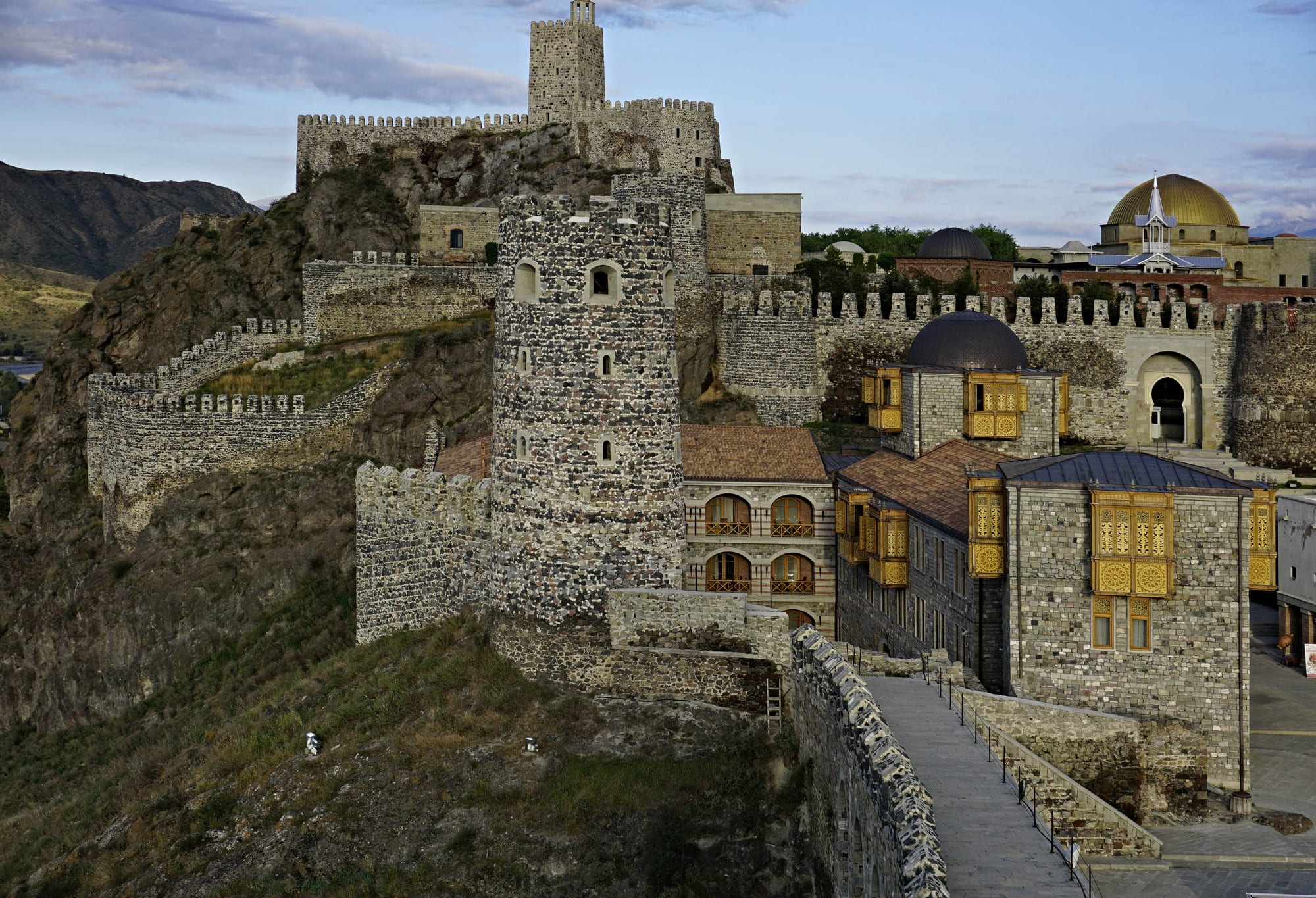
To the south-west, Samtskhe was ruled by the Jaqeli family, who governed it almost independently as atabegs from the late thirteenth century. Vardzia was carved into the cliffs of the Erusheti mountain under George III and his daughter Queen Tamar in the late twelfth century as a monastery and refuge against invaders; an earthquake in 1283 damaged it heavily, and it was later sacked by the Persians. From the sixteenth century Samtskhe fell to the Ottomans and Akhaltsikhe became the seat of a pashalik, with much of the local population converting to Islam, until Russia captured the town in 1828.
Joseph Stalin was born in Gori in 1878, and the town built a museum to him in the 1950s. In 1944 Stalin's government deported the Muslim Meskhetians of Samtskhe to Central Asia. Tskhinvali, the main town of South Ossetia, lies just north of Gori, and after the August 2008 war Russian forces briefly occupied Gori; since then South Ossetia's Russian-backed authorities have held the territory, and the boundary fences have crept close to Georgian villages.