💰 Budget
Stralsund is cheaper than the island resorts it serves, and cheaper than western Germany. Rooms in the old town cost most in July and August, when many visitors use the city as a base for Rügen and Hiddensee; from October to April prices fall. Fish rolls at the harbour and bakery food keep eating cheap.
- Daily Budget Midrange
- USD 130–230 (old-town guesthouse or hotel, fish restaurants, Ozeaneum and museum tickets, a ferry trip)
- Daily Budget Shoestring
- USD 60–100 (hostel or budget room, fish rolls and bakery food, walking and city buses)
Staying in Stralsund and reaching Rügen or Hiddensee by train, bus or ferry avoids the island's summer room prices.
📅 Best Time to Visit
May to September, when the harbour is busy with yachts and the ferries to Hiddensee run, and the Wallensteintage festival fills the old town in summer. July and August are the busiest months. In Advent the old town has its Christmas market, while from November to March the coast is quiet and many island businesses close.
⏳ Suggested Number of Days
The city itself can be seen in a day or two. Allow three to five days to add trips to the islands and the lagoon coast; the number depends mainly on how much island time is wanted and whether there is a car.
- First Visit
- 1–2 days
- With Surroundings
- 3–5 days
🚆 Transportation
The old town is small enough to cover on foot. City buses reach the outer districts and the surrounding area. Trains cross the Rügendamm to Rügen, and ferries from the harbour serve Hiddensee and Altefähr.
Expect heavy traffic on the roads onto Rügen on summer weekends.
🛬 Airport & Station Connections
Stralsund Hauptbahnhof is on the lines to Berlin, Hamburg, Rostock and Rügen; Rostock is about an hour away by train. By road the city is reached from Rostock on the B105 or the A20 motorway. The nearest airport with scheduled flights is Rostock–Laage, and Berlin has the closest major international airport.
🚶 Walkability
Very walkable. The old town island is compact and largely flat, its squares, churches, museums and harbour within a few minutes of one another, and the ponds and the sound give pleasant walks around its edge. The cobbles are uneven underfoot. The station lies just outside the old town, and Knieper and the beach are a longer walk or a bus ride north.
🛡️ Safety
Germany is a safe country with low levels of violent crime. Stralsund sees little crime, and the main hazards are natural: offshore winds can carry inflatables out from the beaches, and currents run hard beside groynes and piers. On trips to Rügen, the chalk cliffs can break away without warning, mostly after rain and frost.
Swim at guarded beaches, keep back from cliff edges and do not linger beneath the cliffs on Rügen, and stay out of marked cycle lanes on foot. Check current official travel advice before travelling.
🌦️ Climate
A Baltic climate, moderated by the sea, with relatively little rain: Stralsund's annual rainfall is in the lowest third of German values, with February the driest month and July the wettest. Summers are mild and winters seldom severe.
- Summer
- mild — on nearby Rügen, August averages about 16°C
- Winter
- cold but rarely severe — on nearby Rügen, January and February average about 0°C
🤝 Local Customs
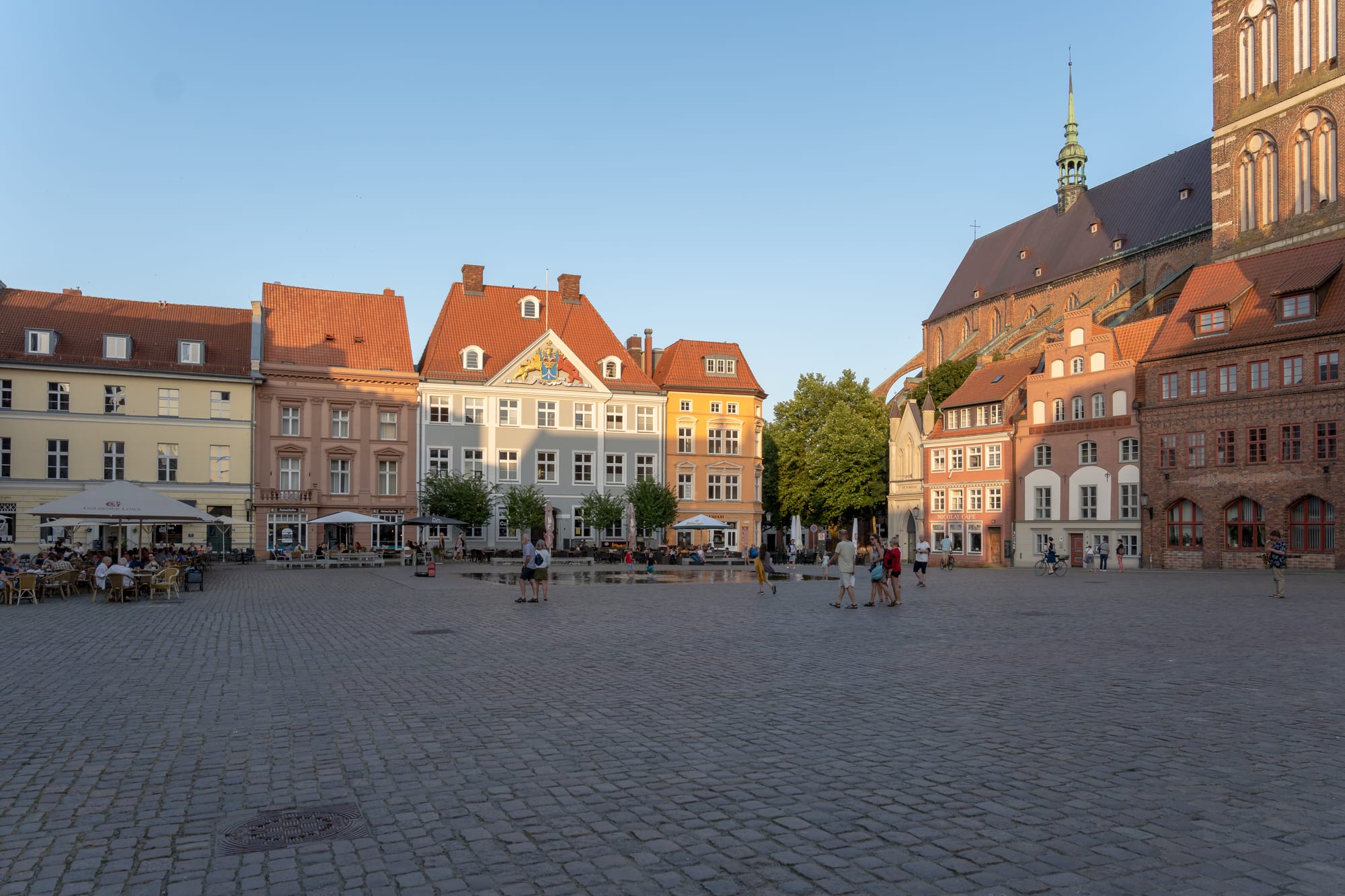
Tips are usual in restaurants, bars and taxis, but rarely exceed 10 per cent; many people simply round up the bill, saying the total they wish to pay when settling. Most shops close on Sundays. Bottles and cans carry a deposit (Pfand) refunded at shops. The great brick churches of St Nicholas and St Mary remain places of worship.
Keep out of cycle lanes on foot, sort rubbish for recycling, and dress respectfully and keep quiet in churches during services.
💳 Common Payment Methods
The currency is the euro. Cards are accepted in most hotels, larger shops and many restaurants, but Germany is still fond of cash, and some bakeries, bars, fish kiosks and small shops may refuse cards, so carry some euros. ATMs are easy to find in the old town and at the station.