💰 Budget
Hohoe is cheap. Guesthouses are simple and inexpensive, meals in chop bars cost very little, and the town is small enough to cross on foot. Money goes instead on transport to the hill villages and on the community entry and guide fees charged at Wli, Afadja, Liati Wote and Tafi Atome, which are modest but are paid separately at each site.
- Daily Budget Midrange
- USD 70–150 (a better hotel or hill lodge, a hired car or taxi for the day, guides and community fees)
- Daily Budget Shoestring
- USD 25–45 (guesthouse, chop-bar food, tro-tros and shared taxis)
Cash and mobile money are what work here; cash machines are in town and the village sites take cash only.
📅 Best Time to Visit
November to March is the driest and best time for the hill walks, with firm paths up Afadja and to the upper Wli falls, though Harmattan haze can dull the views. The falls are at their strongest late in the rains, about July to October, when the forest is green and the trails slippery.
⏳ Suggested Number of Days
The town itself needs little more than a day. Three or four days suit anyone using it as a base, because the waterfalls, the mountain and the sanctuaries lie in different directions and village transport is slow.
- First Visit
- 1 day
- With Surroundings
- 3–4 days
🚆 Transportation
The town is walkable end to end. Everything beyond it moves by tro-tro, shared taxi or motorbike taxi from the lorry park, with services to Ho, Kpando, Accra and the border villages that leave when full and thin out after midday. Taxis and motorbikes can be chartered by the trip or the day, which is how most people reach the hills.
Agree the fare before setting off, and plan hill trips for the morning, when transport back to town is still running.
🛬 Airport & Station Connections
Hohoe lies about 78 km north of Ho and roughly 220 km from Accra, four to five hours by road through Atimpoku and the Adomi bridge or up the eastern corridor. Tro-tros and coaches serve both routes, and there is no airport or railway, so everyone arrives by road; the Togo border crossings east of town are small and local.
🚶 Walkability
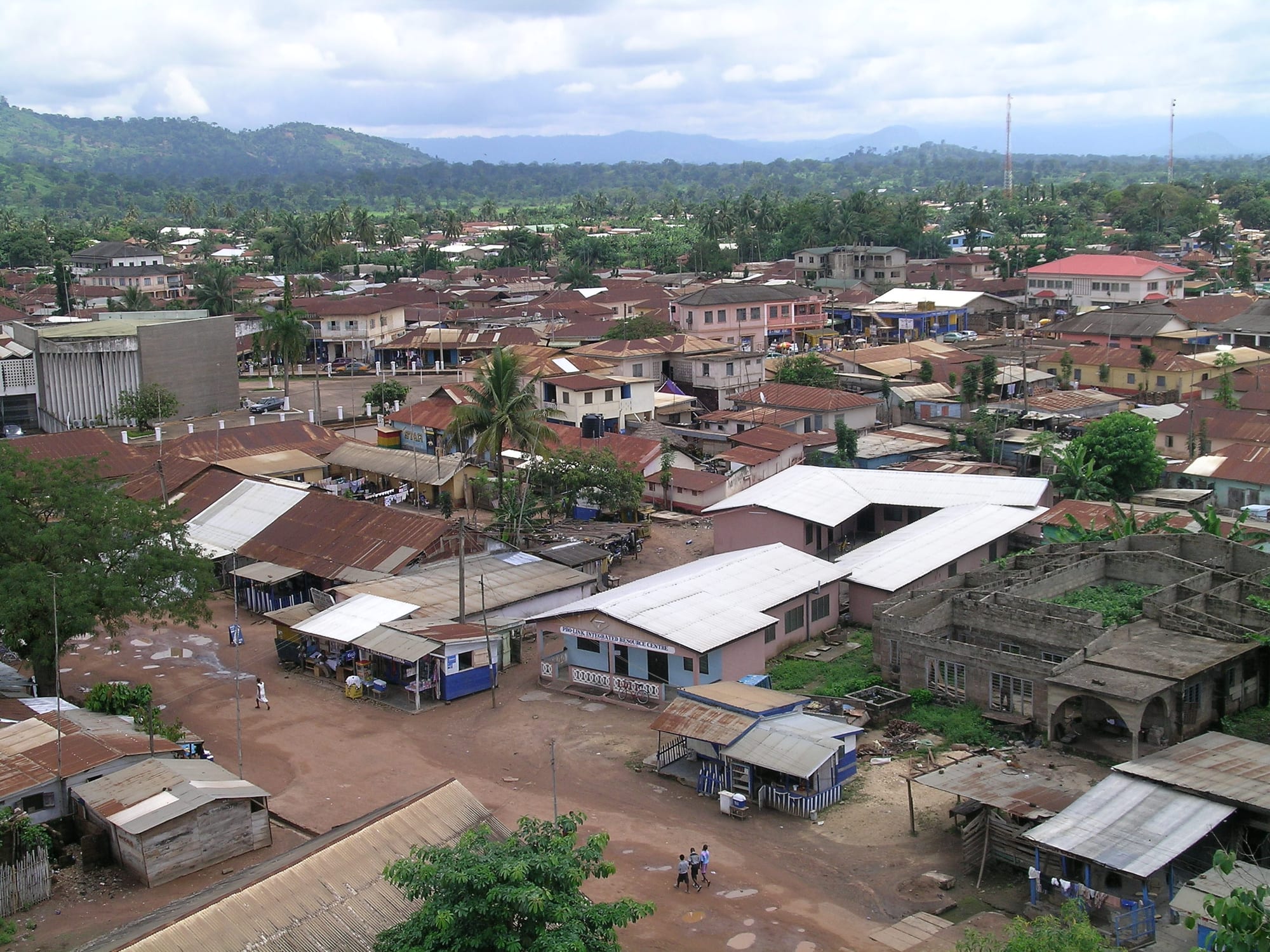
Very walkable: the market, the lorry park, the banks and the guesthouses sit within a few hundred metres of one another, and the town ends quickly in farmland. Pavements are patchy and roadsides are shared with motorbikes, and the middle of the day is hot, so mornings and late afternoons are the comfortable hours. Everything outside town requires transport.
🛡️ Safety
Hohoe is quiet and crime against visitors is rare, with normal care in the market and at the lorry park enough. The practical risks are on the trails and roads: steep, wet rock at the waterfalls, a demanding climb on Afadja, and hill roads that storms can wash out in the rainy season. The Togo border is close, and crossings should be made only at official posts.
Change money at banks rather than with street changers at Aflao, use a guide on mountain trails, and swim only where locals advise. Check current official travel advice before travelling.
🌦️ Climate
Tropical and wetter than most of southern Ghana because of the hills, with two rainy seasons: a long one from about April to July and a shorter one in September and October. The dry months from November to March bring Harmattan haze and cooler nights on the higher ground.
- Summer
- the main rains, about April to July: roughly 23–31°C, humid, with heavy afternoon storms and full waterfalls
- Winter
- the dry season, about November to March: roughly 21–33°C, hazy and dusty, cooler at night in the hills
🤝 Local Customs
Gbi chieftaincy, church and family obligation order life here. Greetings come first and are made with the right hand; hats come off before a chief and shoulders are covered in church. Several sites around the town are community-managed and sacred, the Tafi Atome monkeys among them, so guides' instructions about feeding, noise and photography matter. Sunday morning belongs to church and much of the town closes.
Ask before photographing people, shrines or festival rituals, and pay the official community fee at the visitor centre rather than arranging a guide privately.
💳 Common Payment Methods
The currency is the Ghanaian cedi. Cash and mobile money are used for almost everything, cards almost nowhere, and the banks and cash machines in the centre are the last dependable ones before the hill villages, where only cash is taken.