💰 Budget
Heraklion offers better value than Crete's resort coast: rooms in the city are cheaper than the north-coast resort hotels. Site tickets for Knossos and the museums add up, and a hire car is the main extra for trips to the south of the island.
- Daily Budget Midrange
- USD 130–250 (mid-range hotel, taverna dinners, a hire car, site tickets)
- Daily Budget Shoestring
- USD 55–90 (rented room or hostel, taverna and bakery meals, city and KTEL buses)
City buses reach Knossos, the airport and the beaches, and two free circular lines run through the centre.
📅 Best Time to Visit
April to June for wildflowers and comfortable sightseeing, and September to October for a warm sea and the grape harvest. July and August are hot and crowded at Knossos and the museum. Unlike the resorts, the city stays lively all winter, with its students and year-round shops and tavernas.
⏳ Suggested Number of Days
Two or three days cover the city, its museums and the palace on its outskirts. Four to six allow trips to the south of the island and the wine villages; without a car those take longer, as buses to the south run less often.
- First Visit
- 2–3 days
- With Surroundings
- 4–6 days
🚆 Transportation
City buses run 39 routes, with ticket machines at the main stops that are cheaper than buying on board, and two free circular lines cross the centre. Line 1 serves the airport and line 2 Knossos. Intercity KTEL buses leave hourly from the single bus station just east of the walls for Chania, Rethymno, Agios Nikolaos and other towns.
Drivers often ignore pedestrian crossings, so take care crossing busy roads.
🛬 Airport & Station Connections
Heraklion International Airport, named after the Heraklion-born writer Nikos Kazantzakis and the second busiest in Greece, is about 5 kilometres east of the centre; it is due to be replaced by a new airport at Kasteli, about 39 kilometres south-east, expected to open in 2028. Several ferries a day sail to Piraeus, and others to Santorini, Mykonos, Paros, Rhodes and other islands.
🚶 Walkability
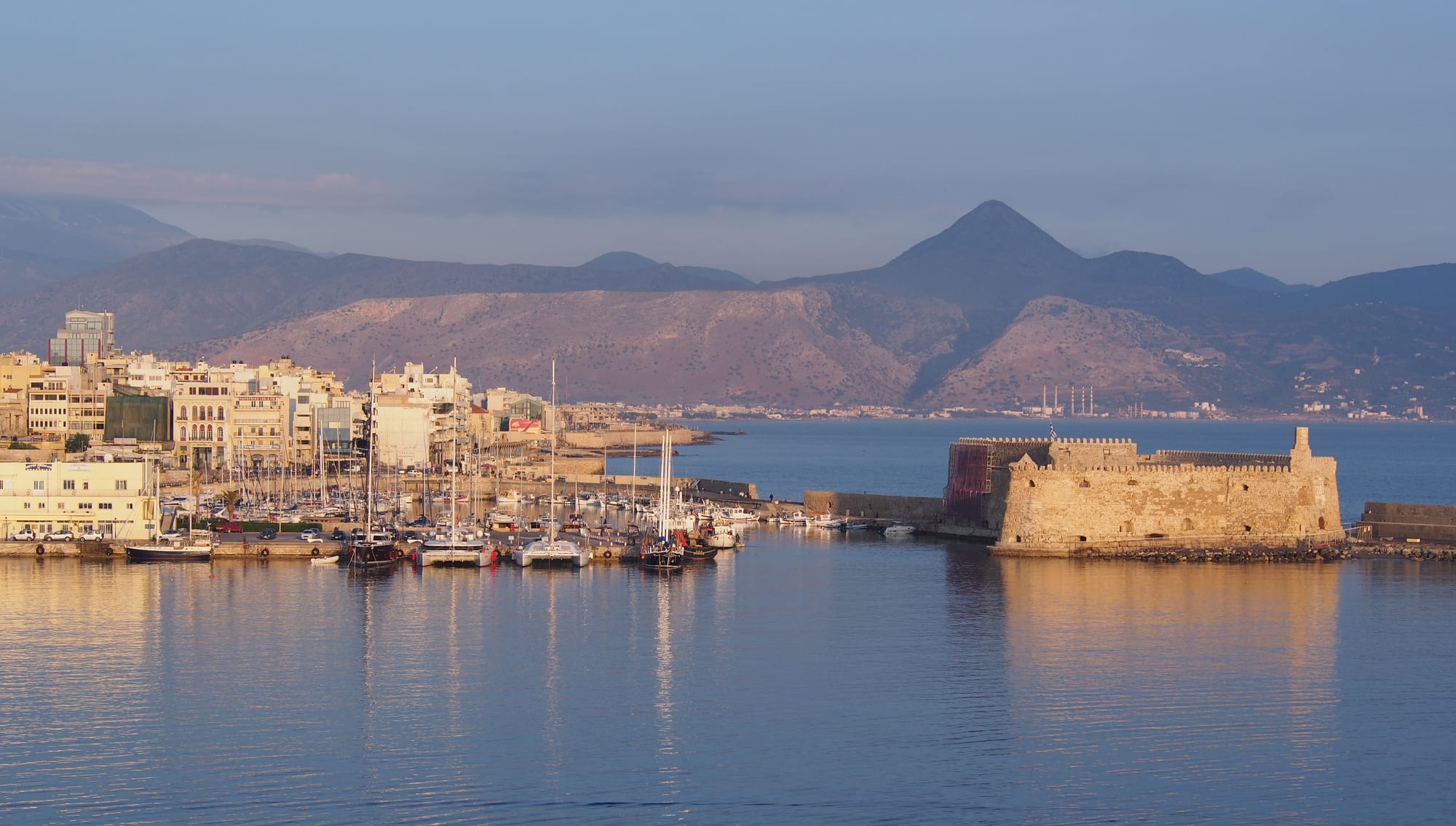
The main sights of the centre are easily seen on foot: Lions Square, the cathedrals, the market and the harbour are within a few minutes of each other, and much of the Venetian wall circuit can be walked. Beyond the walls the city sprawls, and buses are the better choice for Knossos and the beaches.
🛡️ Safety
Greece is a safe country for visitors, with low levels of violent crime. In Heraklion the most common hazard is traffic: drivers rarely stop at pedestrian crossings, and pavements are often blocked by parked cars and bikes. Heat on summer sightseeing days is the other risk.
Cross busy roads with care, drive defensively, carry water at Knossos in summer, and check for airport disruption before flying. Check current official travel advice before travelling.
🌦️ Climate
A hot-summer Mediterranean climate. Summers are warm to hot and dry, often relieved by seasonal breezes; winters are mild with little rain. Being further south than Athens, the city is warmer in winter but cooler in summer because of the sea.
- Summer
- warm to hot and dry — summer highs are usually no more than 28–30°C, about 5°C below those of Athens
- Winter
- mild with little rain — the lowest temperature recorded is −0.8°C at the airport, and the port has never dropped below 1.4°C; snow is rare
🤝 Local Customs
Tipping is not traditionally expected, though leaving a little in restaurants is now common. Raki is often offered free with dessert in restaurants, and churches and monasteries expect modest dress.
Cover shoulders and knees in churches, and buy bus tickets before boarding where machines are available.
💳 Common Payment Methods
Greece uses the euro. Cards are widely accepted in the city, and ATMs are common in the centre. Cash is useful in villages, at small tavernas and on buses without ticket machines.