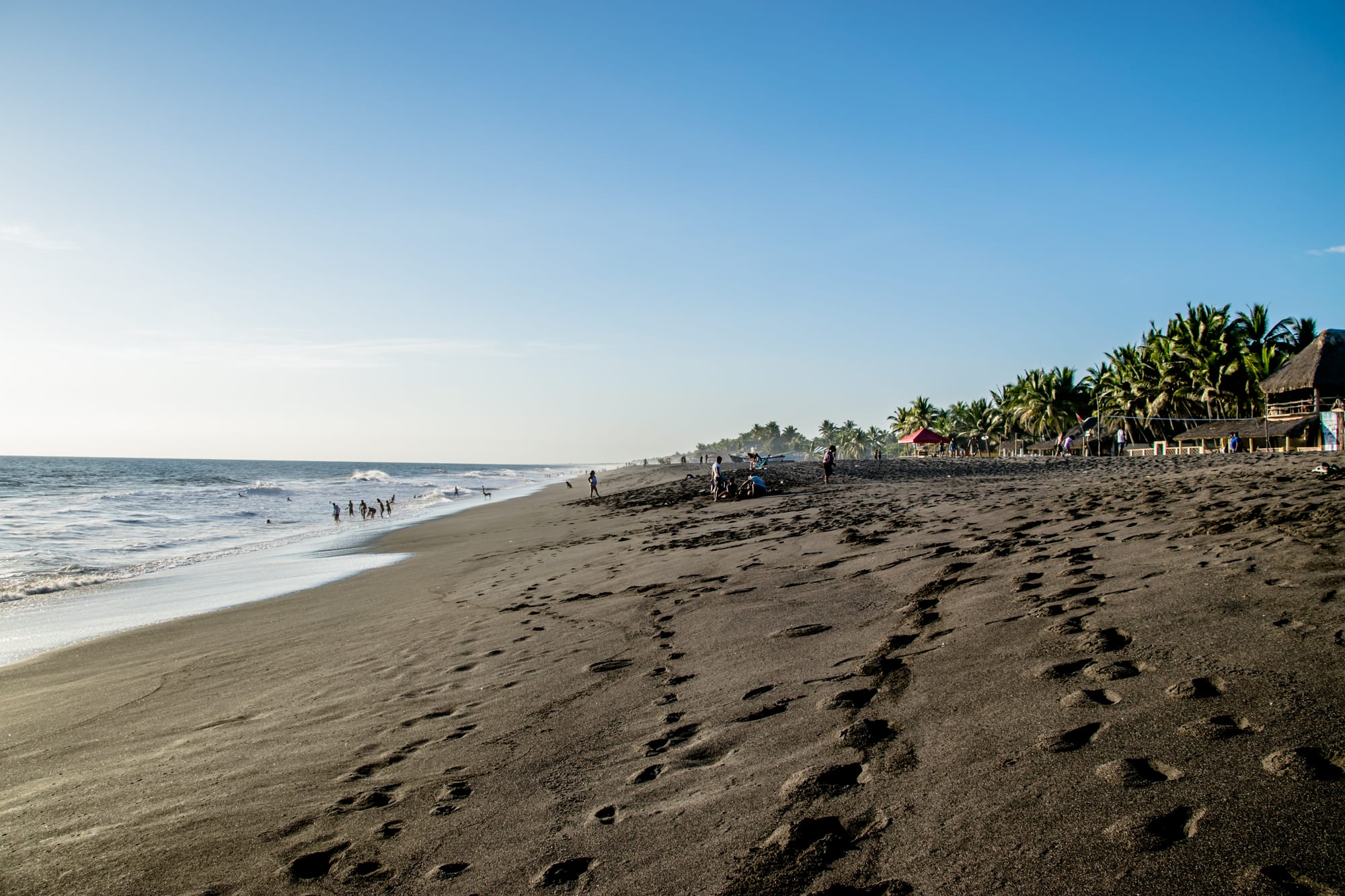
A wide beach of dark grey sand covered in footprints, with surf on the left and palm trees and thatched roofs on the right

The East, Guatemala

Monterrico

The dark volcanic sand of the beach at Monterrico on Guatemala's Pacific coast. (DrStockPhoto.com / Wikimedia Commons · CC BY-SA 4.0)

A small Pacific village in the municipality of Taxisco, Santa Rosa, set on a long beach of dark volcanic sand with the mangrove canals of the Monterrico nature reserve behind it. It is a weekend beach resort for people from Guatemala City, and sea turtle hatcheries and a relaxed pace draw a growing number of foreign visitors.

Neighbourhoods

  • The beachfront
    • Beaches
    • Sunsets
    • Places to stay

    The strip of hotels and beach bars along the sand, many with their own restaurants and terraces facing the sunset. It is busiest at weekends, when visitors from the capital fill the rooms.

    Open in Maps
  • Calle Principal
    • Local life
    • Budget food

    The village's main street, running from the beach to the dock on the mangrove canal, a walk of about ten minutes. Small shops, cheap places to eat, shuttle sellers and street vendors line it.

    Open in Maps
  • The canal side
    • Nature
    • Boat trips

    The landward edge of the village, where the dock looks onto the canals and lagoons of the mangrove reserve and boats leave for tours of the swamp and for La Avellana.

    Open in Maps

Things to do

Beach

  • Monterrico beachbeach

    A beach of dark volcanic sand, 15–25 metres wide and stretching for kilometres, with strong surf, a steep drop-off and powerful undertow; the sand gets very hot by mid-morning.

    Open in Maps

Mangroves and turtles

  • Monterrico nature reservepark

    Created in 1956 with the neighbouring Hawaii park, together the best-preserved mangrove reserve on Guatemala's Pacific coast, explored by boat tours along its canals.

    Open in Maps
  • Laguna de la Palmillaviewpoint

    A lagoon near the village, among the mangroves, where pelicans and other migratory birds can be watched.

    Open in Maps
  • Turtle hatcheriesattraction

    Several hatcheries along the beach collect sea turtle eggs and release the young turtles together once they hatch; local hotels can say when releases take place.

    Open in Maps

Short trips from the village

  • Iztapaattraction

    A port town and municipality in Escuintla, at the start of one of the routes to Monterrico, across the Chiquimulilla canal.

    Open in Maps
  • Taxiscoattraction

    The municipal town inland on the Pacific highway, a Xinca settlement before the conquest, known for its cheese and other dairy products.

    Open in Maps

Seasonal events

  • Turtle hatchling releasesmainly the second half of the year

    Young turtles hatched in the beach hatcheries are released into the sea in groups, mostly in the second half of the year.

Eat and drink

Long-standing places and food districts in Monterrico. Hours, ratings and directions come from your maps app, always current.

Monterrico classics

  • Beachfront hotel restaurantsneighborhood

    Many of the hotels on the beach have restaurants, mostly serving seafood, with views of the sunset over the Pacific.

    Open in Maps
  • Calle Principal food stallsneighborhood

    The cheaper end of eating in the village, with simple comedores, small shops and street vendors along the main street towards the canal dock.

    Open in Maps
  • Fresh coconutsmarket

    Coconuts pile up beneath the trees all over the village, and local sellers open them fresh to drink the cool coconut water.

    Open in Maps

Experience Monterrico

History

Before the Spanish conquest the Pacific lowlands of what is now Santa Rosa were Xinca country. Pedro de Alvarado's forces, which included Spanish soldiers and Indigenous allies from Mexico and the highlands, conquered the Xinca of Taxisco after fierce resistance in May 1524. After independence the area belonged to the department of Guatemala and Escuintla until the department of Santa Rosa was created in 1852 and Taxisco became part of it. Monterrico itself is a village within the municipality of Taxisco.

The village lies on the volcanic sand of the Pacific shore, with the Chiquimulilla canal and its mangroves behind it. In 1956 the Monterrico nature reserve and the neighbouring Hawaii park were created, covering about 1,000 hectares together; the reserve stretches from the María Linda river to the Los Esclavos river across almost all of Santa Rosa's southern coast, and contains Monterrico itself and 16 smaller villages.

Visitors long arrived by boat, across the canal from La Avellana or from Iztapa to Puerto Viejo; roads now reach the village over land. It grew as the closest beach to Guatemala City and Antigua, with hotels, beach houses and a grass airstrip, and its turtle conservation work is drawing a growing number of foreign visitors.

Culture & Customs

Monterrico belongs to the Ladino world of eastern and southern Guatemala, Spanish-speaking and mixed in heritage, far from the Maya highlands in custom and dress. Its culture is that of a beach village that fills up at weekends: Guatemalan families on Sundays, beach bars with music at night, horse rides on the sand and the sunset watched from the hotel terraces.

The sea turtles are at the centre of local identity, and of a long-running tension. The beach is a breeding ground for several species, and turtle eggs have long been collected and eaten. Some egg collectors give a share of what they find to the tortugarios, the hatcheries, which incubate the eggs and release the young turtles into the sea together, but most eggs laid on the beach are still harvested. The conservation work, and the releases of hatchlings that visitors can watch, have done much to make the village known abroad.

The mangroves behind the village are the other half of its life. Pelicans and other migratory birds nest among them, and the reserve runs breeding programmes for the green iguana and the crocodile. Boat tours of about two hours through the canals start from the dock at the end of the main street.

Daily Life

Monterrico is small, with one main street running from the beach to the canal dock. Daily life swings between quiet weekdays and busy weekends, when visitors from Guatemala City arrive by car, minibus and, for the wealthiest, light aircraft and helicopters to the beach houses along the shore. Hotels set different prices for weekdays and weekends, and rooms can be hard to find at weekends.

Tourism is the main source of work: hotels, restaurants, boat tours, horses for hire, shuttles and a Spanish school. Coconuts grow in such numbers that they lie in piles beneath the trees, and the area also grows and dries large loofahs, which hang drying from almost any surface in early November. In the surrounding municipality of Taxisco, dairy farming and cheese-making are important.

The heat shapes the day. People are out early, before the black sand becomes too hot to walk on, and the evening, after the sunset over the Pacific, brings the village back to life. Litter along the main street has been a problem, and local businesses have run cleanliness campaigns with new public bins.

Food

Seafood dominates the menus of Monterrico, and vegetarians find little choice. The beachfront hotels have restaurants serving fish and shellfish with the sunset as a backdrop, while the cheaper places to eat are along Calle Principal, where simple comedores and street vendors sell fried chicken with chips and chicken sandwiches. Like the rest of the Santa Rosa coast, the village is known for seafood soups and fried fish served in beach comedores.

Coconuts are everywhere. Sellers gather them from the piles under the trees and keep them in coolers, opening them so that the coconut water can be drunk straight from the shell before the flesh is eaten; some visitors add other drinks to the coconut.

Inland, the town of Taxisco is known for its cheese and other dairy products, part of the cattle-country food of eastern Guatemala built on fresh cheese, cream and thick tortillas. Cold beer is the usual drink in the heat, and the beach bars serve tropical cocktails at sunset.

Planning tools

Budget

Monterrico is inexpensive on weekdays, when beach hotels lower their prices. Weekends cost more and rooms are harder to find as visitors from Guatemala City arrive. Boat tours of the mangroves and shuttles to Antigua are the main extras.

Daily Budget Midrange
USD 50–100 (better beach hotel with a pool, restaurant meals, a mangrove boat tour, a shuttle)
Daily Budget Shoestring
USD 25–40 (basic beach hotel or dorm, comedor and street food, public buses)

Come midweek for lower prices and quieter beaches, and bring enough cash for the whole stay.

Best Time to Visit

The dry season, from November to April, brings the most settled weather, with the heat building towards March and April. Turtle hatchlings are released mainly in the second half of the year. Sundays are the busiest days on the beach.

Suggested Number of Days

Many Guatemalans come for a weekend, and one or two nights are enough for most visitors. Staying longer suits those who want to slow down or wait for a hatchling release.

First Visit
1–2 days
With Surroundings
2–3 days

Transportation

The village is small and walked end to end in minutes. Boats run through the mangrove canals, horses can be hired on the beach, and minibuses connect with the surrounding area. Roads now reach the village over land, though the old routes by boat across the canal from La Avellana remain.

Watch for ATVs driven along the beach, and take insect repellent for the evenings.

Airport & Station Connections

Monterrico is the closest Pacific beach to Guatemala City and Antigua. Daily tourist shuttles run from Antigua; by public transport the routes run via Iztapa and the bridge to Puerto Viejo, or via Taxisco to La Avellana and a boat across the canal. The nearest international airport is La Aurora in Guatemala City.

Walkability

The village is compact: the beach, the hotels, Calle Principal and the canal dock are all within a short walk. Sandals are needed on the black sand, which becomes too hot to walk on barefoot by mid-morning.

Safety

Guatemala has significant crime, including gang activity and armed robbery, concentrated in parts of Guatemala City and on some highways and rural routes. At Monterrico the main danger is the sea: the beach drops off steeply, the surf breaks hard and the undertow is strong. Lifeguards are on duty at weekends.

Swim only where locals do, and only if a strong swimmer; drink plenty of water in the heat; keep to main roads in daylight. Check current official travel advice before travelling.

Climate

The Santa Rosa coast is hot and humid, and Guatemala's lowlands as a whole run at about 28–35°C. Rains fall mainly from May to October.

Summer
wet season, May to October: hot and humid, with the country's lowland temperatures of about 28–35°C and afternoon storms
Winter
dry season, November to April: hot and sunny, with Guatemala's lowland range of about 28–35°C

Local Customs

Monterrico is a relaxed, Spanish-speaking Ladino village where daily life turns on weekend tourism, and the atmosphere is laid-back. Turtle eggs are traditionally collected and eaten here, and many visitors choose to support the hatcheries instead.

Children who guide new arrivals to hotels will expect a small tip; at hatchling releases follow the hatchery staff's instructions.

Common Payment Methods

The currency is the Guatemalan quetzal. Bring the cash needed for the whole stay: the village has a bank, but its cash machine can run out or be out of service for days, and only a few hotels and restaurants accept cards, often with a surcharge.