💰 Budget
Food and simple hotels are cheap, and the real costs are transport and access to the forest: a hired four-wheel-drive with driver, fuel, and the guides and permits needed for Mount Nimba and Bossou. Getting to Nzérékoré at all is the largest single expense.
- Daily Budget Midrange
- USD 80–170 (the better local hotels, a hired car with driver, guides)
- Daily Budget Shoestring
- USD 25–40 (basic hotel, local food, bush taxis)
Bring all the cash needed in Guinean francs, arrange reserve permits and guides in town before setting out, and allow for long, slow road days.
📅 Best Time to Visit
November to February, the drier months, when the roads in the forest region are passable and the humidity eases a little. The rains here last longer than in the rest of Guinea, roughly May to October, and turn many tracks to mud, although the forest is at its greenest then.
⏳ Suggested Number of Days
The town itself needs a day or two. Four or five make sense for anyone going into the Nimba range and the forest villages, where journeys are slow and permits and guides take time to organise. Add days in the rainy season.
- First Visit
- 1–2 days
- With Surroundings
- 4–5 days
🚆 Transportation
Motorbike taxis are the common way to move around town, along with shared taxis on the main roads. Bush taxis and minibuses leave from the yards near the market for Lola, Macenta, Kissidougou, Conakry and the border crossings into Liberia and Côte d'Ivoire. A hired four-wheel-drive with driver is needed for the tracks into the forest and the Nimba foothills.
Expect long delays at checkpoints, agree vehicle hire and fares in advance, and do not travel the forest roads at night.
🛬 Airport & Station Connections
Nzérékoré lies about 570 kilometres south-east of Conakry, reached through Mamou, Faranah and Kissidougou or Macenta — a journey of two days or more by road, and longer in the rains. The town has an airport in the countryside 12 kilometres to the north-east. Border crossings into Liberia and Côte d'Ivoire are nearby and are used by regional traders.
🚶 Walkability
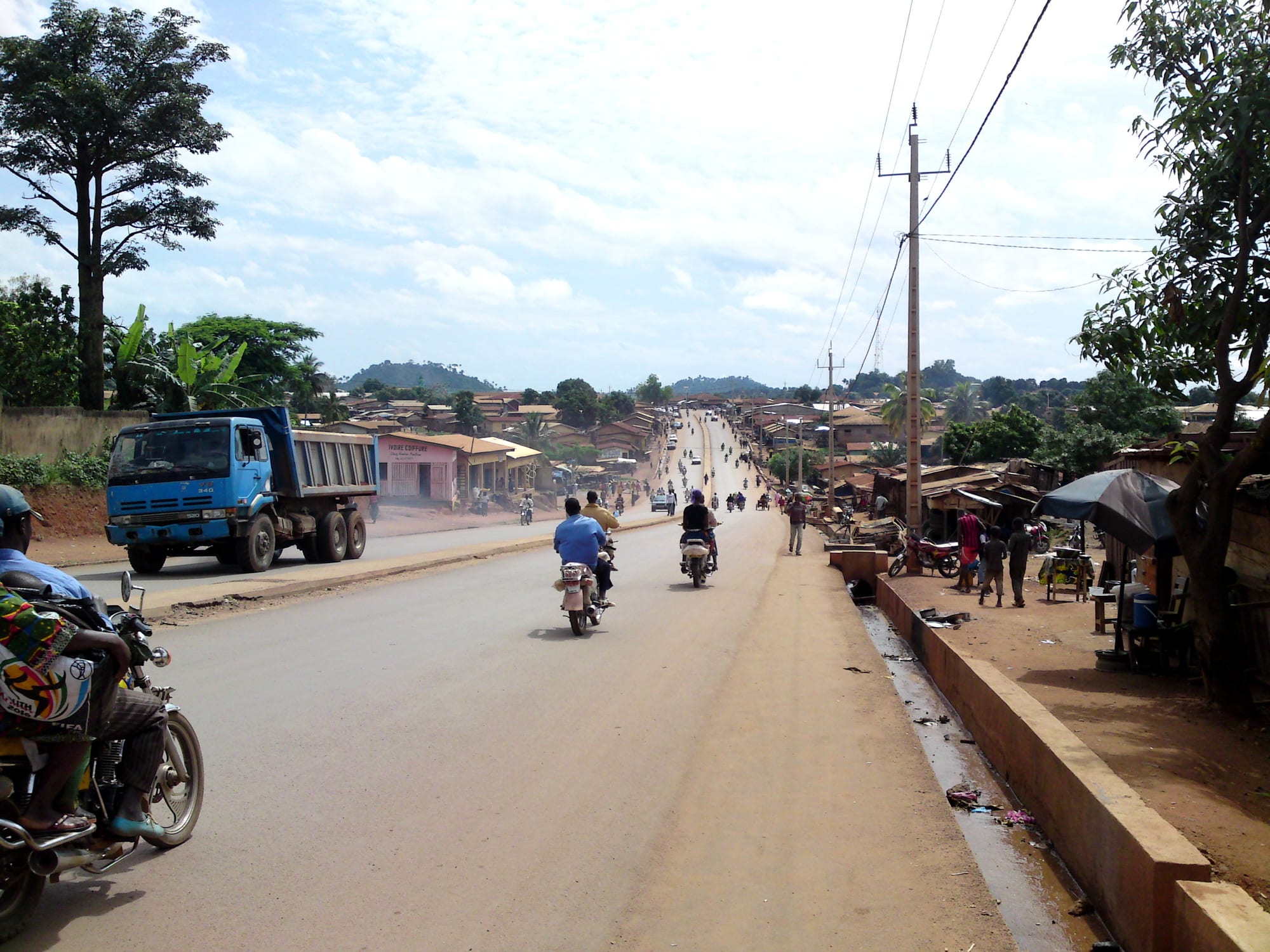
The centre is flat and can be crossed on foot in twenty minutes or so, and the market and the administrative quarter are within easy reach of each other. Beyond that the town spreads out along its roads, traffic is dominated by motorbikes, pavements are patchy and streets are largely unlit, so most people ride rather than walk any distance.
🛡️ Safety
The forest region has seen episodes of intercommunal violence, sometimes around elections, and political protests can turn violent. Roads are the biggest everyday risk, along with motorbike taxis and the shortage of medical care. Malaria is present year-round, and the region has a history of Ebola and Lassa fever outbreaks. The border areas with Liberia and Côte d'Ivoire are sensitive.
Avoid political demonstrations, don't photograph government, military, or the airport, use arranged transport at night in Conakry, and check current advice before travelling near the borders. Follow health advice on outbreaks, take malaria precautions, and travel with a reliable driver in daylight. Check current official travel advice before travelling.
🌦️ Climate
Wetter and more humid than the rest of Guinea, with a long rainy season and a shorter dry one. Temperatures vary less through the year than in the savanna, cloud and mist are common, and the hills above the town are cooler than the streets.
- Summer
- rainy season, around 21–30°C, humid, with heavy and frequent rain from about May to October
- Winter
- dry season, around 18–33°C, with harmattan haze in December and January and building heat before the rains
🤝 Local Customs
This is the most religiously mixed part of Guinea, with Muslim, Christian and traditional communities in the same streets, and respect between them is taken seriously. Initiation societies, masks and sacred forests remain part of village life and are not public entertainment. Greetings are unhurried, elders are greeted first, and the right hand is used for greeting, giving and eating.
Never enter a sacred forest or approach a masked performance without an invitation and a local guide, ask before photographing people, ceremonies or officials, and dress modestly in town.
💳 Common Payment Methods
The currency is the Guinean franc (GNF), and prices run into the tens of thousands. Cash is the only practical means of payment. Cash machines exist in the town but are unreliable and can be empty, cards are not generally accepted, and money changers at the market handle euros and the CFA francs of neighbouring countries.