History
Archaeological finds near Kecskemét go back about 5,000 years. By the early 13th century seven villages in the area were destroyed in the Mongol invasion; some revived when the Cumans were settled here. Lying on an important trade route, Kecskemét grew as a customs post and market, and in 1368 a charter of Louis I called it a town. Under Ottoman rule it was protected by palisades and by paying its taxes directly to the pasha in Buda, so people from the surrounding villages took refuge here and the town absorbed their lands. By the early 18th century its citizens grazed nearly 30,000 cattle on common pasture.
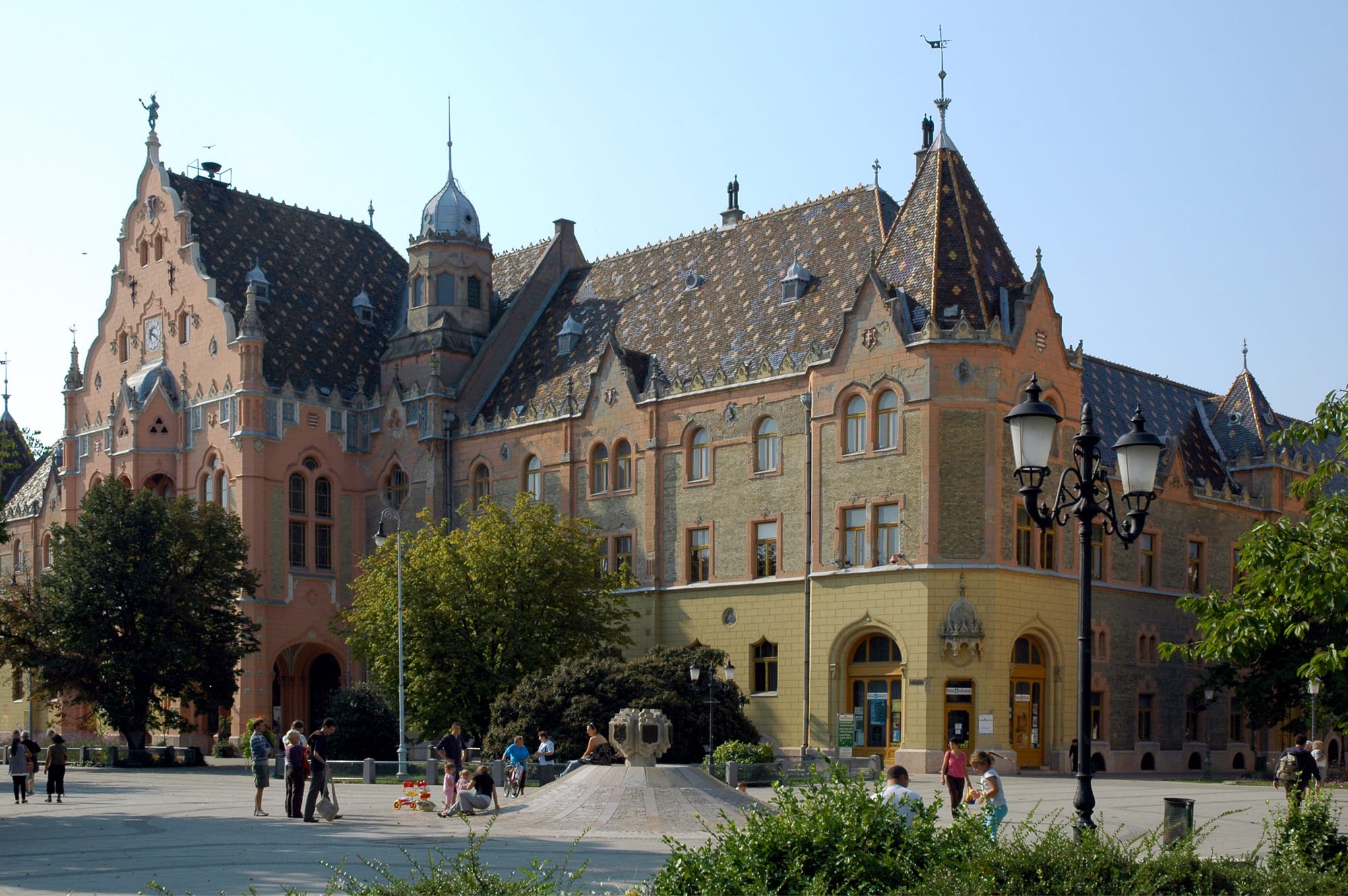
Overgrazing by cattle stripped the pastures and set the sand moving, and the town replanted the land with trees, fruit and vines. When phylloxera destroyed the hill vineyards in the late 19th century, the vines of the sandy plain survived, and in the 1870s landowners planted large vineyards around the town. As farmers grew richer and trade quickened, the town built its Art Nouveau centre of around 1900 — the town hall, the Cifrapalota, the New College and the Luther Palace.
The Depression and the Second World War ended the boom, and in May and June 1944 most of the city's Jews were deported to Auschwitz-Birkenau, where most were killed. Under communism Kecskemét lost much of its territory to new villages but became the seat of Bács-Kiskun, the country's largest county, in 1950. The architect József Kerényi adapted historic buildings for new uses, among them the Franciscan monastery that became the Kodály Institute. In 2012 Mercedes-Benz opened its car plant, which has transformed the city's economy.