💰 Budget
Haifa is noticeably cheaper than Tel Aviv and Jerusalem. Hotels are modest in price outside the holiday weeks, hummus and grill restaurants in Wadi Nisnas and Hadar cost little, and the beaches, the Bahá'í terrace views and the promenades are free. Rates rise at Jewish holidays and in high summer.
- Daily Budget Midrange
- USD 160–300 (mid-range hotel, restaurant dinners, museum entries, taxis or a hire car)
- Daily Budget Shoestring
- USD 70–120 (hostel or simple guesthouse, hummus and market meals, buses and the Carmelit)
Entry to the Bahá'í gardens is free, and a day ticket covers the buses, the Carmelit and the metronit lines together.
📅 Best Time to Visit
March to May and October to November, when the Carmel is green or mild and the humidity has dropped. Summer is hot and sticky at sea level, though the ridge is cooler and the beaches busy; winter is wet but rarely cold. The security situation overrides the season, and Israel has been at war since February 2026.
⏳ Suggested Number of Days
One or two days covers the gardens, the German Colony, a museum or two and a beach. Three to five make sense using the city as a base for the coast and the Galilee. The steep terrain slows movement, so allow more time than distances suggest.
- First Visit
- 1–2 days
- With Surroundings
- 3–5 days
🚆 Transportation
Public transport is unusually good for Israel. The Carmelit funicular climbs the mountain in a few minutes, the metronit bus rapid transit runs along the bay, ordinary buses cover the slopes, and six railway stations link the city to Acre, Nahariya and Tel Aviv. A cable car runs from Bat Galim up to Stella Maris, and a commuter cable car opened in 2022 links the bay to the Technion and the University of Haifa. Driving means steep, winding roads and difficult parking on the ridge. Because a large Arab population lives here, some buses run on Shabbat, unlike most Israeli cities.
Use the funicular or a bus to gain height rather than walking up the mountain, and keep to the shaded routes in summer.
🛬 Airport & Station Connections
Trains from Tel Aviv take about an hour to the city's bay-side stations, continuing north to Acre and Nahariya, and buses serve the Galilee and the Golan. Ben Gurion Airport is about 100 kilometres south, roughly an hour and a half by road or train with a change; Haifa's own small airport handles domestic and limited regional flights. Cruise ships and ferries use the passenger terminal at the port. Aviation across the region has been disrupted since the war with Iran began in February 2026.
🚶 Walkability
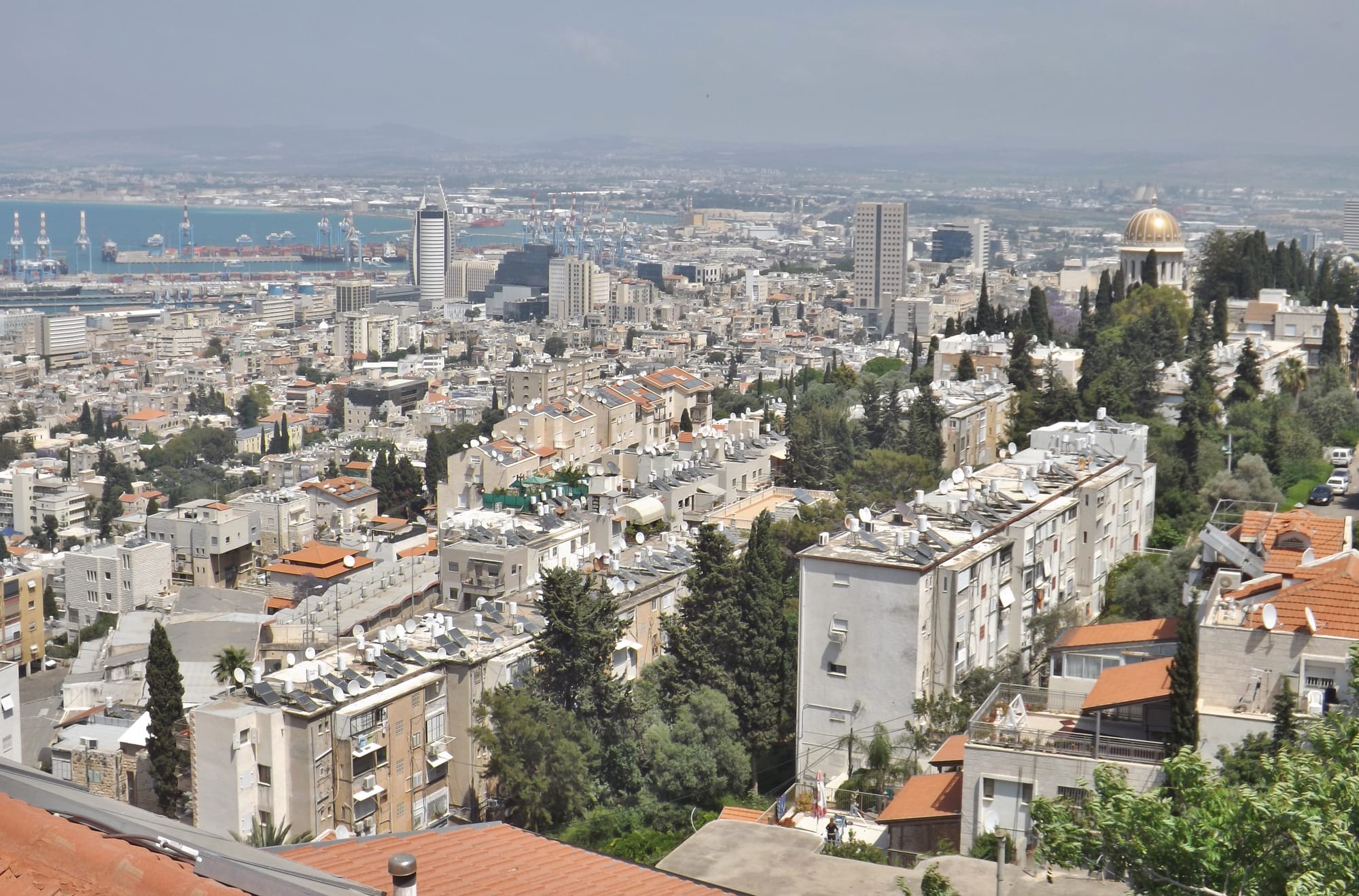
The city is built on a steep slope, and walking between its levels is hard work: the German Colony, Hadar and Carmel Centre sit one above the other with long flights of steps and winding roads between them. Each level is pleasant on foot in itself, and the Louis Promenade and the seafront are easy walks. Most people use the funicular, buses or taxis to change height.
🛡️ Safety
Everyday crime is low and the city has a reputation for calm coexistence between its Jewish and Arab residents. The industrial zone around the bay, with its refinery and chemical plants, is a long-standing environmental and safety concern locally. Rocket sirens have sounded in Haifa during conflicts. Since 28 February 2026 Israel has been at war with Iran, Iranian missiles have struck the city, among them a refinery hit in March 2026, and Hezbollah resumed firing into northern Israel on 2 March 2026. This page is written to explain the city, not to suggest travelling there.
Learn where the nearest shelter or safe room is, follow Home Front Command instructions, and avoid the area near the Lebanese border, where access can close at short notice. Check current official travel advice before travelling.
🌦️ Climate
Mediterranean, with hot humid summers and mild wet winters, modified by height: Carmel Centre on the ridge is a few degrees cooler than the port and catches the sea breeze, while the bay is muggy in August. Rain falls between November and March, sometimes heavily.
- Summer
- hot and humid, around 30°C by the sea and a little cooler on the ridge
- Winter
- mild and rainy, 10–18°C, with storms off the sea and occasional hail
🤝 Local Customs
Haifa is mixed and comparatively relaxed: Arabic and Hebrew are both widely heard, and the city keeps a reputation for practical coexistence. Modest dress is required in the Bahá'í gardens and at religious sites, where quiet is also expected, and the terraces have their own visiting rules. Some shops and buses run on Shabbat, but much of the Jewish city still closes from Friday afternoon.
Tipping of about 10 per cent is usual in restaurants. Cover shoulders and knees at the shrine, monastery and mosques, and ask before photographing people.
💳 Common Payment Methods
The currency is the Israeli new shekel. Cards and contactless payment are accepted almost everywhere, including public transport, and ATMs are common. A little cash is useful in the Talpiot and Wadi Nisnas markets and at small food counters.