💰 Budget
Breuil-Cervinia is one of the expensive resorts of the Aosta Valley in the ski season, when lift passes and slope-side rooms dominate the bill; skiing across to Zermatt costs extra. Summer is cheaper, though glacier skiing and the high cable cars still add up. Staying lower in the valley can cut accommodation costs.
- Daily Budget Midrange
- USD 190–380 (mountain hotel, restaurant dinners, cable cars or a ski pass)
- Daily Budget Shoestring
- USD 90–140 (simple guesthouse or apartment, picnic lunches, buses, hiking)
Early in the season the link to Zermatt is often closed, and bad weather can shut the top lifts, so allow spare days on a ski trip.
📅 Best Time to Visit
The ski season is long, running from autumn to spring thanks to the resort's height, and the Plateau Rosa glacier is skied in summer too. Snow cover is usually deepest in March. July and August bring walking, mountain biking and golf, with cool days; the link to Zermatt and the top lifts depend on the weather.
⏳ Suggested Number of Days
Two or three days are enough to ride the high cable cars and see the resort and its lakes, with a spare day in case cloud closes the top. Skiers usually stay a week, and the cross-border ski area and the lower valley reward a longer stay.
- First Visit
- 2–3 days
- With Surroundings
- 5–7 days
🚆 Transportation
The resort is compact and most of it is walkable, with lifts leaving from the centre. Only one road reaches it, the regional road up the Valtournenche from Châtillon. Lifts connect the slopes with Valtournenche over the Cime Bianche pass and with Zermatt over the Plateau Rosa glacier; there is no road over the border.
Carry snow chains or winter tyres, which are compulsory on many mountain roads in winter.
🛬 Airport & Station Connections
The resort sits at the end of the Valtournenche road, 27 kilometres up the valley from Châtillon in the main Aosta Valley and about 50 kilometres from Aosta. The Châtillon/Saint-Vincent exit of the A5 motorway between Turin and Aosta is the turn-off for the valley road.
🚶 Walkability
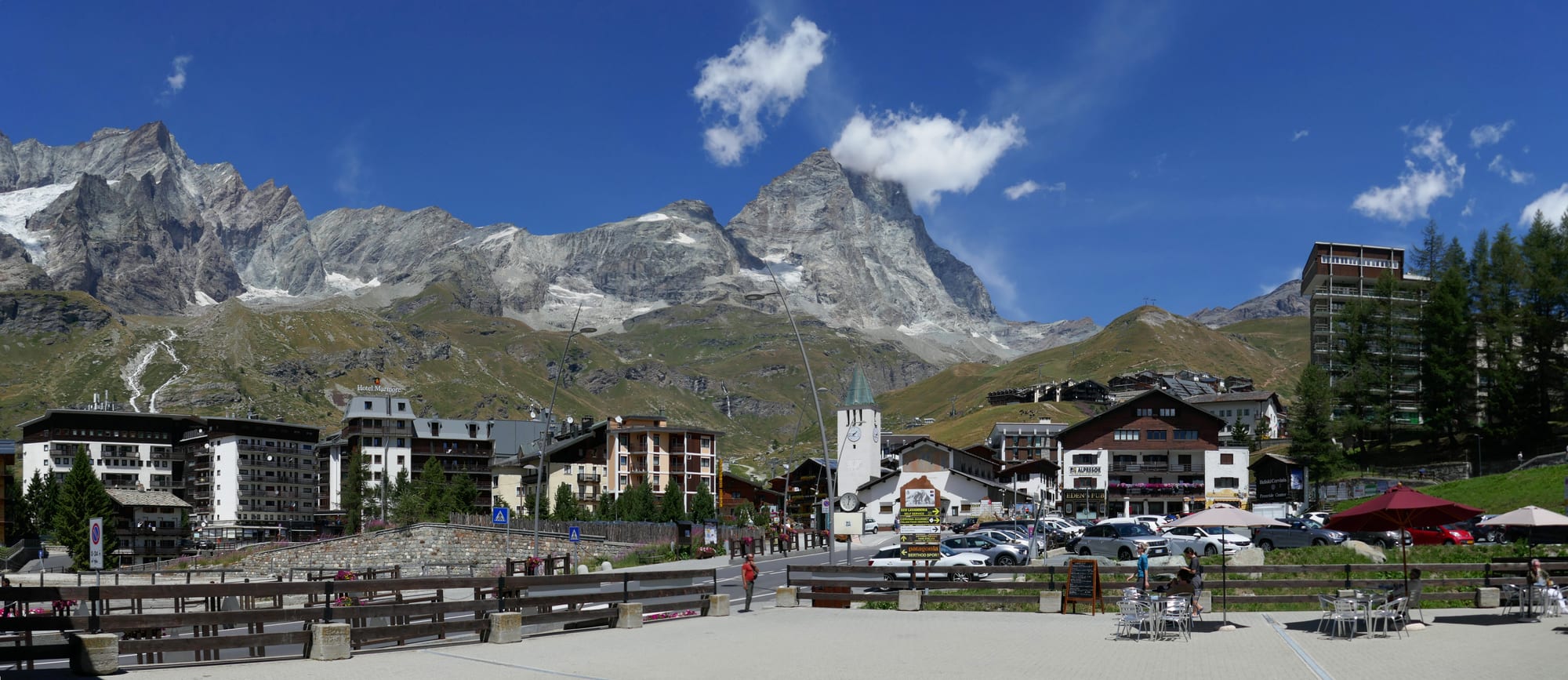
The centre is small enough to cross on foot, and paths lead out to the Blue Lake and the meadows of the basin. At over 2,000 metres the walks are short but breathless for new arrivals, and pavements are icy in winter. The upper district of Cielo Alto is a climb from the centre.
🛡️ Safety
Italy is generally safe, with low levels of violent crime against visitors. In Breuil-Cervinia the risks are mountain ones: altitude on the cable cars to over 3,000 metres, which can bring headaches or altitude sickness after a fast ascent, crevasses on the glaciers, sudden changes of weather and avalanches; a covered gallery and walls protect the road and parts of the resort from avalanches.
Ascend gradually if prone to altitude sickness, hire a mountain guide for glacier and climbing routes, and check avalanche bulletins before leaving the marked pistes. Check current official travel advice before travelling.
🌦️ Climate
An Alpine climate. Winters are long and cold, with heavy snowfall that historically begins in the second week of October and ends in the second week of April; summers are short and cool.
- Summer
- short and cool, with daily averages of only about 8–10°C
- Winter
- very cold, with daily averages around −5 to −10°C and deep snow on the slopes
🤝 Local Customs
The Aosta Valley is bilingual in Italian and French, and the resort's double name reflects its history: Breuil is the old French name and Cervinia the Italian one imposed in 1939, and both are now official. Tips are not customary in Italy but are given for special service; restaurants usually add a cover charge, the coperto, and tips cannot be added to a card bill.
Respect closed areas on the slopes and the working pastures in summer, and keep quiet in the chapels and churches during services.
💳 Common Payment Methods
The currency is the euro. Cards work widely in shops, restaurants and at the lift offices; keep some cash for small purchases. A per-night tourist tax may be collected by accommodation.