💰 Budget
Desert tourism, once organised from Sabha with 4x4 convoys and local guides, stopped after 2011, and there is no tourist infrastructure left. The few outsiders who come are on oil, aid or research work with heavy security, at very high cost, and nothing can be arranged independently. Cash in dinars and US dollars is the only reliable means of payment.
- Daily Budget Midrange
- USD 300–600+ (secured accommodation, vehicles, drivers and an escort; costs depend entirely on the security arrangement)
- Daily Budget Shoestring
- USD 100–200 (a basic local hotel, market food and shared transport — not achievable without a sponsor)
Costs are set by security and logistics rather than by any travellers' market, and fuel and cash shortages can make even routine spending difficult.
📅 Best Time to Visit
In principle November to March, the only months when the heat of the Fezzan is bearable and when desert trips ran before 2011. Nights are cold then and the days clear. From May to September the heat is extreme. In practice the security situation, not the season, rules out travel.
⏳ Suggested Number of Days
The city itself is small in what it offers a visitor and can be seen quickly. Journeys to the oasis valleys and the dunes are long and require convoys, which is what stretches a stay to several days. Permissions, escorts and road conditions set the length far more than anything else.
- First Visit
- 1–2 days
- With Surroundings
- 3–5 days
🚆 Transportation
Everything moves by road, and distances are long and empty. Sabha is the junction of the routes north to Tripoli, west along the Wadi al-Hayaa towards Ubari and Ghat, and south to Murzuq and Qatrun towards the Niger and Chad borders. Shared taxis and minibuses link the towns for residents; 4x4 vehicles are needed off the tarmac. There is no railway.
Checkpoints on the roads are run by different armed groups, and no journey in the region should be considered without professional security and an escort.
🛬 Airport & Station Connections
Sabha Airport, about 5 km south-east of the centre, has occasional domestic flights to the coast, and service is irregular. By road, Tripoli is some 640 km north in a straight line and a full day's drive across the desert through Shwayrif or Brak, and Ubari and the west are reached along the Wadi al-Hayaa. Most arrivals are by road convoy or on internal flights.
🚶 Walkability
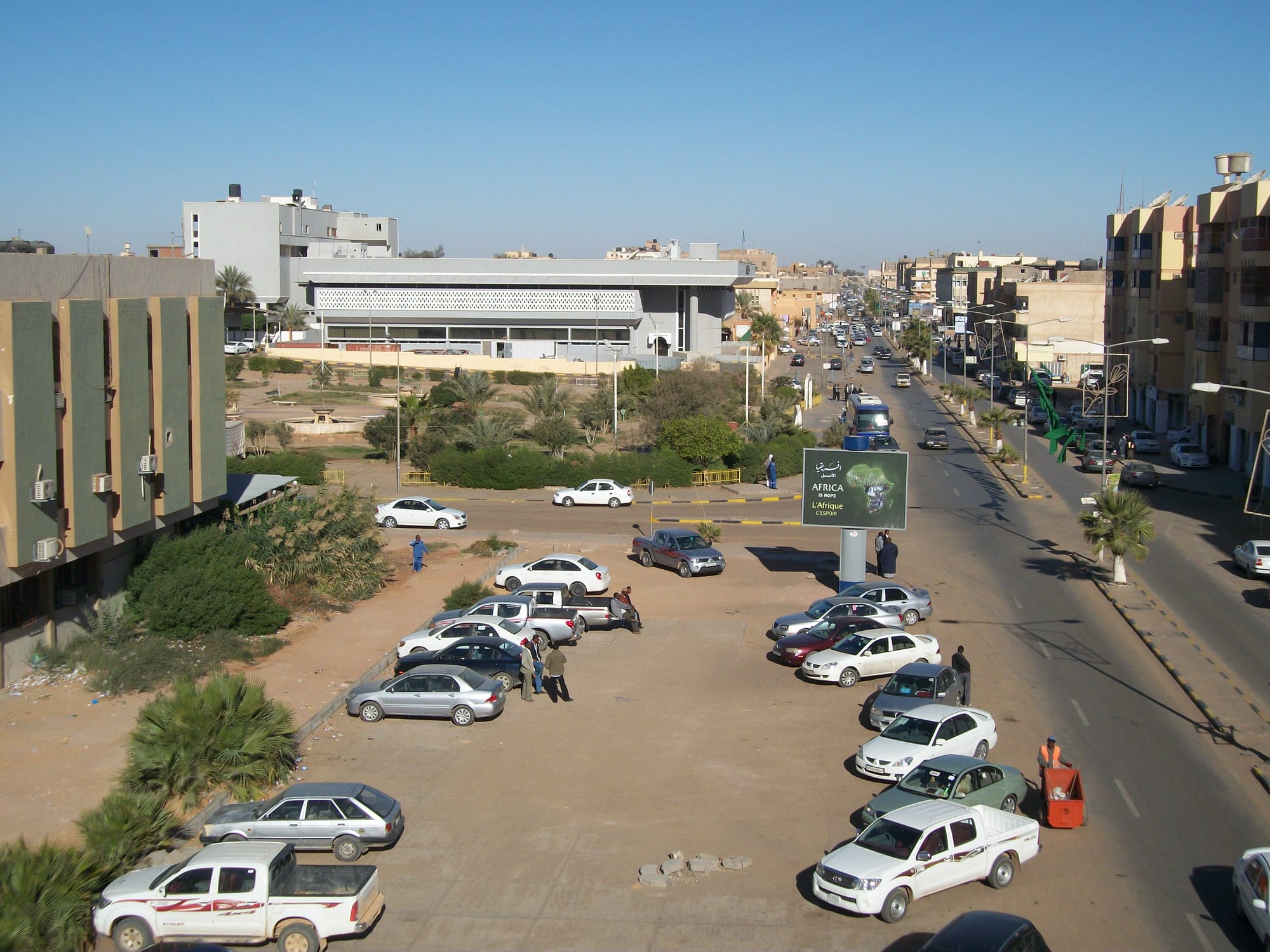
The centre is flat and its avenues are wide, so short distances are easy enough on foot, but the city is spread out, pavements are patchy and shade is scarce. Summer heat makes walking impractical for much of the day. Beyond the centre, walking is not how people move; the desert begins immediately at the edge of the built-up area.
🛡️ Safety
Most governments advise against all travel to Libya, and the Fezzan is among its most dangerous areas. The state is thinly present; armed groups linked to local communities, tribes and the rival national authorities compete for control, and Sabha itself has seen repeated clashes between them. Kidnapping of foreigners, banditry, and the smuggling of fuel, weapons and people are all serious risks, as are the heat and the empty desert.
Globeway covers Libya so its history and its recent tragedy can be understood — not to suggest a visit. Do not travel to the Fezzan. Check current official travel advice before travelling.
🌦️ Climate
Extreme desert. Sabha receives less than 10 mm of rain in an average year, the sky is clear for most of it, and the gap between day and night temperatures is large. Dust and sandstorms blow through in spring, when the hot ghibli wind comes off the desert.
- Summer
- extreme heat, commonly around 40°C and above, with very low humidity
- Winter
- mild days around 19°C in January and cold nights near 5°C
🤝 Local Customs
Society here is conservative and organised around tribe and community — Arab, Tuareg and Tebu — and hospitality is the desert's first rule: tea is poured in three rounds and dates are offered before any business. Dress is modest for men and women alike, greetings are long, and the working day shifts to the early morning and the evening in summer. Alcohol is illegal throughout Libya.
Ask before photographing anyone, and never photograph checkpoints, soldiers, military vehicles or official buildings.
💳 Common Payment Methods
The currency is the Libyan dinar, and payment is in cash. Cards are of no practical use, ATMs are unreliable and frequently empty, and banks in the south have long queues and limits on withdrawals. US dollars in cash are the usual backup, and the parallel exchange rate differs from the official one.