💰 Budget
Mahajanga is moderately priced by Malagasy standards: cheap street food and guesthouses, mid-priced seafront hotels, and higher costs only for a hired car with driver, park fees and guides. It has cash machines, which most of the surrounding countryside does not.
- Daily Budget Midrange
- USD 70–150 (seafront or beach hotel, restaurant meals, a car with driver for a day's excursion)
- Daily Budget Shoestring
- USD 25–45 (guesthouse, hotely meals, shared taxi-brousse and city taxis)
Share the cost of a vehicle for the Anjohibe or Ankarafantsika trip; the promenade, the baobab and the beaches cost nothing.
📅 Best Time to Visit
May to October, the dry season, when the heat is bearable, the roads and tracks inland are passable and the sea is calm. December to March brings heavy rain and a cyclone risk, and the tracks to the caves can be impassable.
⏳ Suggested Number of Days
Two days suit the city itself, its seafront and its markets. Four or five allow the beaches north of town, the red cliffs and a trip to the national park inland. Road conditions and the length of the drive from the capital are what usually change the number.
- First Visit
- 2 days
- With Surroundings
- 4–5 days
🚆 Transportation
The city is served by shared minibuses and taxis, pousse-pousse rickshaws and motorised tuk-tuks, which are the normal way to cover short distances. Taxis run out to the airport and the northern beaches, and a car with driver is the practical choice for the Cirque Rouge, Mangatsa or the caves. A ferry crosses the estuary to Katsepy.
Agree the fare before setting off in a taxi or rickshaw, and allow far more time than the distance suggests for any road journey inland.
🛬 Airport & Station Connections
Philibert Tsiranana Airport at Amborovy is about 6 kilometres from the centre, with flights to Antananarivo and other regional airports. A paved national road links the city with the capital, roughly 570 kilometres away and a long day's drive; shared taxi-brousse minibuses run it regularly. Coastal cargo boats also call, and a ferry crosses the bay to Katsepy.
🚶 Walkability
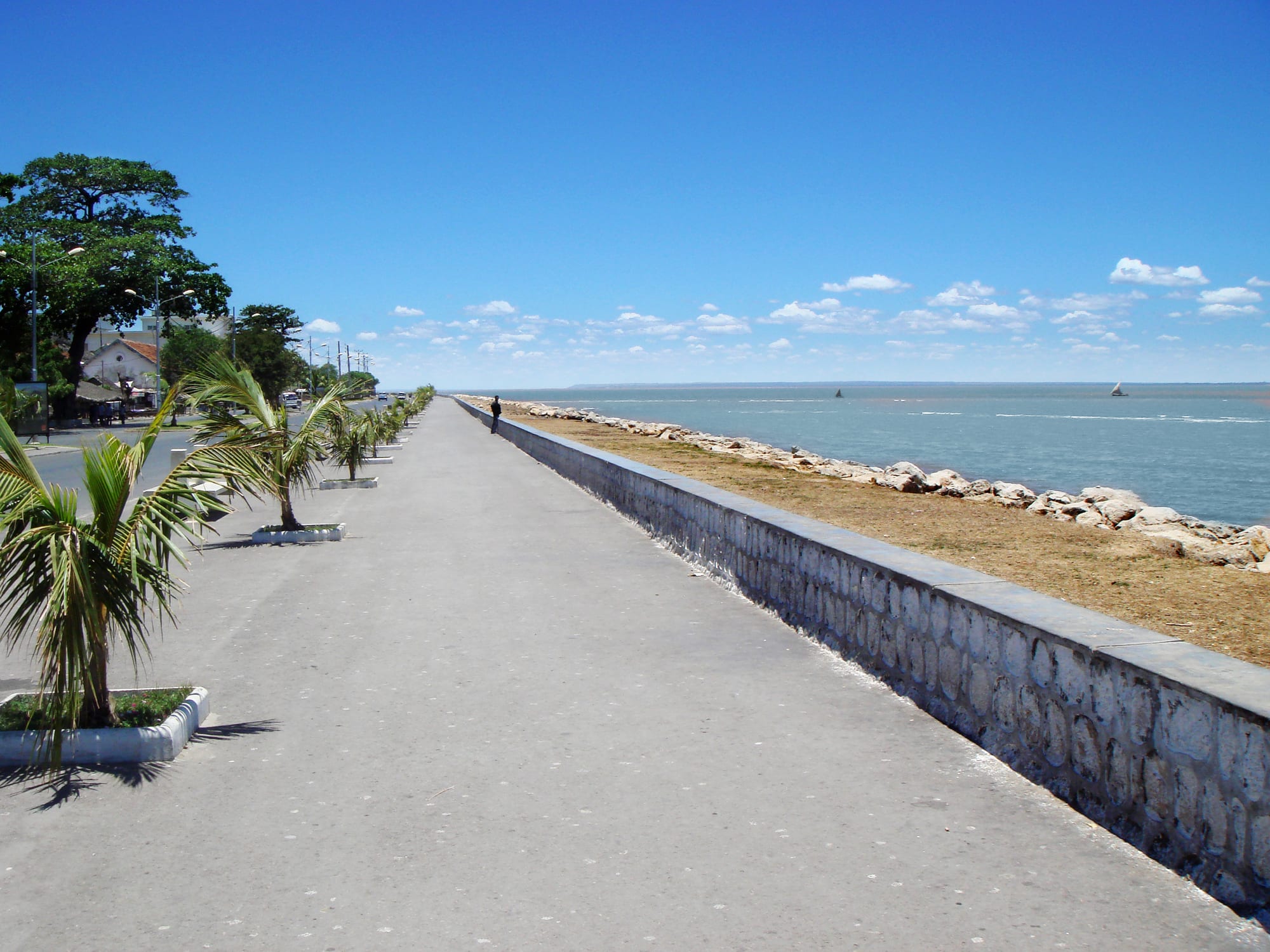
The centre is flat and compact, and the promenade, the baobab, the market quarter and the port are all within a walk of each other. The heat makes the middle of the day hard going, which is why the seafront fills at dusk. Pavements are uneven, there is little shade on the sea wall, and the beaches and the airport are too far to walk.
🛡️ Safety
Mahajanga is one of the calmer Malagasy cities for visitors, and the main risk is theft — from the beach, and on the streets and the seafront after dark. Malaria is present on this coast, crocodiles live in rivers and lakes in the west of the island, and roads outside the city are poor.
Madagascar has a long history of political unrest — mass protests in September 2025 were followed by a military takeover and a change of government, so demonstrations can disrupt movement in the capital. Leave valuables at the hotel, avoid quiet stretches of the seafront late at night, take rigorous malaria precautions, and avoid driving rural roads after dark. Check current official travel advice before travelling.
🌦️ Climate
Hot and tropical, with a dry season from about May to October and a wet, humid season from November to mid-April that carries a cyclone risk. Sea breezes off the Mozambique Channel make the coast more bearable than the interior.
- Summer
- December to February is the southern summer: hot, humid and wet, around 25–33°C, with heavy downpours
- Winter
- June to August is the southern winter: warm, dry and breezy, around 20–30°C, with cooler nights
🤝 Local Customs
Manners are coastal and unhurried, with long greetings and a slow pace through the hottest hours. The city has a substantial Muslim population alongside Christians and ancestral belief, so modest dress is appreciated in the market streets and expected near mosques. Many women wear the printed lamba wrap and the pale masonjoany face paste used against the sun. Sacred sites such as the lake at Mangatsa carry fady, local taboos, that visitors are expected to respect.
Ask before photographing people, tombs or sacred places, follow a guide's instructions at fady sites, and round up a bill or fare rather than tipping heavily.
💳 Common Payment Methods
The currency is the Malagasy ariary. Cash is used for almost everything; cards are accepted only at larger hotels and a few restaurants. The city has cash machines, but they can run out, so travellers usually draw money here before heading inland, where there are none.