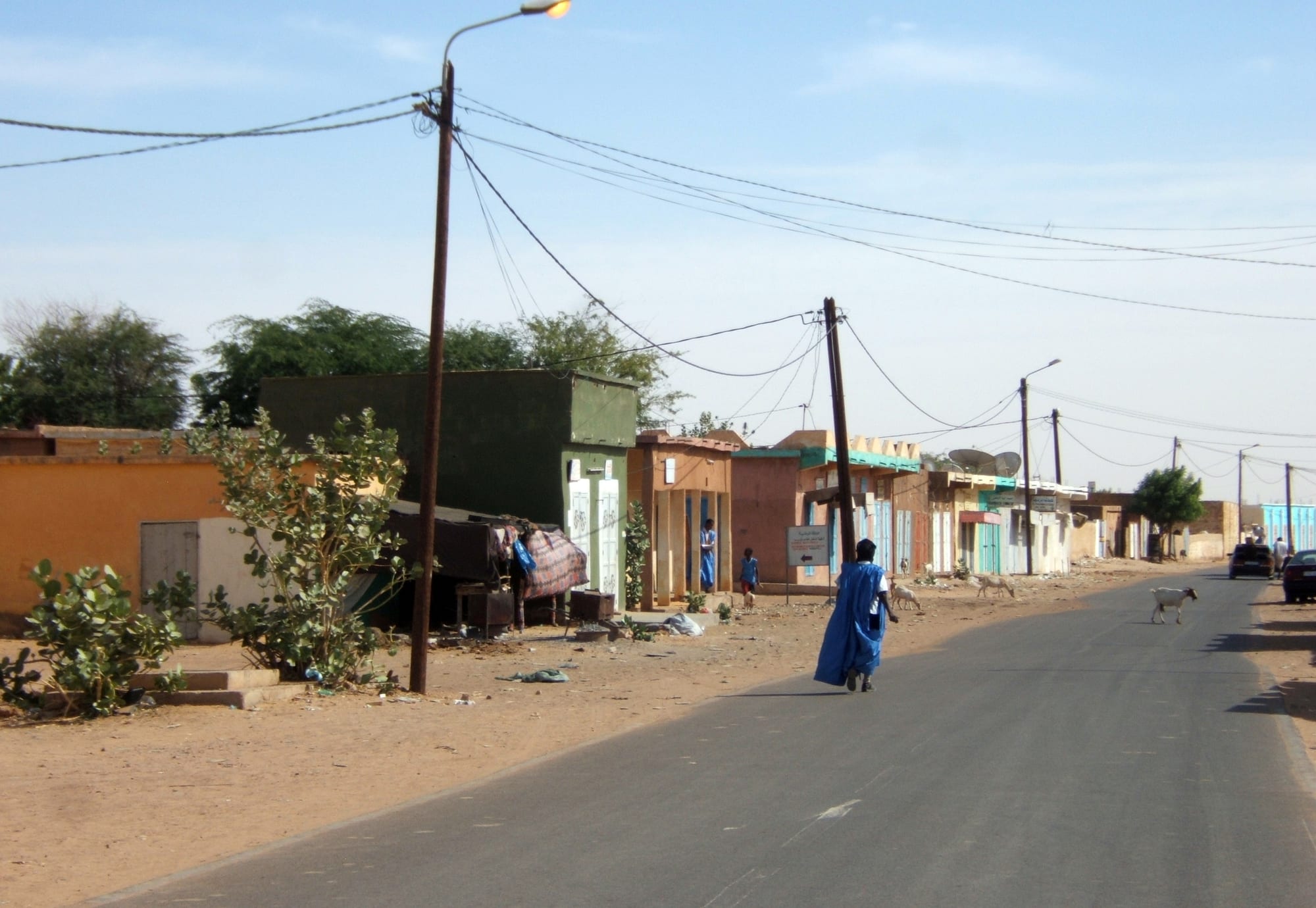
A wide tarmac road through a low sandy town, with single-storey shops, power lines, acacia trees and goats at the roadside

The Senegal River & the South, Mauritania

Kiffa

A street through Kiffa, the main town of the Assaba region. (Toksave / Wikimedia Commons · CC BY-SA 3.0)

The capital of the Assaba region and the main market town of Mauritania's southern plains, strung along the Route de l'Espoir, the highway that runs east from Nouakchott towards Néma. It is a trading and livestock centre rather than a sightseeing town, and the usual overnight stop on the long drive east.

Neighbourhoods

  • The highway strip
    • First-time visitors
    • Places to stay
    • Close to transport

    The stretch of the Route de l'Espoir running through town, lined with fuel stations, tyre repairers, tea stalls, small hotels and auberges. It is where buses and bush taxis stop and where most travellers stay.

    Open in Maps
  • The market quarter
    • Markets
    • Local life
    • Best for food

    The blocks around the central market, busiest in the morning, with cloth and hardware shops, butchers, grain and date sellers and small eating houses. The administrative offices of the Assaba region are close by.

    Open in Maps
  • The outer quarters
    • Quiet and residential
    • Local life

    Sandy residential streets spreading away from the road, a mix of concrete houses, mud brick and tents pitched in family compounds, with neighbourhood mosques and shops and livestock kept in the yards.

    Open in Maps

Things to do

Markets and trade

  • Kiffa marketmarket

    The town's large produce market, which draws traders and buyers from a wide stretch of the interior with grain, dates, vegetables, cloth, tea and hardware.

    Open in Maps
  • The livestock marketmarket

    Cattle, sheep, goats and camels brought in by herders from the surrounding plains and traded on for Nouakchott and for export south.

    Open in Maps
  • Kiffa beadsattraction

    The town gave its name to small beads of powdered glass, made by women to closely held recipes and worn in necklaces; the last traditionally trained makers died in the 1970s, and old beads are prized by collectors.

    Open in Maps

The town and the road

  • The Route de l'Espoirlandmark

    The paved highway from Nouakchott to Néma, which made modern Kiffa; lorries, buses and bush taxis stop here to refuel, eat and sleep.

    Open in Maps
  • The acacia plainsattraction

    Scrub, sand and thorn trees spread around the town, grazed by herds and briefly green after the summer rains.

    Open in Maps

Short trips

  • Kankossaattraction

    A small town and commune roughly 80 kilometres south, transferred from French Sudan to Mauritania in 1944 and now a market centre for the herders of the plains.

    Open in Maps
  • Guerouattraction

    The second town of the Assaba region, about 45 kilometres west along the highway, with some 22,000 people at the 2013 census and a market of its own.

    Open in Maps

Eat and drink

Long-standing places and food districts in Kiffa. Hours, ratings and directions come from your maps app, always current.

Markets and street food

  • Kiffa marketmarket

    Dates, millet, rice, dried fish, vegetables and fresh milk, with tea stalls, bread sellers and grilled meat around the edges.

    Open in Maps
  • The roadside grillsmarket

    Stands along the highway grilling mutton and goat for drivers and passengers, served with bread, raw onion and glasses of tea.

    Open in Maps

Where people eat

  • Town centre eating housesneighborhood

    Plain kitchens near the market and the hotels serving rice with meat or fish sauce, millet couscous, and thieboudienne when fish has come up from the river.

    Open in Maps

Experience Kiffa

History

Kiffa is a young town in an old landscape. The plains of Assaba lie between the Senegal river valley and the Hodh, country long used by Moorish herders moving camels, cattle, sheep and goats between wells and seasonal pasture, and crossed by the routes that linked the river to the caravan towns of the interior. Settlement was small and shifting; wells, markets and the rains decided where people gathered.

Under French rule Kiffa grew as an administrative and trading centre, and it became the seat of the Assaba region; French colonists ran experimental date-palm plantations in the red soil around the town from 1948, though labour and water shortages saw them fail within a few years. Its rise owed most to the road. The Route de l'Espoir, the 1,100-kilometre highway linking Nouakchott with Néma, runs straight through the town, and the traffic it carries — lorries, buses and bush taxis — turned a local market into the principal stop between the capital and the east.

The great droughts of the 1970s and 1980s changed it again. Herders who lost their animals settled on the edge of the town in tents and compounds, and Kiffa absorbed thousands of them, as Nouakchott did on a far larger scale. The town has grown outwards since, with schools, a hospital, administrative offices and an airfield. It is known beyond Mauritania mainly for one thing: the small glass beads made here by women, which carry its name in collections around the world.

Culture & Customs

Assaba is Moorish country, and Kiffa's culture is Hassaniya-speaking: long greetings, hospitality offered before any business, poetry recited and sung, and the three rounds of green tea with mint brewed over coals and poured from a height. Griot families play the tidinit lute and the ardin harp at weddings, and the town's social calendar turns on marriages, naming ceremonies and the two Eids.

The craft the town is known for is the Kiffa bead. Women made tiny beads from powdered glass, ground from broken bottles and older beads, fused over open fires in small tins and decorated with fine patterns, the recipes kept within families. The beads were worn in necklaces and in the hair and traded widely; the craft died out with the last traditionally trained makers in the 1970s, and the modern versions made by outsiders are imitations, so genuine old examples are prized.

Religious life follows the Sufi brotherhoods, the Tijaniyya and Qadiriyya, and Quranic schools have long trained pupils in the region. Haratin communities, descendants of enslaved people and the largest group in much of the interior, farm and herd alongside Bidhan families, and the legacy of that hierarchy is a live social and political question. Dress is conservative, camels and cattle remain a measure of standing, and much of the population still keeps a foot in the herding life of the plains.

Daily Life

Kiffa is the largest town of the Assaba region and its administrative centre, and one of the larger towns of the Mauritanian interior. Government offices, the regional hospital, schools and the security services employ a good share of the workforce, and much of the rest lives from trade: shops, transport, repairs, fuel and the market that draws people from a wide area of the plains.

Livestock is the backbone of the countryside around it. Herds of cattle, sheep, goats and camels move between wells and pasture and are traded through Kiffa towards Nouakchott and beyond, while millet, sorghum and beans are grown in the rains and vegetables in small gardens where water allows. Money sent home by relatives working in the capital or abroad supports many households.

The rhythm is set by the heat and the road: an early start, business done in the morning, a long still middle of the day, and the streets and tea places filling again in the late afternoon and evening, when buses come through. Water supply, unreliable electricity, drought years, the cost of food and the state of the highway are the constant local concerns, along with the pressure of families arriving from the countryside when the rains fail.

Food

Kiffa eats the food of the Moorish interior, with the rice and sauces of the river valley brought up the road. Millet and sorghum are steamed into a fine couscous or cooked into a thick porridge eaten with soured milk; rice arrives by lorry and is served with meat, dried fish or vegetable sauce. Thieboudienne — rice with fish and vegetables in tomato — appears when fish has come up from the Senegal or the coast.

Meat and milk matter most. Goat and mutton are stewed or grilled, camel meat is eaten and its milk drunk fresh, and méchoui, a whole lamb roasted for a feast, marks weddings and Eid al-Adha, when every family that can afford it slaughters a sheep. Zrig, soured milk thinned with water and sweetened, is drunk through the day, and fresh milk is a matter of pride in a herding region.

Dates from the Tagant and Adrar oases are sold fresh in midsummer and dried the rest of the year, and bread baked in town is eaten with everything. Sahelian wild foods appear in the kitchen too: baobab leaves and fruit in sauces and drinks, and hibiscus brewed into a cold red infusion. Alcohol is illegal, so hospitality means tea — three glasses, each poured differently, never hurried.

Planning tools

Budget

Kiffa is inexpensive. Accommodation is limited to simple hotels and auberges along the highway, meals are cheap, and bush taxis cost little. The main expense for anyone leaving the road is a hired 4x4 with a driver, since the tracks into the countryside are sand and rock.

Daily Budget Midrange
USD 75–170 (best hotel in town, a hired 4x4 and driver)
Daily Budget Shoestring
USD 20–35 (auberge, market food, bush taxis)

Bring enough cash from Nouakchott; cash machines here are few and unreliable, and cards are not accepted.

Best Time to Visit

November to February is the comfortable season, dry and warm by day with cool nights, and the plains still green from the rains. April to June is fiercely hot, often above 45°C, and the rains from July to September bring storms that can cut the dirt tracks off the highway.

Suggested Number of Days

Kiffa is usually a night on a long journey rather than a destination, and the town is seen in a few hours. Longer stays are for market days or for trips into the surrounding countryside, which need a vehicle.

First Visit
Half a day to a day
With Surroundings
2 days

Transportation

Everything in town is close to the highway, and shared taxis and carts cover the short distances. Long-distance buses and bush taxis run west to Aleg and Nouakchott and east to Ayoun el Atrous and Néma, leaving when full rather than to a timetable. Travel off the paved road needs a 4x4.

Travel by day only; expect many police and gendarmerie checkpoints, and keep copies of the passport to hand.

Airport & Station Connections

Kiffa lies on the Route de l'Espoir, the 1,100-kilometre road from Nouakchott to Néma, about 600 kilometres east of the capital and a long day by bus or bush taxi. The town has an airport, but in practice travel to other parts of the country is by road. Kaédi and the Senegal river valley lie to the south-west, and the Tagant plateau and Tidjikja are about 250 kilometres north over rougher roads. Most nationalities need a visa, applied for online through the e-visa system introduced in January 2025.

Walkability

The centre is flat, small and easily walked, with the market, the hotels and the transport stops within a few hundred metres of the highway. Sand, dust, heat and lorry traffic on the main road are the drawbacks, and there is little shade, so walking is easiest early and late in the day.

Safety

Kiffa itself is calm, and the main everyday risks are petty theft in the market and road accidents on the highway, which is dangerous after dark. Most governments advise against travel to the areas bordering Mali and to much of the east and south-east, including large parts of the Hodh, because of the risk of terrorism and kidnapping; Kiffa lies west of that area, but the roads running south and east from it approach it. Medical facilities are limited.

Stay off the roads near the Malian border, travel with a local driver, and do not drive after dark. Check current official travel advice before travelling.

Climate

Sahelian: hot and dry for most of the year, with a short rainy season from about July to September that greens the plains, and dusty harmattan winds in winter. Nights cool sharply between December and February.

Summer
very hot, commonly 35–45°C, humid and stormy from July to September
Winter
warm days about 28–33°C, with cool nights and hazy dust

Local Customs

Kiffa is conservative and observant. Modest dress is expected of everyone, with local men in the daraa and women in the malahfa; greetings are long and ask after family and herds before business. Food is eaten from a shared dish with the right hand, and three rounds of mint tea follow any visit. Alcohol is illegal. The legacy of slavery, criminalised in 2007, remains a sensitive subject, particularly in a region where it shaped who farms and who herds.

Ask before photographing people, herds or market stalls, and do not photograph checkpoints, police or government buildings.

Common Payment Methods

The Mauritanian ouguiya (MRU) is used, and this is a cash economy. Cards are not accepted, the few cash machines can be empty or out of order, and small notes are needed for taxis, stalls and tea, so travellers normally arrive with enough money for the whole stay.