💰 Budget
Chimoio is one of the cheaper towns in central Mozambique, with simple pensões and guesthouses aimed at traders and lorry drivers and a few mid-range hotels. Food in local restaurants and markets costs little. The expensive part of any stay is transport: a hired vehicle or a 4x4 and guide for the Chimanimani mountains, or a car to Manica and the border.
- Daily Budget Midrange
- USD 100–250 (hotel, restaurant meals, a hired car or a guided trip to the mountains)
- Daily Budget Shoestring
- USD 30–50 (pensão or guesthouse, market and local food, chapas)
Carry meticais: cash is needed for chapas, markets and most restaurants, and cash machines are limited to the town centre.
📅 Best Time to Visit
May to October is the dry season and the best time: clear highland days, cool nights, and dry tracks into the Chimanimani mountains. November to April brings heavy rain that can cut rural roads, though it is also when the countryside around the town is greenest.
⏳ Suggested Number of Days
The town itself takes a day; it is a place to pass through, resupply and sleep. Three or four days makes sense for anyone walking in the mountains or visiting the goldfields and the border country, since those trips need slow road travel.
- First Visit
- 1 day
- With Surroundings
- 3–4 days
🚆 Transportation
The town is small enough to cross on foot or by motorcycle taxi, and chapas run along the main roads and out to the bairros. Chapas and long-distance buses leave from the stand near the market for Beira, Tete, Manica and the border. Reaching the Chimanimani mountains needs a 4x4 and usually a guide, and there is no public transport to the trailheads.
Travel between towns in daylight; the corridor road carries heavy lorry traffic and is unlit, and rural roads deteriorate in the rains.
🛬 Airport & Station Connections
Chimoio lies on the EN6 corridor road inland from the port of Beira, a few hours by car and longer by chapa, and about 95 kilometres from the Zimbabwean border at Machipanda. Buses run north to Tete and south towards Maputo. Chimoio Airport handles only limited traffic, so most visitors arrive by road, often flying into Beira first. The railway through the town carries mostly freight.
🚶 Walkability
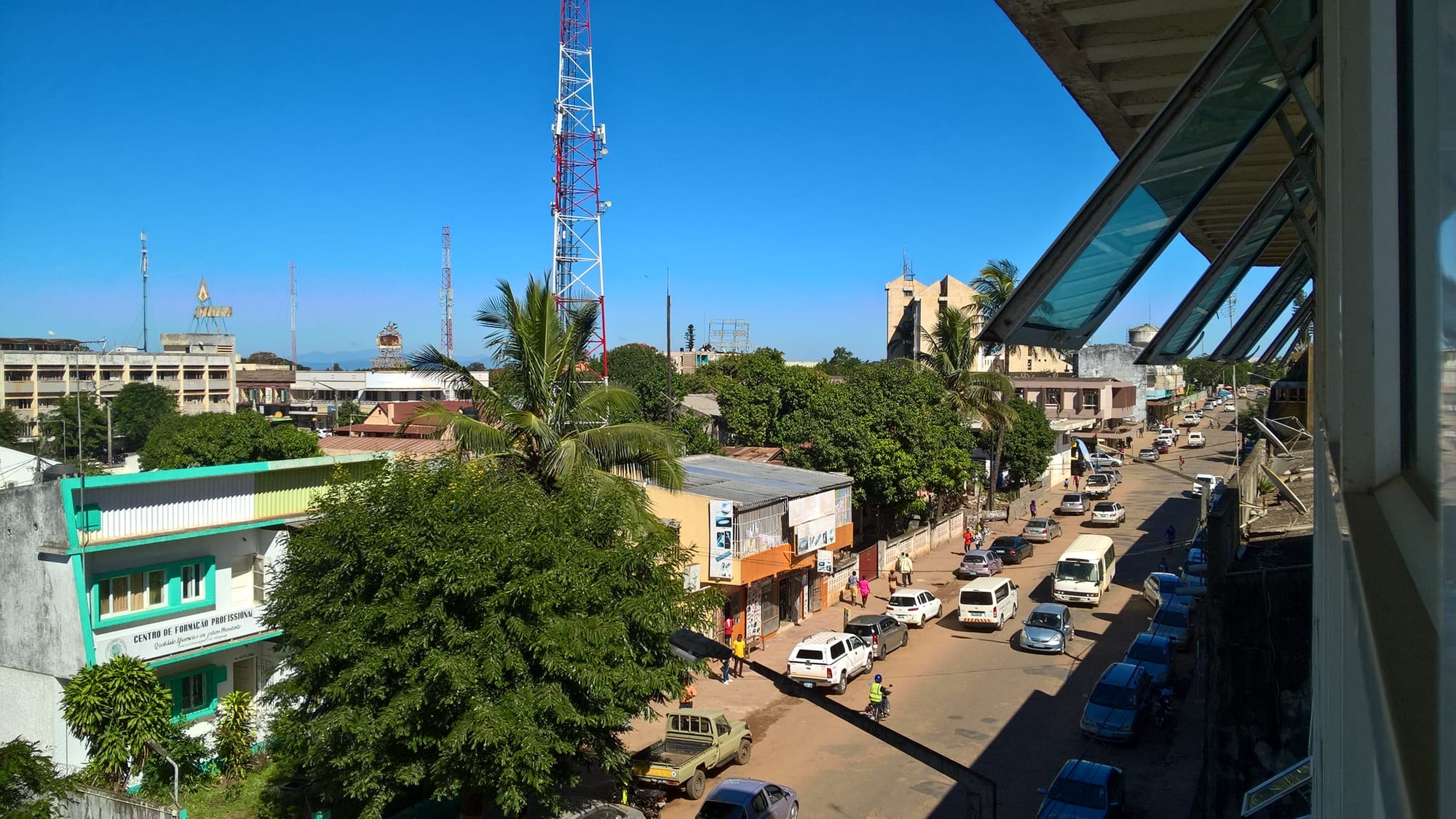
The centre is flat, compact and easily walked, with the main shops, banks and offices within a few blocks and the market a short distance away. The outer bairros are spread out along sandy roads and pavements are patchy, so people use chapas and motorcycle taxis for longer distances; walking after dark is not advisable.
🛡️ Safety
Chimoio is a quiet provincial town well away from the conflict in the far north. Clashes involving Renamo affected roads in Manica in the mid-2010s, but the area has been calm since about 2021. Everyday risks are petty theft around the market and bus stand, road accidents on the busy corridor, and malaria, which is present year round though lower here than on the coast.
Avoid Cabo Delgado and adjacent districts entirely, don't walk in cities after dark or display valuables, and check the current situation before travelling to the centre and north. Use mosquito precautions, and take a guide and supplies for walks in the Chimanimani mountains. Check current official travel advice before travelling.
🌦️ Climate
An altitude of about 750 metres makes Chimoio cooler and fresher than the coast. The wet season runs from November to April with heavy afternoon rain; the dry season from May to October is sunny with cold nights in June and July. This is the southern hemisphere, so summer falls in December to February.
- Summer
- warm and wet, December–February, around 27–30°C by day with heavy rain and humidity
- Winter
- dry and mild, June–August, around 24–26°C by day and often below 12°C at night
🤝 Local Customs
Portuguese is the language of business and schooling, with Manyika, Tewe and Ndau widely spoken at home, and Shona understood by many because of the closeness of Zimbabwe. Greetings are unhurried and formal. Dress is modest, and churches and traditional ceremonies are taken seriously.
Ask before photographing people, markets or ceremonies, and avoid photographing the border post, the railway, police and government buildings.
💳 Common Payment Methods
The currency is the metical, and Chimoio runs largely on cash. Markets, chapas and small restaurants take nothing else; hotels and larger shops accept cards, Visa more reliably than Mastercard. ATMs are in the centre and can run out at weekends, and South African rand and Zimbabwean-earned dollars circulate informally near the border.