💰 Budget
Prices here track the South African market, so the village is dearer than most Mozambican towns of its size and rises sharply in the holiday weeks. Camping and self-catering keep costs down; diving, dolphin trips and fuel for the sand roads are the main extras, and supplies are often brought in from across the border.
- Daily Budget Midrange
- USD 100–260 (beach lodge, seafood dinners, a dive or a boat trip)
- Daily Budget Shoestring
- USD 35–60 (camping or backpacker bed, self-catering and market food)
Rand is widely accepted in the village but meticais are better value in the market, and cash machines here are unreliable, so bring enough cash from the border or Maputo.
📅 Best Time to Visit
April to October is dry, mild and least crowded, with whales passing offshore in the southern winter and clear days for diving. December and January are hot, humid and full of South African holidaymakers, and the summer months bring rain, warmer water and nesting turtles.
⏳ Suggested Number of Days
Two or three days suit the beach and time on the water. Longer stays are common because weather and swell cancel boats, and because the drive in over sand roads or the border crossing makes short visits feel rushed.
- First Visit
- 2–3 days
- With Surroundings
- 4–5 days
🚆 Transportation
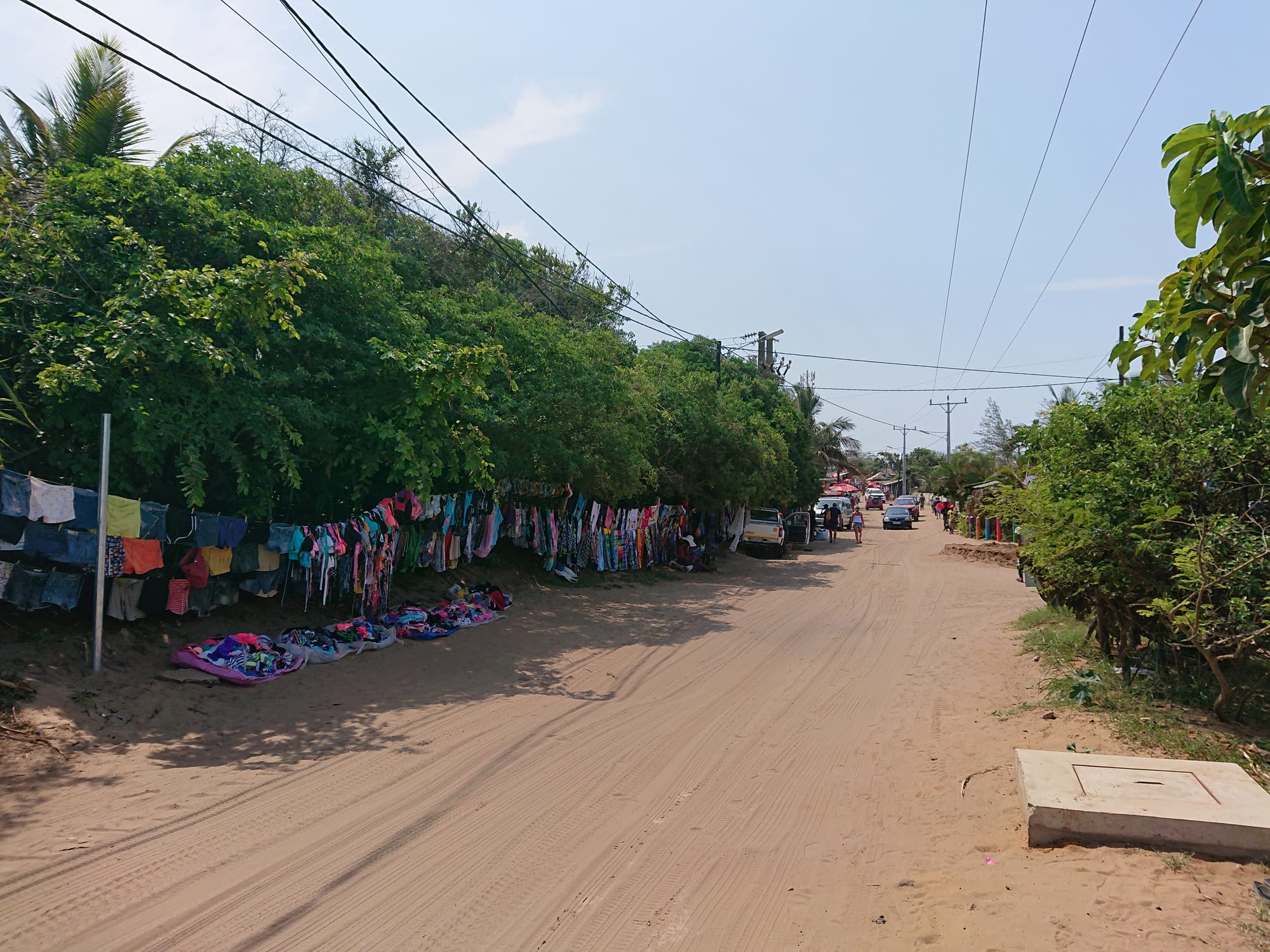
The village is walked on sand streets, with bakkies and four-wheel drives doing the rest; there is no public transport within it. Sand tracks link it to the camps and beaches north, and a tarred road runs inland towards the Katembe bridge and Maputo. Chapas run to Maputo but are infrequent, so most visitors arrive in their own vehicle or by transfer.
A high-clearance or four-wheel-drive vehicle is needed for the sand tracks around the village, and deflating tyres a little is normal practice on them.
🛬 Airport & Station Connections
Most visitors drive: the border post with South Africa at Kosi Bay is about 15 km south and busy at holiday times, and from the north the tarred road and the Maputo–Katembe bridge, opened in 2018, put the capital about 130 km away, roughly an hour's drive. Transfers can be arranged from Maputo and from the border for those without a vehicle.
🚶 Walkability
The village itself is small and entirely walkable, though the streets are deep sand and the slope down to the bay is steep enough to feel in the heat. The camps to the north are a long walk or a short drive, and there is almost no street lighting after dark.
🛡️ Safety
This is a quiet corner far from the northern conflict, and the everyday risks are theft from tents, rooms and parked vehicles and the sea itself: strong shore break, rip currents and boat launches through surf. Dolphin and whale encounters are regulated within the marine reserve. Sand tracks strand inexperienced drivers regularly, and the border post can involve long queues and vehicle formalities.
Avoid Cabo Delgado and adjacent districts entirely, don't walk in cities after dark or display valuables, and check the current situation before travelling to the centre and north. Check current official travel advice before travelling.
🌦️ Climate
Subtropical, the mildest stretch of the Mozambican coast. Summers are hot and humid with heavy showers, winters mild, dry and sunny with cool nights and a steady southerly wind. Southern-hemisphere summer falls in December to February.
- Summer
- hot and humid, December–February, often around 30°C, with afternoon storms and warm sea
- Winter
- mild and dry, June–August, around 23°C by day with cool evenings and clearer water
🤝 Local Customs
Portuguese and Ronga are the local languages, and English and Afrikaans are widely understood because of the border trade. Swimwear is for the beach, not the market or the streets. Greetings come before requests, and prices at stalls are often negotiated politely rather than haggled hard. Crossing the border involves passport and vehicle formalities on both sides.
Ask before photographing people or stalls, tip around ten per cent in restaurants if service is not included, and do not touch, chase or feed dolphins and turtles, which is regulated in the reserve.
💳 Common Payment Methods
The currency is the metical, but South African rand circulates freely here and many lodges and dive centres quote in it. Cards are taken by the larger businesses; the market, stalls and small bars are cash only. Cash machines are few and unreliable, so most visitors arrive with cash.