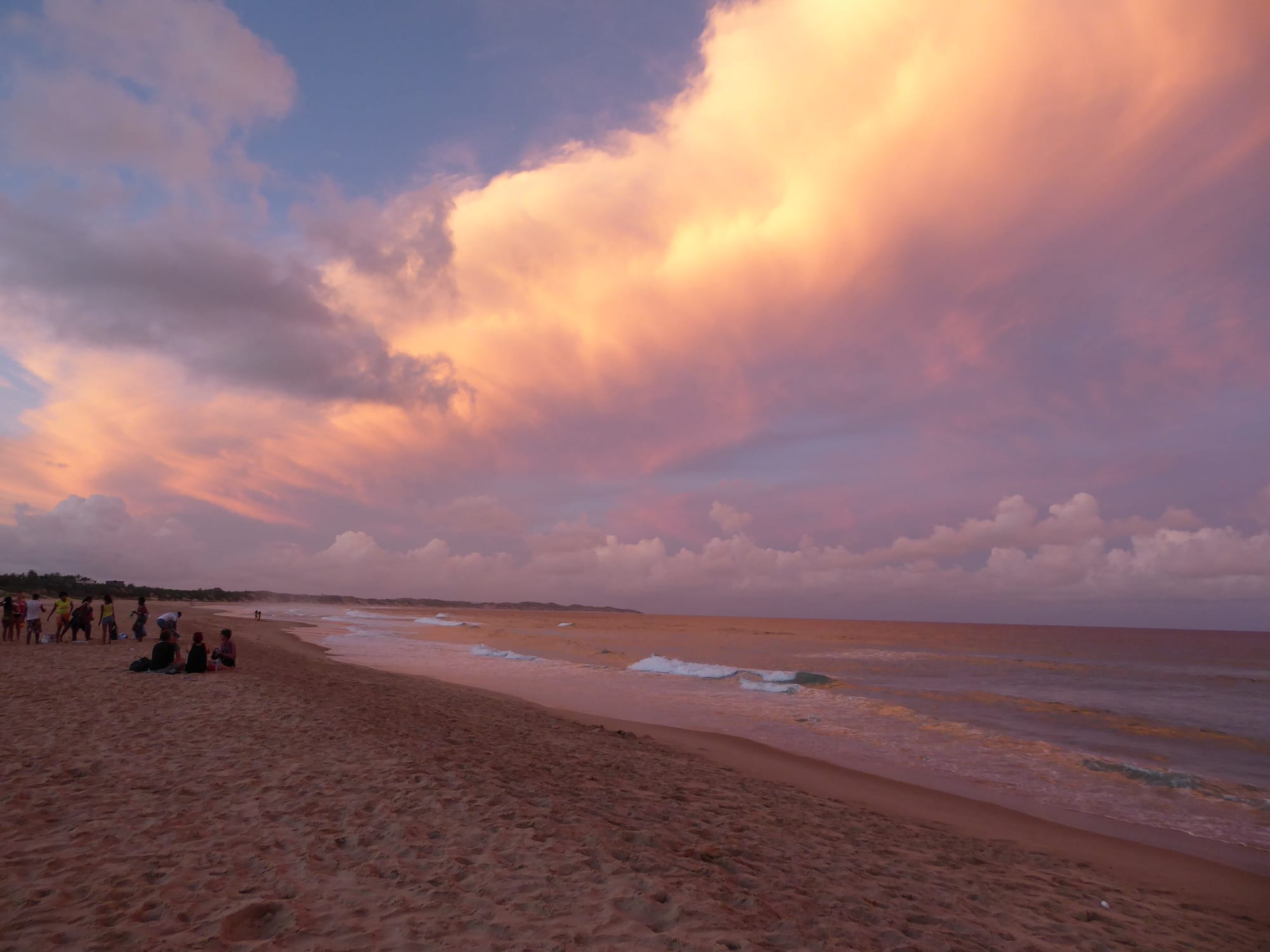
Wide empty sand beach with breaking surf running to the horizon under tall pink and orange sunset clouds

Maputo & the South, Mozambique

Tofo

The beach at Tofo at sunset, looking along the open Indian Ocean shore of the Inhambane peninsula. (Cornelius Kibelka / Wikimedia Commons · CC BY-SA 2.0)

A beach village on the Indian Ocean side of the Inhambane peninsula in southern Mozambique, a short drive from the old town of Inhambane. A wide surf beach and the deep water close offshore, where whale sharks and manta rays feed, turned a fishing settlement into one of the country's best-known diving bases, with lodges, a small market and a scattering of bars behind the dunes.

Neighbourhoods

  • The village centre
    • First-time visitors
    • Markets
    • Nightlife

    The sandy square behind the beach, with the craft and food market, small shops, dive centres and a few bars. Almost everything in Tofo is within a few minutes' walk of it.

    Open in Maps
  • The beachfront
    • Beaches
    • Diving
    • Surfing

    The line of lodges, restaurants and dive shops along the dunes above the main beach, where boats are launched straight off the sand through the surf.

    Open in Maps
  • Tofinho
    • Quiet and residential
    • Surfing
    • Viewpoints

    The rocky point just south of the village, with a surf break, low cliffs above the sea and a scatter of houses and lodges on the headland.

    Open in Maps

Things to do

The beach and the ocean

  • Tofo beachbeach

    A long, wide arc of pale sand with a steady shore break, sheltered enough to swim at the northern end and open ocean beyond.

    Open in Maps
  • Tofinho pointviewpoint

    The headland and beach about 1.5 km south of the village, a surfing spot and a place to watch the sea, with a monument above the shore.

    Open in Maps
  • Diving and ocean safarisattraction

    Boats launch through the surf to reefs a few kilometres offshore, where divers and snorkellers look for manta rays, whale sharks, turtles and, in winter, humpback whales.

    Open in Maps
  • Marine Megafauna Foundationattraction

    A marine research and conservation organisation founded at Tofo in 2009, known for its long-running studies of whale sharks and manta rays on this coast.

    Open in Maps

Short trips from the village

  • Inhambaneattraction

    The old Portuguese trading town about 22 km away across the peninsula, with a cathedral, a waterfront and dhow ferries across the bay.

    Open in Maps
  • Barrabeach

    A quieter beach at the tip of the Ponta da Barra peninsula north of the village, with a lighthouse above a tidal pool and the wreck of the SS Inharrime, aground since 1949, exposed nearby.

    Open in Maps

Seasonal events

  • Humpback whale seasonJuly to October

    Humpback whales migrate past the coast in the southern winter and are often seen from the boats and sometimes from the beach.

  • Independence Day25 June

    The anniversary of independence in 1975, marked with public events in Inhambane and smaller gatherings in the village.

  • South African holiday seasonDecember to early January

    The busiest weeks of the year, when lodges fill with families driving up from South Africa and the village stays awake late.

Eat and drink

Long-standing places and food districts in Tofo. Hours, ratings and directions come from your maps app, always current.

Tofo classics

  • Grilled prawns, crab and line fishrestaurant

    The catch landed on the beach is grilled with garlic, lemon and piri-piri at the lodges and beach restaurants, with prawns and crab the usual order.

    Open in Maps
  • Matapa and ximarestaurant

    Cassava leaves pounded with groundnuts and coconut milk, often with prawns, served with rice or stiff maize porridge at the village canteens.

    Open in Maps

The market and the beach bars

  • Tofo marketmarket

    A small market behind the beach selling fish, fruit, vegetables, cashews and capulana cloth alongside craft stalls.

    Open in Maps
  • Beach barsneighborhood

    Open-sided bars on the dunes serving cold 2M and Laurentina, seafood and grilled chicken, and the centre of the village's nightlife.

    Open in Maps

Experience Tofo

History

The Inhambane peninsula has been settled for centuries by Bitonga fishing and farming communities, and the bay behind it was one of the earliest points of contact between the Portuguese and this coast. Tofo itself, facing the open ocean rather than the sheltered bay, stayed a small fishing settlement: a place where boats were launched through the surf and the catch was carried across the peninsula to the market in town.

Sea bathing brought the first outsiders. In the late colonial period the beaches east of Inhambane drew holidaymakers from the town and from further inland, though little was built above the dunes. Independence in 1975 and the civil war that followed ended that traffic almost entirely, and for two decades Tofo was again a village of fishing families.

The modern village dates from the peace of 1992 and, above all, from the discovery by divers of what lies just offshore: a narrow continental shelf that brings deep water and plankton close to the beach, and with it manta rays and whale sharks in numbers seen in few places. Dive centres opened through the late 1990s and 2000s, backpackers followed the South African self-drive traffic, and research groups based themselves here to study the big animals. Growth has been rapid and largely unplanned, and the village now lives from the sea in two ways at once.

Culture & Customs

Tofo has two populations living side by side. The older one is Bitonga, a fishing culture of the peninsula in which boats are shared, crews are family, and the catch is sold on the beach or carried to Inhambane; the newer one is a floating community of divers, instructors, researchers and travellers, many of whom came for a season and stayed. The result is a village where Portuguese, Bitonga and English are all heard within a few metres.

Music follows the southern Mozambican pattern, marrabenta and pandza in the bars alongside South African house, and the province is the home of the Chopi timbila xylophone orchestras, proclaimed a Masterpiece of the Oral and Intangible Heritage of Humanity by UNESCO in 2005, whose heartland is the Zavala district south of Inhambane. Craft stalls sell wood carving, basketry and painted cloth, and capulana is worn daily by local women.

Conservation is part of the local identity in a way that is unusual for a Mozambican village: research teams tag and photograph mantas and whale sharks, and there is a long-running argument, common to such places, between fishing livelihoods and protection of the animals visitors pay to see. Sunday churchgoing is widespread, and the ordinary courtesies of greeting and unhurried conversation matter as much here as anywhere else in the country.

Daily Life

Tofo is a village of a few thousand people, part of a peninsula whose main town, Inhambane, is about 22 km away and where most administration, schooling and shopping happen. Households depend on fishing, small-scale farming of cassava, maize and coconut, market trade, and work in tourism as boat crew, guides, cooks, cleaners and security.

The pattern of the day is set by the surf and the boats. Crews push out at dawn, dive boats follow through the morning, and the market fills as the fish come in. Afternoons are hot and slow, and the beach bars take over in the evening. Seasonality is sharp: work is plentiful in the South African holiday weeks and the dry-season months and scarce in the wet middle of the year.

Infrastructure is thin. Electricity reaches the village but cuts are routine, water is drawn from boreholes, the sand roads are hard on vehicles, and cyclones periodically damage lodges and houses along the dunes. Rising land values on the beachfront, pressure on fish stocks, and the gap between tourism earnings and local wages are the issues people talk about.

Food

Everything starts with the catch. Prawns, crab, calamari, rock cod and other line fish are grilled with garlic, lemon and piri-piri, and lobster appears when the boats find it; the cheapest and often the best version is bought at the market and cooked at a stall or taken back to a lodge kitchen. Matapa — cassava leaves pounded with groundnuts and coconut milk, frequently with prawns — is one of the country's best-known dishes, eaten with rice or xima, the stiff maize porridge.

Coconut is everywhere on this coast, in fish curries, in rice and drunk straight from the nut, and Inhambane's groves supply the cashews that are roasted, salted and sold by the bag. Portuguese habits survive in the bakeries and cafés: crusty rolls, custard tarts, chamussas, and frango à piri-piri from roadside grills.

The drinks are simple: cold 2M and Laurentina beer, sugar-cane spirit, strong coffee, and fresh juices from mango, cashew fruit and baobab in season. Palm wine tapped from coconut palms and drunk young is a speciality of the peninsula's villages.

Planning tools

Budget

Tofo is one of the cheaper places to stay on the Mozambican coast, with backpacker lodges, self-catering rooms and market food. Diving is the cost that matters: a day of dives or an ocean safari can be more than a night's accommodation, and equipment hire adds to it. Imported drinks and food at the beach restaurants cost far more than at the market.

Daily Budget Midrange
USD 100–250 (beach lodge, seafood dinners, a dive or an ocean safari)
Daily Budget Shoestring
USD 30–55 (backpacker lodge, market food, chapas, no diving)

Bring enough meticais from Inhambane or Maputo, since cash machines in the village are few and can be empty at weekends and holidays.

Best Time to Visit

The water is warmest and clearest from about October to March, which is also the hottest and wettest time and the peak of manta and whale shark sightings for many operators. June to September is dry and cooler, with humpback whales offshore, bigger surf and choppier days on the boats.

Suggested Number of Days

Two or three days give time for the beach and a trip on the water. Longer stays are common because the sea decides what happens: weather and swell cancel boats, divers want repeat attempts at big animals, and the old town and the quieter beaches nearby fill the rest.

First Visit
2–3 days
With Surroundings
4–6 days

Transportation

The village is small and everything in it is walkable on sand paths. Chapas, the shared minibuses, run between Tofo and Inhambane through the day and fill up rather than follow a timetable, and tuk-tuks cover short hops. Sand tracks to Tofinho, Barra and the lodges beyond the village need a vehicle with clearance.

Chapas thin out in the late afternoon and stop after dark, so arrange a lift or a tuk-tuk in advance for an evening trip to Inhambane.

Airport & Station Connections

Inhambane Airport, a short drive away, has flights from Maputo on most days and charters from Johannesburg, and the last stretch is by taxi or chapa on a tarred road. Buses and chapas run up the EN1 from Maputo to Inhambane in a long day, and many South African visitors drive, crossing at the border south of the capital and continuing north along the coast.

Walkability

Entirely walkable: the market, the dive centres, the lodges and the beach sit within a few hundred metres of each other, with soft sand underfoot rather than pavements. Tofinho is a twenty-minute walk south along the shore, and there is little lighting, so a torch is useful at night.

Safety

Tofo is a long way from the northern conflict and is quiet by day, but thefts from rooms, tents and unattended bags on the beach happen, and walking alone on the sand at night is best avoided. The sea is the bigger risk: the shore break is strong, rip currents run along the beach, and surf launches and dives should only be made with reputable operators.

Avoid Cabo Delgado and adjacent districts entirely, don't walk in cities after dark or display valuables, and check the current situation before travelling to the centre and north. Check current official travel advice before travelling.

Climate

Tropical and humid, moderated on the beach by the sea breeze. The wet season runs from about November to March with heavy downpours and a cyclone risk, and the dry season from May to September is warm, sunny and breezier. Southern-hemisphere summer falls in December to February.

Summer
hot and humid, December–February, often around 30°C, with thunderstorms and warm sea temperatures
Winter
warm and dry, June–August, around 25°C by day, cooler at night and windier on the water

Local Customs

Portuguese is the official language, Bitonga is widely spoken on the peninsula, and English is common in the dive centres. Swimwear is normal on the beach but not in the market or the village, where modest dress is expected. Greetings come before questions. Fishing crews and market traders work here every day and are not a spectacle.

Ask before photographing people, boats or houses, agree tuk-tuk and boat prices in advance, and keep well clear of whale sharks and mantas in the water rather than touching or chasing them.

Common Payment Methods

The currency is the metical. Dive centres and lodges usually take cards and quote in dollars or rand, but the market, chapas, tuk-tuks and small restaurants are cash only. Cash machines are few in the village, so many visitors withdraw in Inhambane or Maputo before arriving.