💰 Budget
Ngapali was the most expensive beach in Myanmar, with hotel prices well above those elsewhere in the country and most visitors arriving by air. Village guesthouses and simple restaurants were far cheaper. Since 2021 inflation, fuel costs, the collapse of tourism and shortages across Rakhine have changed prices and closed many businesses.
- Daily Budget Midrange
- USD 80–200 (beach hotel, domestic flight, boat hire and a guide)
- Daily Budget Shoestring
- USD 25–45 where travel is possible (guesthouse room, village restaurants, shared transport)
Everything must be paid in cash, so all funds should be carried as clean US dollar notes and changed in Yangon; supplies, fuel and electricity in Rakhine are unreliable.
📅 Best Time to Visit
In climate terms, November to March, when the sea is calm, the skies are clear and the coast is dry. The southwest monsoon from about late May to October brings several metres of rain, rough seas and the risk of cyclones, and most beach businesses used to close. In practice, conflict has closed most of Rakhine to visitors.
⏳ Suggested Number of Days
Ngapali is a place to stay still rather than to sightsee, so most stays ran to three or four days of beach, walking and seafood. Longer stays suit those who also want the town inland and boat trips along the coast. Weather and transport links decide more than anything else.
- First Visit
- 3–4 days
- With Surroundings
- 5 days
🚆 Transportation
There is no public transport on the beach itself. A single road runs behind the sand through the villages to Thandwe, and journeys along it are made by motorcycle taxi, tuk-tuk, hired bicycle or hotel car. Local boats were hired from the fishing villages for trips along the coast.
Treat Rakhine as closed to travel; in the wider region, expect checkpoints on every main road.
🛬 Airport & Station Connections
Thandwe Airport, about five kilometres from the beach, took short flights from Yangon in the dry season and was how almost all visitors arrived, but it has been closed since mid-2024. The road from Yangon crosses the Rakhine Yoma hills and takes the best part of a day when it is open; buses also run north along the coast. Fighting has cut many of Rakhine's air, road and water links.
🚶 Walkability
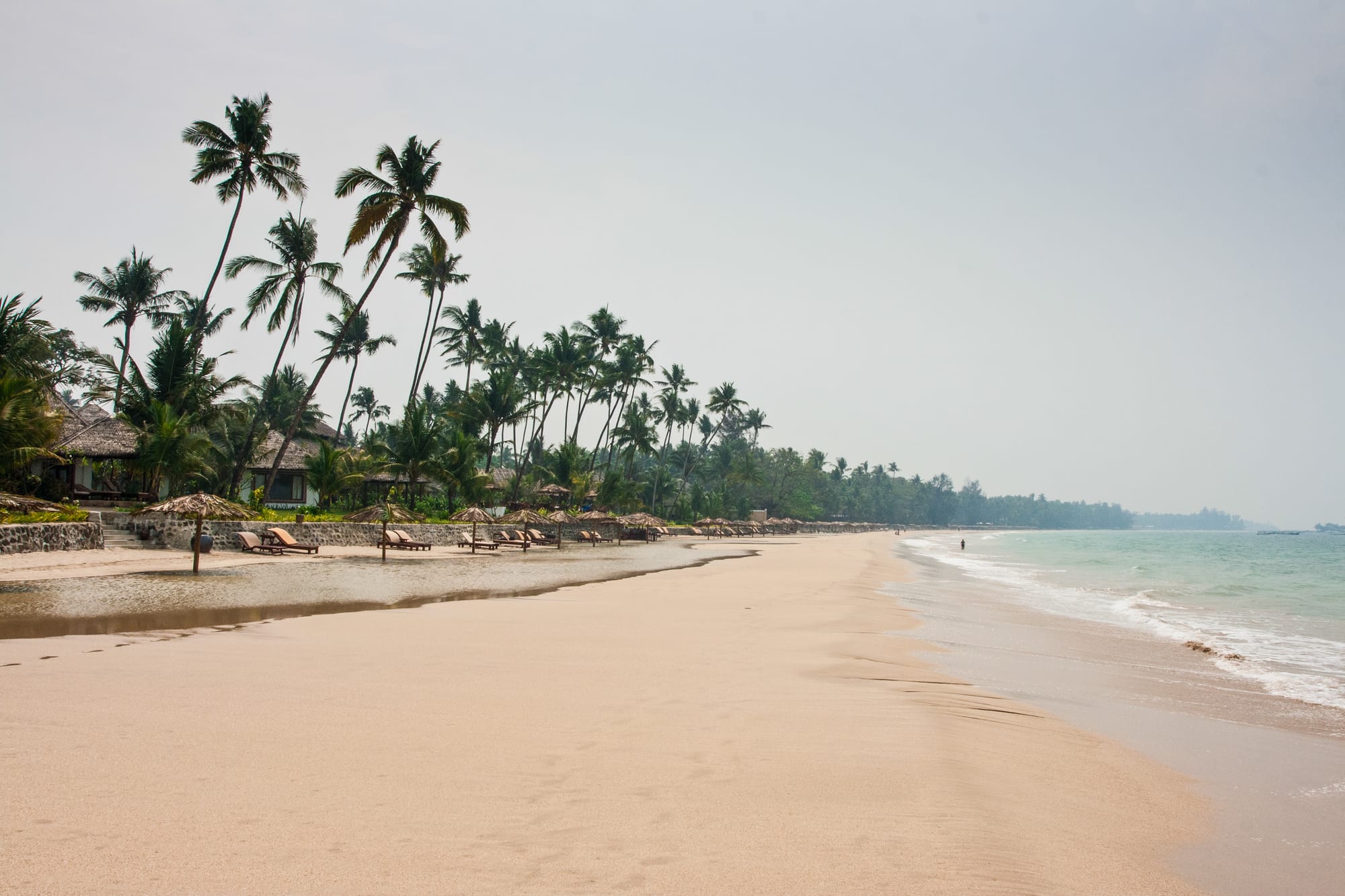
The beach itself is the walk — several kilometres of firm sand between two headlands, easiest at low tide and in the early morning or late afternoon. The parallel road is unlit, dusty in the dry season and muddy in the rains, and the town lies too far inland to reach on foot.
🛡️ Safety
Rakhine State is an active war zone and most governments advise against all travel to Myanmar. Fighting has brought air strikes, landmines, blockades and severe shortages of food, fuel and medicine to the state, telephone and internet links are cut for long periods, medical care on the coast is very limited and there is no consular help. The sea adds its own hazards, with strong currents outside the calm season and cyclones from the Bay of Bengal.
Do not travel to Rakhine State; anywhere in the region, avoid photographing security forces and follow cyclone warnings. Check current official travel advice before travelling.
🌦️ Climate
A tropical monsoon climate on one of the wettest coasts in Asia. The dry season from November to April is warm, sunny and calm; the southwest monsoon from about late May to October brings torrential rain and heavy surf. Cyclones from the Bay of Bengal come mainly in April–May and October–November.
- Summer
- hot and humid, about 30–35°C before the rains, then weeks of heavy rain and rough seas
- Winter
- dry, sunny and warm, about 25–32°C, with a calm sea — the only reliable season
🤝 Local Customs
Rakhine is conservative and strongly Buddhist. Swimwear belongs on the sand and nowhere else; longyi or covered shoulders and knees are expected in the villages, in town and at any pagoda, where shoes and socks are removed at the entrance. Fishing families are used to visitors but their boats, nets and drying racks are workplaces.
Tipping is not traditional but is appreciated; permission should be asked before photographing people or boats; military sites, soldiers and checkpoints are never photographed; and public discussion of politics can endanger residents.
💳 Common Payment Methods
The currency is the Myanmar kyat (MMK). Cards are effectively unusable, ATMs on the coast are unreliable or empty, and hotels and restaurants deal in cash. Clean, unfolded US dollar notes are the usual way to bring money into the country, exchanged at widely varying rates.