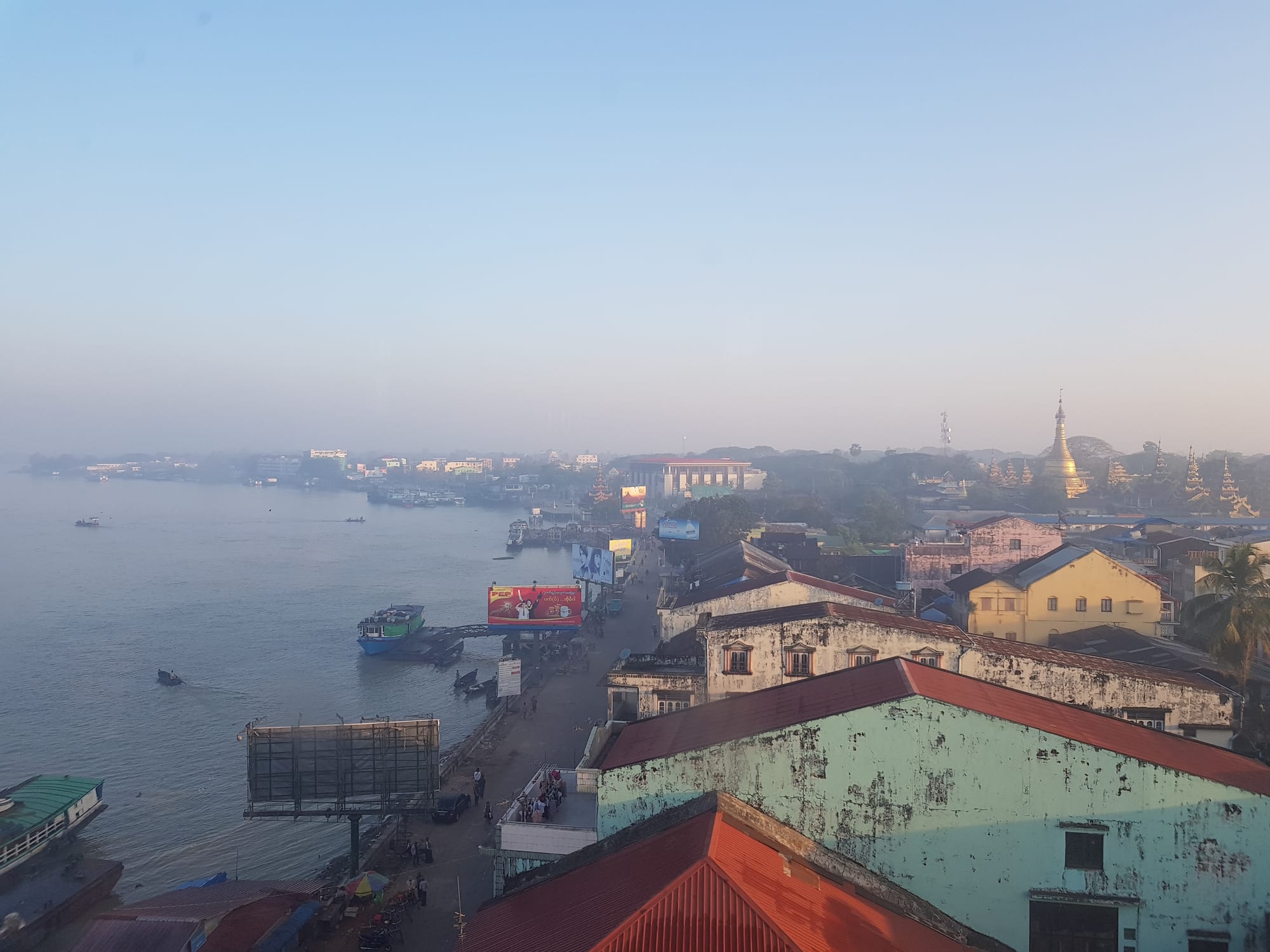
A wide brown river with ferries and small boats at a landing, and low shophouses with red and green roofs along the bank

Rakhine & the Ayeyarwady Delta, Myanmar

Pathein

Kanner Road along the riverfront at Pathein, on the westernmost arm of the Ayeyarwady. (Myat_Thura_Aung / Wikimedia Commons · CC BY-SA 3.0)

The largest city of the Ayeyarwady delta in southern Myanmar, a river port on the Pathein river about 190 kilometres west of Yangon. Rice mills, boatyards and a long riverside market line the water, the gilded Shwemokhtaw Pagoda stands at its centre, and family workshops still make the hand-painted parasols the town is known for. This page is written to explain the city, not to encourage travel.

Neighbourhoods

  • The riverfront and Strand
    • First-time visitors
    • Local life
    • River views

    The road along the Pathein river is the working face of the city, with jetties for ferries and cargo boats, rice warehouses, boatyards and a line of shophouses. Stalls and teashops face the water, and the view across to the rice fields opens up at the landings.

    Open in Maps
  • The pagoda and market quarter
    • Historic district
    • Markets
    • Best for food

    The blocks around the Shwemokhtaw Pagoda hold the main market, goldsmiths, cloth sellers and food stalls, along with mosques, churches and Chinese temples left by the port's mixed population. It is the busiest part of the city from dawn onwards.

    Open in Maps
  • The parasol workshops
    • Crafts
    • Shopping

    Family workshops in the streets away from the centre make the hand-painted parasols of bamboo, cotton and silk that carry the city's name across Myanmar, and visitors can watch frames being cut and covers painted.

    Open in Maps
  • The outer town
    • Quiet and residential
    • Close to transport

    Beyond the centre the city spreads into low residential quarters of timber and brick houses among monasteries, schools, the university and the rice mills, with the roads out to the beaches and to Yangon starting here.

    Open in Maps

Things to do

Pagodas and landmarks

  • Shwemokhtaw Pagodalandmark

    The gilded stupa at the heart of the city, about 47 metres tall, its upper tier of solid gold and studded with diamonds, rubies and semiprecious stones; tradition traces its founding to the Indian emperor Ashoka.

    Open in Maps

The river and the market

  • The riverside marketmarket

    Fish, rice, vegetables and household goods are traded along the Strand from before dawn, with boats unloading directly at the steps.

    Open in Maps
  • Parasol workshopsattraction

    Small workshops where bamboo frames are split, covered with cotton or silk, treated to shed water and then painted by hand with flowers and figures.

    Open in Maps
  • The river jettiestransit hub

    The landings where ferries and cargo boats leave for villages down the creeks and along the delta's waterways.

    Open in Maps

Around the delta

  • Ngwesaung Beachbeach

    A beach resort on the Bay of Bengal about 48 kilometres west of the city, opened in 2000 and built for larger holiday budgets than its neighbour.

    Open in Maps
  • Chaung Tha Beachbeach

    The older and busier of the delta's two beach towns, a favourite weekend escape for families from Yangon and Pathein.

    Open in Maps
  • Myaungmyaattraction

    A delta town south-east of Pathein among rice fields and creeks, and one of the country's main rice-exporting centres.

    Open in Maps
  • Hinthadaattraction

    A river town upstream on the Ayeyarwady, a port for rice and tobacco and a road and rail junction linking the delta with Pathein and Yangon.

    Open in Maps
  • Pathein Airporttransit hub

    The single-runway airfield outside the city, the delta's only airport.

    Open in Maps

Seasonal events

  • ThingyanApril

    The Burmese new year water festival, when stages go up along the main roads and the city spends several days soaked.

  • ThadingyutOctober

    The festival of lights ending the Buddhist rains retreat, with candles and lanterns at the Shwemokhtaw Pagoda and in the streets.

  • TazaungdaingNovember

    A second festival of lights, marked with robe-weaving offerings to monks and illuminations at the pagodas.

  • Shwemokhtaw Pagoda festivalthe full moon of Kason, April or May

    The pagoda's annual festival, held at the full moon of Kason that marks Visakha, when pilgrims from across the delta fill the platform and stalls take over the surrounding streets.

Eat and drink

Long-standing places and food districts in Pathein. Hours, ratings and directions come from your maps app, always current.

Markets and food streets

  • The central marketmarket

    River fish, prawns, rice, vegetables and the pungent fermented fish paste of the delta, traded from early morning.

    Open in Maps
  • Strand Road food stallsneighborhood

    Noodle bowls, fritters, grilled fish and sweets sold from stalls along the riverfront, eaten at low tables by the water.

    Open in Maps
  • Teashops in the centreneighborhood

    Sweet milk tea, green tea and fried snacks from dawn, with mohinga, the fish and noodle soup, as the standard breakfast.

    Open in Maps

Delta sweets

  • Pathein halawa shopsneighborhood

    Shops selling the city's sticky pudding of glutinous rice flour, coconut, butter, milk and sugar, cut into slabs and sold by weight.

    Open in Maps

Experience Pathein

History

Pathein stands on the westernmost arm of the Ayeyarwady, far enough up the river for seagoing ships to reach it, and the site has been a port for a very long time. It belonged to the Mon kingdoms of Lower Burma before the Bagan empire reached the delta, though its early history is thinly documented. The name is thought to come from the city's Old Mon name, with a rival explanation deriving it from the archaic Burmese word for Muslims and the Arab and Indian traders of the port; the English form, Bassein, is a colonial corruption of it. The Portuguese, who called the place Cosmim, traded here in the 16th and 17th centuries, when Pathein sent rice and forest goods across the Bay of Bengal.

The city that exists now was made by rice. After Britain annexed Lower Burma in 1852, the colonial government and migrant labourers cleared the delta's mangrove and swamp on an enormous scale, turning it into one of the world's great rice-exporting regions. Pathein became its milling and shipping centre, with steam mills along the river, a mixed population of Bamar, Karen, Chinese and Indian families, and a busy trade with Rangoon downstream. Karen Baptist churches and schools date from the same period.

The Second World War, the Japanese occupation and the post-independence insurgencies hit the delta hard, and the rice trade never regained its colonial scale. In May 2008 Cyclone Nargis struck the delta and killed around 138,000 people, mostly in the townships south and east of the city; Pathein itself was less badly damaged than the coastal villages and became a base for relief work. It remains the capital of the Ayeyarwady Region and the delta's largest city.

Culture & Customs

The parasol is the city's emblem. Pathein htee are made in family workshops from split bamboo, cotton or silk, treated to shed water and painted by hand with flowers, birds and figures; they are sold across Myanmar and used at weddings, in processions and by monks. The craft has been handed down through generations and shares the streets with pottery, weaving and boat-building.

Religious life is mixed to an unusual degree. The Shwemokhtaw Pagoda dominates the centre, monks collect alms along the riverfront at dawn, and the Buddhist calendar sets the festivals — Thingyan in April, Thadingyut and Tazaungdaing at the end of the rains. At the same time the delta has a large Karen population, about a fifth of the region, with Baptist churches, mission schools and choirs in the city and the towns around it, and a long-established Muslim community with mosques near the market.

Delta manners are those of Myanmar generally: quiet speech, deference to age and to monks, shoes removed at thresholds, modest dress. The rhythm is set by the river and the rice calendar, and pagoda festivals bring villages into town by boat. People are used to outsiders passing through on the way to the beaches, and politics is a subject residents cannot safely discuss.

Daily Life

About 170,000 people live in Pathein, one of Myanmar's larger cities and the centre of a region of some six million, most of them in villages along the creeks. Rice dominates the economy — milling, storage, trading and transport — alongside fishing, shrimp and fish-paste production, boat-building, the parasol workshops and the trade that passes through to the coast. The university, hospitals and regional government offices are the other large employers.

The day starts before dawn at the market and the jetties and slows in the afternoon heat. Most people live in single-storey houses of timber, brick and corrugated iron among monasteries and schools, and move by motorcycle, trishaw or boat. Electricity supply is intermittent, and generators are common in shops and hotels.

The delta's exposure to weather shapes everything: monsoon flooding is routine, and the memory of Nargis is close, with mangrove replanting and cyclone shelters among the responses since. Since the 2021 coup the wider crisis has reached everyday life here too — rising prices, fuel shortages, restricted internet, checkpoints and the fear of conscription — and many young people have left for Yangon, Thailand or work at sea.

Food

Pathein eats from the river and the paddy. Freshwater fish and prawns come in daily and are cooked as curries heavy with turmeric and onion, in sour soups with tamarind or roselle leaf, fried whole, or pounded into ngapi, the fermented fish and shrimp paste that the delta makes in quantity and sends across the country. Rice is the centre of every meal, served with several small dishes, a chilli relish and a plate of raw vegetables.

Mohinga, the fish and rice-noodle soup eaten for breakfast across Myanmar, is at home here in a region of rivers and fish, thickened with banana stem and lemongrass and finished with fritters, coriander and lime. Noodle salads, ohn-no khao swè with coconut milk, and fried snacks from the market stalls fill out the day, with tea-leaf salad, lahpet thoke, on most tables.

The sweet the city is famous for is Pathein halawa, a dense, chewy pudding of glutinous rice flour cooked slowly with coconut, butter, milk and sugar, sometimes with poppy seed, and sold in slabs to take away — a delta speciality since the 1930s. Coconut, sticky rice and palm sugar make the rest of the sweets, fresh toddy palm juice is drunk in the villages, and the teashops supply strong tea with condensed milk from early morning until dark.

Planning tools

Budget

Pathein is inexpensive by any measure, with simple hotels and guesthouses, market food and cheap road and river transport. The delta's beaches are the costly part, since their hotels charge weekend and holiday rates. Since 2021 inflation and fuel costs have pushed prices up across the region.

Daily Budget Midrange
USD 80–200 (hotel or beach resort, a hired car and driver, boats and a guide)
Daily Budget Shoestring
USD 25–45 where travel is possible (guesthouse, teashops and market meals, buses and ferries)

Carry clean US dollar notes and change them in Yangon; card services do not work reliably, and power cuts affect hotels and shops.

Best Time to Visit

In climate terms, November to March, when the delta is dry and warm and the beaches west of the city are open. April and May are very hot, and the monsoon from late May to October brings heavy rain, flooding and rough seas. The delta is quieter than Rakhine but is under military control and affected by the country's wider crisis.

Suggested Number of Days

The city centre is compact and most visits run to a day or two. Longer stays suit the coast to the west and boat trips into the delta's creeks. Road conditions and checkpoints shape the timing more than distance does.

First Visit
1–2 days
With Surroundings
3–4 days

Transportation

Buses and shared taxis run east to Yangon and west to the beaches, and river ferries and small boats serve the villages along the creeks. Inside the city, motorcycle taxis, tuk-tuks, trishaws and bicycles cover short distances, and hired cars with drivers are used for the coast.

Treat Rakhine as closed to travel; in the delta, expect checkpoints on every main road.

Airport & Station Connections

Pathein lies about 190 kilometres west of Yangon, roughly four hours by road on the delta highway, and buses run through the day. River ferries once ran the same route more slowly through the creeks, and the city is the terminus of a branch railway that runs through Hinthada and Letpadan to Yangon. A small airport lies outside the city, and the road west continues some 40 to 50 kilometres to the beaches at Chaung Tha and Ngwesaung.

Walkability

The centre is flat and compact, and the pagoda, the market and the riverfront are all within a short walk of each other. Pavements are uneven and often given over to stalls, traffic is dense near the market, and the heat, humidity and monsoon rain keep most walking to the early morning and the evening. Outer districts are too spread out to reach on foot.

Safety

Most governments advise against all travel to Myanmar. The delta has seen far less fighting than Rakhine but is under military rule, with checkpoints, conscription and arbitrary arrest, long power cuts and restricted internet, and there is little consular help available. Cyclones and monsoon flooding are serious local hazards, as Nargis showed in 2008. Ordinary crime is a lesser concern than the political situation.

Do not travel to Rakhine State; anywhere in the region, avoid photographing security forces and follow cyclone warnings. Keep away from gatherings, avoid photographing checkpoints and government buildings, and do not draw residents into political conversation. Check current official travel advice before travelling.

Climate

A tropical monsoon climate, hot and humid all year, with a dry season from November to April and very heavy rain from late May to October. Cyclones from the Bay of Bengal threaten the delta mainly in April–May and October–November, and low-lying land floods in the rains.

Summer
very hot before the rains, about 32–38°C in April, then weeks of torrential rain
Winter
warm, dry and comparatively pleasant, about 22–32°C, with cooler mornings

Local Customs

The delta is mainly Buddhist, with substantial Karen Christian and Muslim communities and churches and mosques in the city. Shoes and socks come off at the entrance to any pagoda platform, shoulders and knees stay covered, and the longyi and thanaka are everyday wear. Greetings are quiet and things are passed with the right hand.

Tipping is not traditional but is appreciated; permission should be asked before photographing people, monks or nuns; military sites, soldiers and checkpoints are never photographed; and political conversation can endanger the person answering.

Common Payment Methods

The currency is the Myanmar kyat (MMK). Cash is used for almost everything, foreign cards are effectively unusable, ATMs are unreliable and exchange rates differ widely between official and market rates. Clean, unfolded US dollar notes are the usual way to bring money into the country.