History
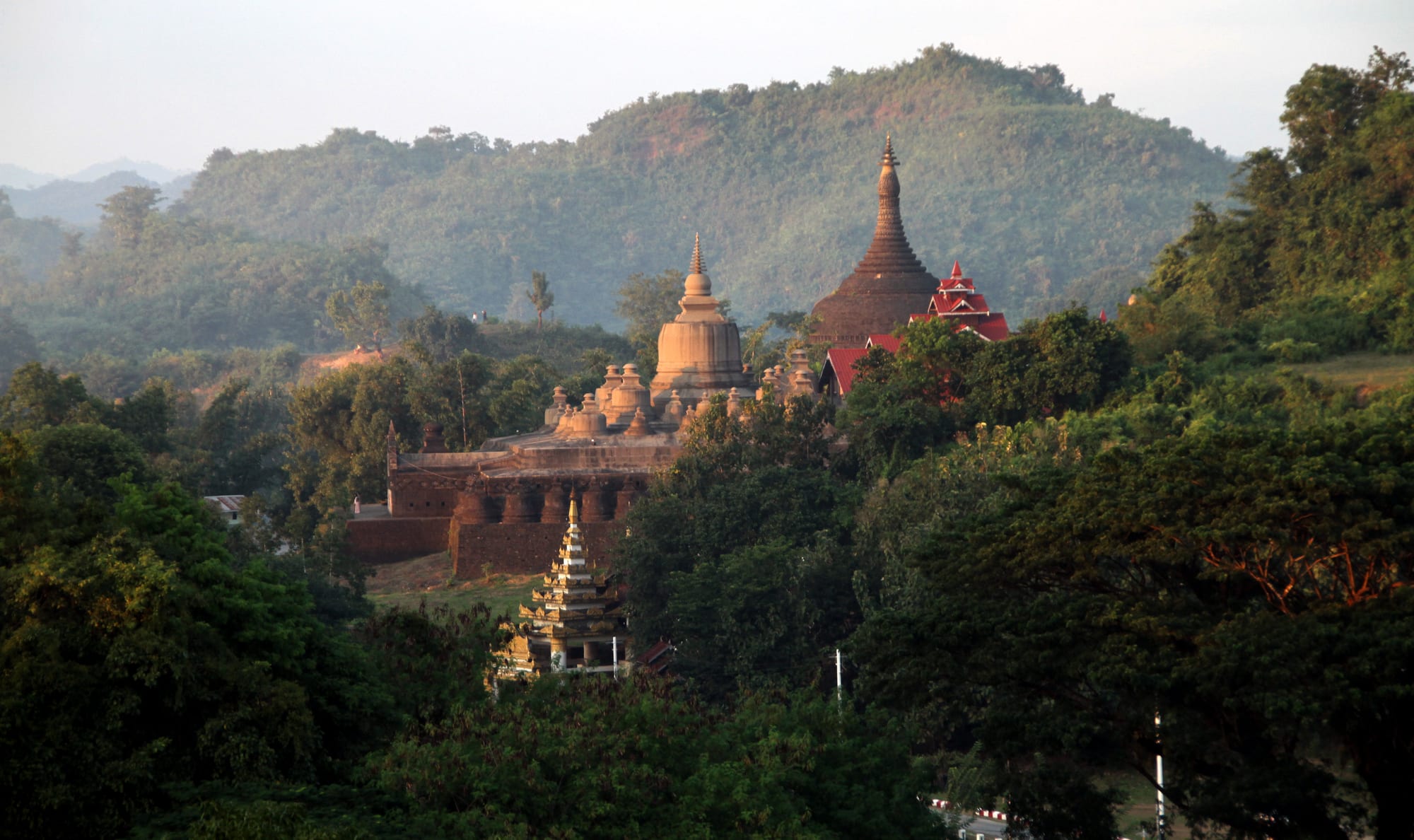
Rakhine, historically Arakan, faces west across the Bay of Bengal and was long separated from the Ayeyarwady valley by the Rakhine Yoma hills. Early kingdoms at Dhanyawadi and Waithali were Buddhist and Hindu, and Rakhine tradition holds that the Mahamuni Buddha image was cast at Dhanyawadi in the Buddha's lifetime. In 1430 King Min Saw Mon regained the Arakanese throne with help from the Sultanate of Bengal, and for the next three centuries the Mrauk U kingdom was a trading power whose kings used Muslim titles alongside Buddhist ones and dealt with Portuguese and Dutch merchants.
The Konbaung king Bodawpaya conquered Arakan in 1784 and carried the Mahamuni image to his capital near Mandalay. Britain took Arakan in 1826, and Akyab, now Sittwe, grew into a rice port. The delta changed even more: in the late 19th century the colonial government and migrants cleared mangrove and swamp to create one of the world's great rice-exporting regions, settled by Bamar, Karen and Indian labour.
After independence both areas saw insurgency, including the Karen insurgency from 1949. In 2008 Cyclone Nargis killed around 138,000 people, mostly in the delta. In Rakhine, violence between Buddhists and Rohingya Muslims in 2012 confined many Rohingya to camps, and the military's campaign of 2016–17 drove about 740,000 into Bangladesh. The Arakan Army, a Rakhine nationalist force, fought the military from the late 2010s and after 2023 took control of most of the state's townships.