💰 Budget
Inle Lake was one of the cheapest places on the old tourist circuit: guesthouses, noodle shops, bicycle hire and shared boats all cost very little, with a government zone fee charged on arrival. Since 2021 prices have risen with inflation and fuel costs, and many hotels and boat operators have closed.
- Daily Budget Midrange
- USD 70–160 (lake-view hotel, private boat or guide, domestic flight to Heho)
- Daily Budget Shoestring
- USD 25–45 where travel is possible (guesthouse, noodle shops, shared boats and bicycles)
The Inle zone fee goes to the authorities; carry clean US dollars and kyat in cash, as there is no working card access.
📅 Best Time to Visit
In climate terms, November to February, when the plateau is dry and the skies are clear, though nights are cold; the Phaung Daw U festival falls in September or October and the Taunggyi balloon festival in November. Security is the deciding factor: fighting has affected parts of Shan State and the road links around it since 2021.
⏳ Suggested Number of Days
Two or three days is the usual length of stay, one of them on the water. Four or five allows the hills and caves further out, or the arrival on foot from the west, and depends entirely on which roads are open.
- First Visit
- 2–3 days
- With Surroundings
- 4–5 days
🚆 Transportation
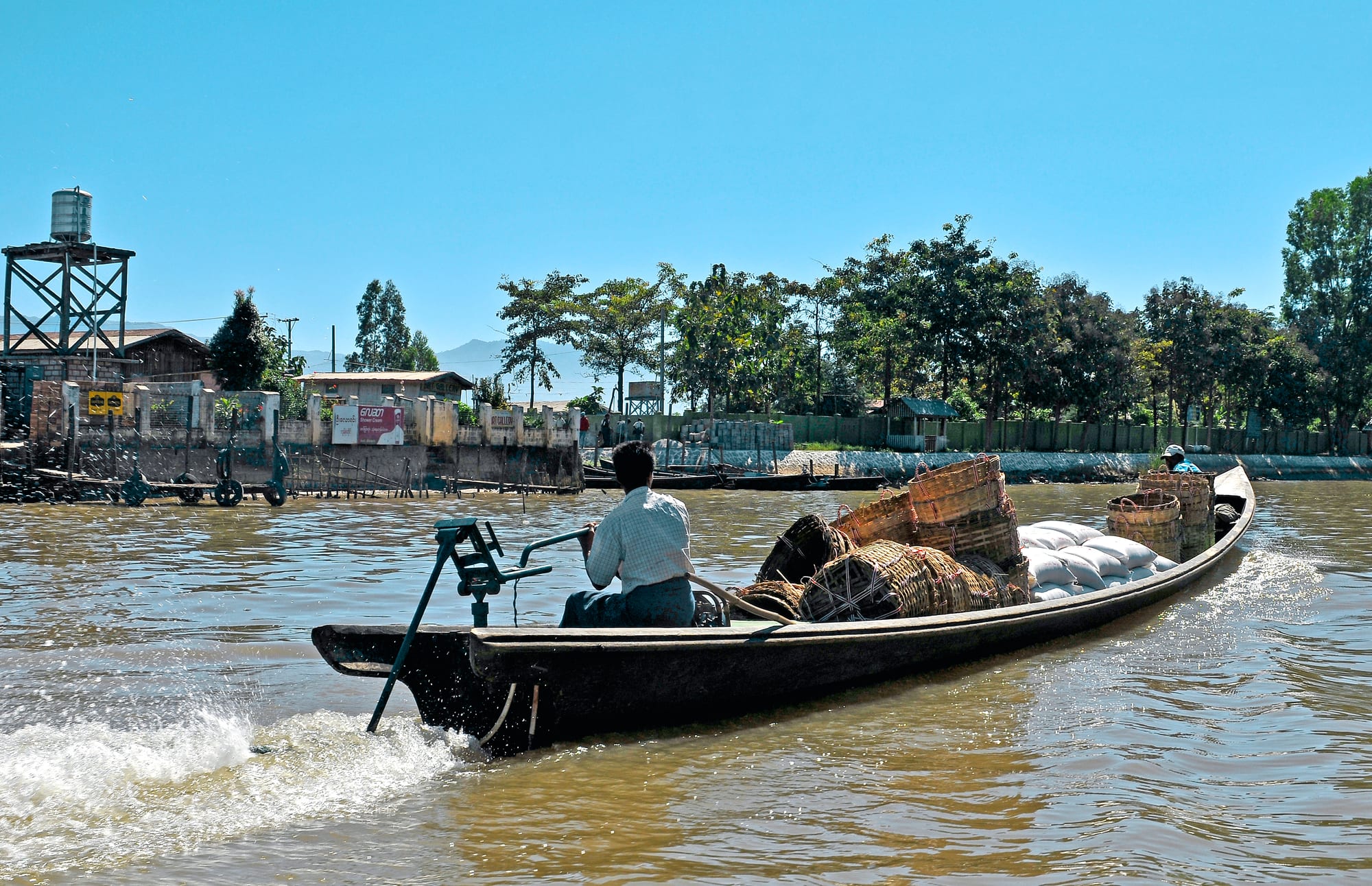
Boats are the transport of the lake: long, narrow motorboats hired by the day at the canal jetties reach the villages, workshops and pagodas on the water. The town itself is covered on foot or by bicycle, which many guesthouses hire out, and the shore roads are flat. Taxis, pick-up trucks and buses run up to Taunggyi and west to Heho and Kalaw.
Roads in parts of Shan State are frequently closed by fighting, and the border crossings with Thailand and China are unreliable; check conditions before any overland journey.
🛬 Airport & Station Connections
Heho Airport, on the plateau west of the town, is the usual way in, with flights from Yangon and Mandalay and a road transfer of about an hour. Buses reach the junction town of Shwenyaung, about 11 kilometres north of Nyaungshwe, on the overnight routes from Yangon, Mandalay and Bagan, and walkers arrive from Kalaw on a two- or three-day trek.
🚶 Walkability
The town is small, flat and easily walked from end to end in half an hour, and bicycles cover the shore roads and the villages nearby. Streets are unlit in places at night, and the lake itself can only be reached by boat from the canal jetties.
🛡️ Safety
Inle has seen quieter periods than much of the country, but no part of Shan State can be called safe. Fighting between the army and ethnic armed groups has affected large parts of northern and southern Shan since 2021, with air strikes, landmines and mass displacement, and control of towns has shifted. Consular help is limited, communications are cut for long periods, and road links can close without warning.
Do not travel against official advice, stay away from border areas, and treat any job offer leading to the Thai border as a trafficking risk. Check current official travel advice before travelling.
🌦️ Climate
The town stands at about 880 metres, high enough for warm days and cold nights. The dry season runs from November to February, the hot months are March to May, and the monsoon brings moderate but regular rain from about May to October.
- Summer
- warm rather than hot, generally about 25–32°C before the rains, with heavy showers once the monsoon sets in
- Winter
- dry and clear, with days around 22–26°C and nights that can fall close to 5°C on the plateau
🤝 Local Customs
The lake is Intha, Shan, Pa-O and Danu country, Theravada Buddhist and conservative in dress. Shoes and socks come off at pagodas and monasteries, shoulders and knees are covered, and at Phaung Daw U only men were allowed to place gold leaf on the images, a practice the trustees stopped in 2019 because of their weight. Boats pass villages where people are working: photographs of fishermen and weavers are asked for, not taken by surprise.
Tipping is not customary but small amounts are appreciated, and boat drivers are usually paid for the day. Do not photograph soldiers, police or checkpoints.
💳 Common Payment Methods
The currency is the Myanmar kyat. This is a cash economy: foreign cards rarely work, ATMs are unreliable and international banking has been disrupted since 2021, so clean, undamaged US dollar notes are the usual fallback. Exchange rates differ widely between official and market rates.