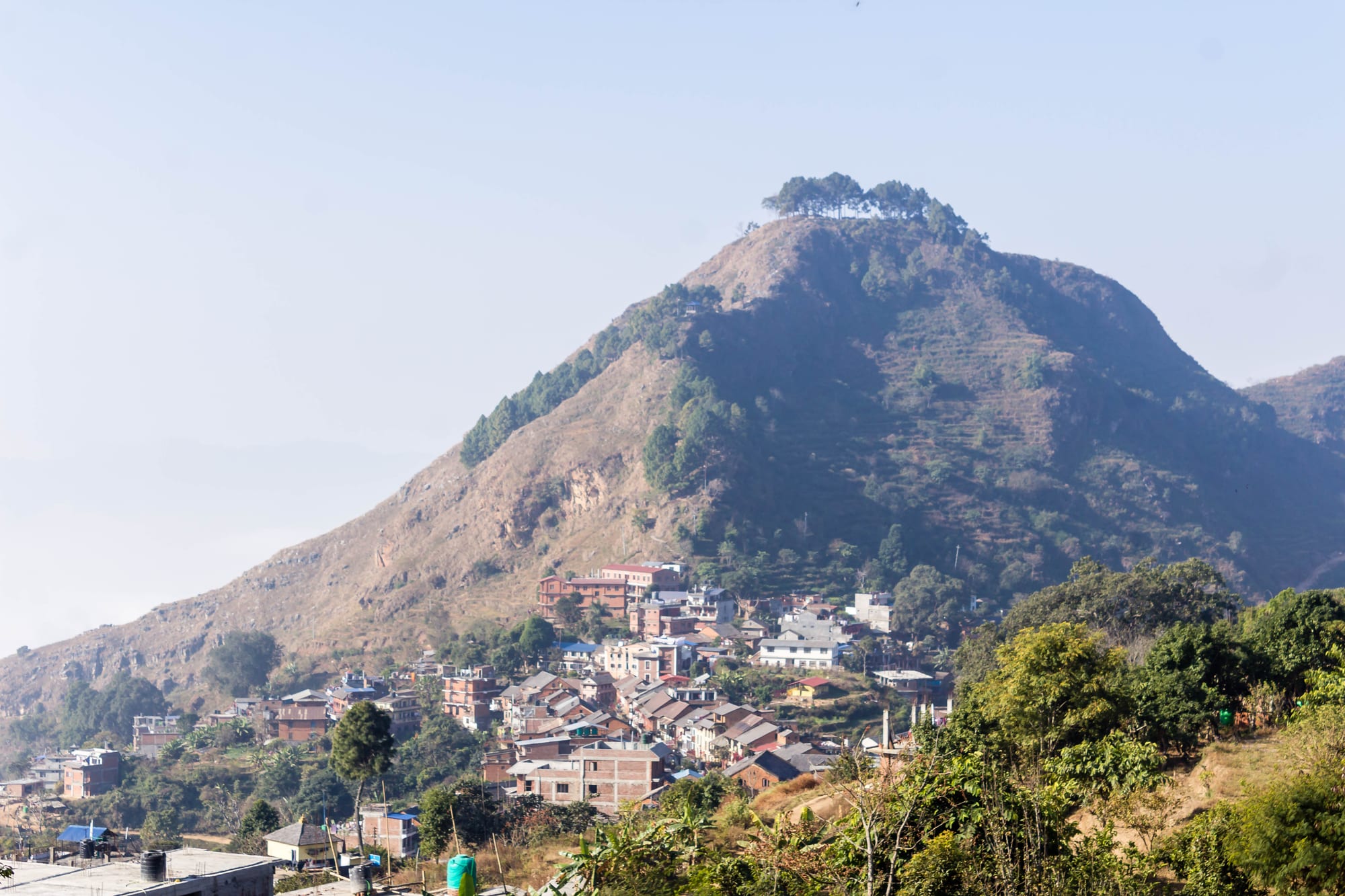
A small town of tin-roofed houses spread across the shoulder of a steep green hill topped by a stand of pine trees

Pokhara & the Annapurna Region, Nepal

Bandipur

Bandipur on its ridge in Tanahun district, below the wooded hilltop above the bazaar. (Bijay Chaurasia / Wikimedia Commons · CC BY-SA 4.0)

A hilltop town in Tanahun district, about 1,000 metres up on a ridge above the Marsyangdi valley. Newar merchants from the Kathmandu Valley made it a wealthy trading post in the 19th century; when the highway was built below it in the 1970s the trade left, and the neat bazaar of shuttered merchant houses survived almost unchanged, now restored as a quiet walking town with a long view of the Himalaya.

Neighbourhoods

  • The bazaar
    • First-time visitors
    • Historic district
    • Best for food

    The single paved street along the ridge, lined with two-storey Newar houses with carved wooden windows, overhanging eaves and shopfronts opening straight onto the flagstones. Vehicles are kept out, so the street works as a public room, used for drying grain, playing and sitting out in the evening.

    Open in Maps
  • Tundikhel and the ridge
    • Walks and viewpoints
    • Quiet

    The grassy parade ground on the open shoulder north-east of the bazaar, with the land dropping away sharply and the Annapurna, Manaslu and Ganesh ranges on the skyline in clear weather. Paths climb from here to the wooded hilltops above the town.

    Open in Maps
  • Dumre and the highway
    • Transport
    • Practical stops

    The junction town on the Prithvi Highway roughly 8 kilometres below by a steep switchback road. Buses between Kathmandu and Pokhara stop here, jeeps wait for the climb up, and shops, petrol and bus tickets are easier to find than on the ridge.

    Open in Maps

Things to do

The old town

  • Khadga Devi Templelandmark

    The town's principal temple, dedicated to a goddess whose sword is said to have been given to a local ruler, and the focus of Bandipur's Dashain observances.

    Open in Maps
  • Bindhyabasini Templelandmark

    A small pagoda-roofed shrine in the bazaar, one of several temples the Newar traders endowed as the town grew rich.

    Open in Maps
  • Tundikhelviewpoint

    A flat open ground the size of a football field on the ridge north-east of the bazaar, once a parade space, now where residents and visitors gather for the mountain view at dawn and dusk.

    Open in Maps

Hills, caves and walks

  • Siddha Gufaattraction

    A cave in the hillside below the ridge at Bimalnagar, about 437 metres deep with a chamber some 50 metres high, reached on a walk of an hour or two through forest.

    Open in Maps
  • Thani Mai Templeviewpoint

    A shrine on the hill above the bazaar, reached by a steep stepped path, and the usual place to watch sunrise over the ranges.

    Open in Maps
  • Ramkotneighborhood

    A Magar village of round thatched houses about two hours' walk west along the ridge, among terraced fields.

    Open in Maps

Short trips

  • Manakamana Templelandmark

    A much-visited hilltop temple to the goddess Bhagwati east of Bandipur, reached by a cable car that rises from the Trishuli valley.

    Open in Maps
  • Gorkha Palacelandmark

    The palace and temple complex on the ridge above Gorkha, from which Prithvi Narayan Shah set out to conquer the Kathmandu Valley.

    Open in Maps
  • Manasluviewpoint

    The eighth-highest mountain in the world, the most prominent of the peaks visible from the ridge on a clear morning.

    Open in Maps

Seasonal events

  • DashainSeptember or October

    Nepal's longest festival, marked in Bandipur with worship at the Khadga Devi temple, swings set up on the edges of the town and families returning to the ridge.

  • TiharOctober or November

    The festival of lights, when oil lamps and marigold garlands line the bazaar's shopfronts and groups go from house to house singing.

Eat and drink

Long-standing places and food districts in Bandipur. Hours, ratings and directions come from your maps app, always current.

Bandipur classics

  • Newari khaja setrestaurant

    The snack platter brought here by the town's Newar founders — beaten rice with spiced meat, black soybeans, pickles and often bara, a lentil-flour pancake.

    Open in Maps
  • Daal bhaat and dhidorestaurant

    The everyday meal of the hills, rice or a thick millet porridge with lentils, seasonal greens and pickle, served in the lodges along the bazaar.

    Open in Maps

The bazaar street

  • Bandipur bazaar cafés and rooftopsneighborhood

    Guesthouses in restored merchant houses open their ground floors and roof terraces as cafés, serving tea, coffee, momo and simple Western dishes with the ranges in view.

    Open in Maps

Experience Bandipur

History

The ridge was a Magar settlement before it was a town. Its rise began after Prithvi Narayan Shah's conquest of the Kathmandu Valley in 1768, when Newar merchants from Bhaktapur and the other valley cities moved out along the trade routes of the newly unified country. A group of them settled on this ridge, which sat on the route between India and Tibet and above the malarial lowlands, and rebuilt it in the architecture of their home cities: brick and timber houses of two or three storeys with latticed windows, carved struts and shop bays, set along a single paved street.

Bandipur grew into one of the wealthiest trading towns in the hills, dealing in cloth, grain and goods moving north and south, and it became the administrative centre of Tanahun district. Its heyday came in the Rana years, when the town was granted its own library — still standing, and one of the oldest in Nepal — and its merchants paid for temples and for schools that served the surrounding villages.

The end came with the road. When the Prithvi Highway was built along the valley below in the 1970s, traffic and business moved to Dumre at the foot of the hill and the district headquarters shifted to Damauli. Families left, shops shut, and the bazaar was largely abandoned — which is why it survived: nothing was pulled down and replaced with concrete. From the 1990s residents, returning families and conservation-minded projects restored houses, banned vehicles from the main street and turned merchant homes into guesthouses, and the town has lived on visitors ever since.

Culture & Customs

Bandipur is a Newar town set among Magar and Gurung hill villages, and the mixture shows. The bazaar keeps Newar habits — the tiered pagoda shrines, the guthi associations that manage temples and funerals, festival food and the practice of living above the shop — while the surrounding farms and the villages along the ridge belong to communities with their own languages, dress and dances, and a long history of service in the Gurkha regiments.

The street itself is the centre of public life. Because no vehicles come into it, the flagstones are used for drying maize and millet, for children's games, for school processions and for sitting out with tea at the end of the day. Temple festivals fill it several times a year, and Dashain, when families come back to the ridge and swings are built on the outskirts, is the biggest of them.

Preservation is part of the town's identity, and residents are conscious of living in a place people come to look at. Restoration work has followed old patterns in brick, timber and tile, and the appearance of the street is more carefully managed than in most Nepali towns. There is a visible debate about how many new buildings and how much concrete the ridge should take, and about how far tourism should shape a working settlement.

Daily Life

The municipality has about 15,000 residents spread over farming villages across the ridge and the slopes; the old bazaar itself holds only a few hundred households. Much of the working-age population lives elsewhere — in Kathmandu, Pokhara, India or the Gulf — and remittances support many families, a pattern common across the middle hills.

Farming and tourism carry the local economy. Terraces below the town grow rice, maize, millet and mustard, with vegetables and citrus for the market, and livestock kept in the villages. Guesthouses, cafés, shops and guiding work employ many in the bazaar, and Dumre below provides transport jobs and trade on the highway. Schools and a health post serve the ridge, but anything serious means a journey to Damauli or Pokhara.

The rhythm is early. People are out before dawn on the Tundikhel for the light on the mountains, children walk uphill to school, and the day's heat pushes work into morning and late afternoon. Electricity, piped water and mobile coverage reach the ridge, though water is short in the dry months and has to be carried or bought in some villages. The chief local concerns are the water supply, the state of the Dumre road, and the loss of young people to work abroad.

Food

Newar cooking is the town's inheritance. The khaja set, a snack platter, is built around chiura, beaten rice, with spiced meat, black soybeans, fried potatoes, pickle and often bara, a fried lentil-flour cake; choila, grilled buffalo or chicken tossed with mustard oil, chilli and spices, belongs to the same tradition. Festival cooking runs to richer dishes with mustard oil and heavy spicing, and to sweets such as sel roti, the ring of fried rice-flour batter made at Tihar.

Everyday meals are those of the hills. Daal bhaat — rice, lentils, a seasonal vegetable, greens and pickle — is eaten twice a day, and dhido, a stiff porridge of millet or maize flour taken with the fingers, is the older staple and still common in the villages. Gundruk, leafy greens fermented and dried, goes into a sour soup; sisnu, stinging-nettle soup, appears in winter, and dried meat, sukuti, is fried with chilli.

The bazaar's guesthouses serve momo, thukpa, curries and a short Western menu on roof terraces. Tea comes strong with milk and sugar; raksi, distilled from millet or rice, and locally brewed millet beer are drunk at home and at festivals, and citrus, banana and guava from the slopes appear in the shops through the cool months.

Planning tools

Budget

Bandipur costs a little more than most Nepali hill towns, because the restored merchant houses are its guesthouses and there are few very cheap beds. Food, tea and the walks are inexpensive, and there are no entry fees for the bazaar or the viewpoints; the cave and transport up from the highway are the main extras.

Daily Budget Midrange
USD 45–100 (a room in a restored Newar house, restaurant meals, a guided walk, private transfers)
Daily Budget Shoestring
USD 15–30 (simple guesthouse room, daal bhaat, local bus and jeep)

Bring cash: there are few places to change money on the ridge and card payment is uncommon.

Best Time to Visit

October to December gives the clearest views of the Himalaya, the reason most people come, along with the Dashain and Tihar festivals. February to April is warm and pleasant, though haze often hides the peaks by mid-morning. The monsoon from June to September is green and cloudy, with the mountains rarely visible, and winter mornings are cold with fog filling the valleys below.

Suggested Number of Days

A night is enough to see the bazaar and catch one clear morning; two or three suit walkers who want the cave, the ridge villages and a temple trip as well. Many travellers stop here for a night while moving between Kathmandu and Pokhara.

First Visit
1–2 days
With Surroundings
2–3 days

Transportation

The town is car-free along the bazaar, and everything within it is walked. Jeeps and small buses climb the switchback road from Dumre on the Prithvi Highway and stop at the edge of the old street; long-distance buses do not come up. Hired jeeps serve the surrounding villages and the road towards Manakamana and Gorkha.

Ask a guesthouse to arrange a jeep from Dumre; buses on the highway can drop passengers at the junction, but the climb takes about half an hour by vehicle.

Airport & Station Connections

Bandipur sits above the Prithvi Highway roughly midway between Kathmandu and Pokhara. From Kathmandu the journey is about five hours by bus to Dumre and then the climb; from Pokhara it is around two hours. Pokhara's airport is the nearest with regular flights, and Kathmandu's is the main international gateway. Trekkers heading for the Marsyangdi valley and the Annapurna Circuit often pass through Dumre.

Walkability

The bazaar is closed to vehicles and flagged with stone, which makes the centre one of the most pleasant places to walk in Nepal. Everything else is up or down: the paths to Thani Mai, the cave and the ridge villages are steep, rough and unlit, and the road from Dumre is a series of tight bends. Ordinary shoes are fine in the town, but not on the hill paths after rain.

Safety

Bandipur is a quiet town with very little crime. The practical risks are the steep unlit paths and unfenced drops at the viewpoints, the winding road up from the highway, monsoon landslides on that road, and leeches on the forest paths in the rains. The cave is dark, slippery and best entered with a guide and a torch.

Walk the hill paths in daylight, carry a torch in the evening, choose daytime road travel, and take the usual precautions with altitude-free but demanding hill walking. Check current official travel advice before travelling.

Climate

A temperate hill climate at about 1,000 metres, warmer than the mountains and cooler than the Terai. Mornings are often the clearest part of the day for mountain views; cloud builds in the afternoon for much of the year.

Summer
warm and very wet — roughly 20–30°C, with heavy monsoon rain from June to September and cloud on the peaks
Winter
mild days and cold nights — roughly 5–20°C, with fog in the valleys below and the best mountain views

Local Customs

The town is Newar in origin, with Magar and Gurung villages around it, and Hindu and Buddhist practice sit side by side. Shoes are removed at temple steps, and some inner shrines are closed to non-Hindus. The bazaar is a lived-in street rather than an open-air museum, and residents are used to visitors but not to cameras pushed through doorways.

Greet people with palms together and a namaste, ask before photographing people or house interiors, dress modestly with shoulders and knees covered at temples, and keep noise down in the bazaar late at night.

Common Payment Methods

The currency is the Nepalese rupee, and Bandipur runs largely on cash. Some guesthouses take cards or mobile payment, but small shops, jeeps and teashops do not. There is little in the way of banking on the ridge, so visitors draw money in Pokhara, Kathmandu or at Dumre.