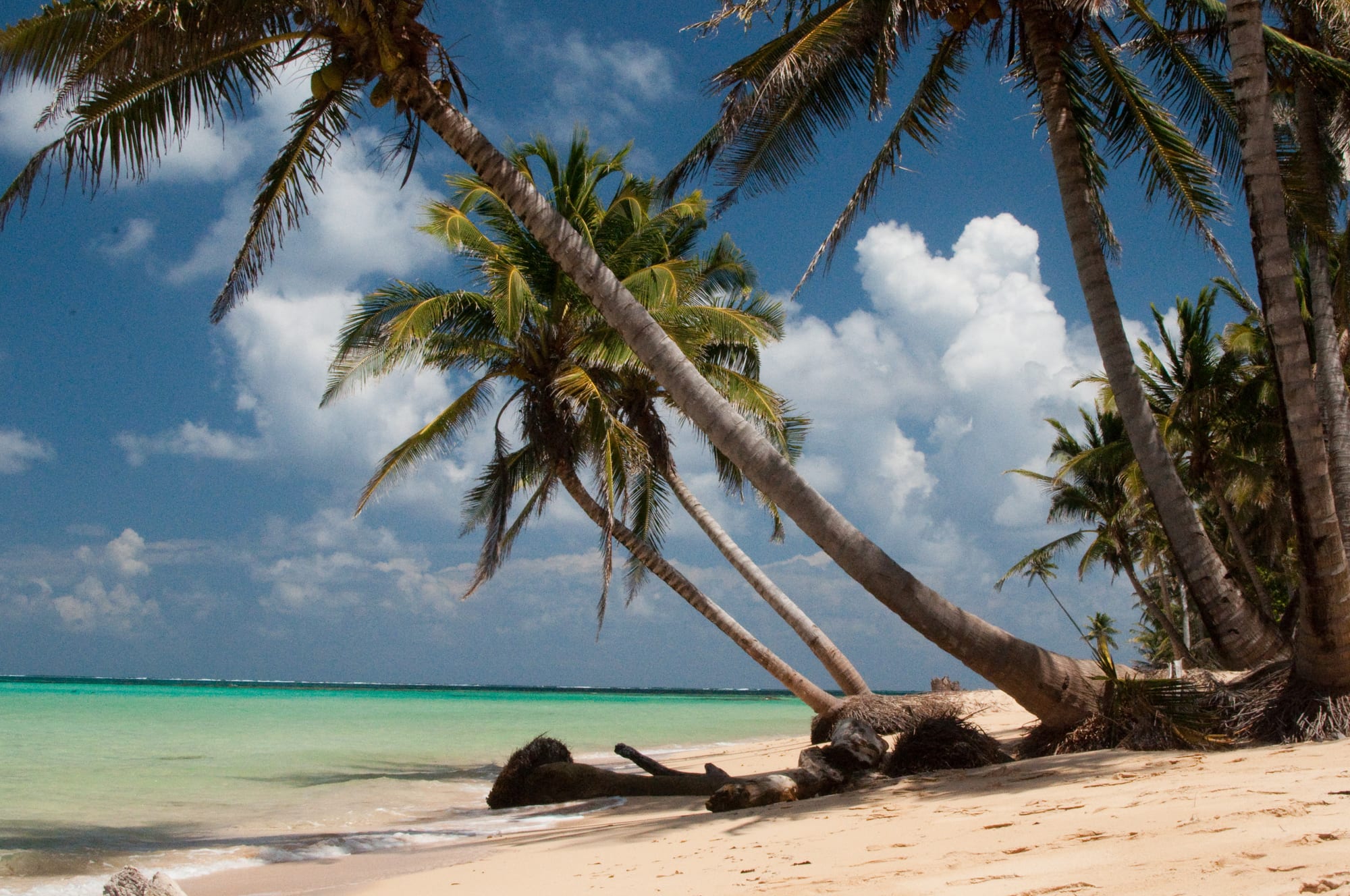
Leaning coconut palms over a pale sand beach and turquoise water on Little Corn Island

The Caribbean Coast, Nicaragua

Corn Islands

Otto Beach on Little Corn Island, the smaller of the two Corn Islands. (Brian Johnson & Dane Kantner / Wikimedia Commons · CC BY-SA 2.0)

Two small Caribbean islands about 70 km off Nicaragua's mainland — Great Corn, with a ring road and an airport, and car-free Little Corn. Settled by British colonists and the Africans they enslaved, the islands kept an English-speaking Afro-Caribbean Creole culture; lobster fishing and a growing trade in diving, snorkelling and beach stays now support their small population.

Neighbourhoods

  • Brig Bay
    • First-time visitors
    • Close to the airport
    • Local life

    The main settlement and municipal seat of Great Corn Island, home to the airport and the baseball stadium beside it, and the place where most visitors arrive.

    Open in Maps
  • Southwest Bay and Picnic Beach
    • Beaches
    • History

    The south-western side of Great Corn, where the enslaved people of the island were declared free in 1841. The port for the boats to Little Corn is here, and a paved side road leads to Picnic Beach, with its fine sand and gentle waves.

    Open in Maps
  • Long Bay and the south-east
    • Beaches
    • Quiet and residential

    The quieter southern and eastern shores of Great Corn, with Long Bay on the south end and small, out-of-the-way beaches between Sally Peaches and South End.

    Open in Maps
  • Little Corn Island
    • Beaches
    • Diving and snorkelling
    • No cars

    The smaller island, reached by fast boat from Great Corn. There are no motor vehicles and no roads: a paved path runs along the west coast near the pier, where the village, dive shops and cafés are, and dirt tracks cross the wooded interior to the beaches of the east side.

    Open in Maps

Things to do

Beaches

  • Picnic Beachbeach

    Great Corn's best-known beach, with fine sand and gentle waves on the south-west side of the island, thatched shelters and simple restaurants.

    Open in Maps
  • Long Baybeach

    A bay on the south end of Great Corn, where small stands on the beach sell cheap meals.

    Open in Maps
  • Sally Peaches and the small south-east covesbeach

    A string of small, remote beaches on Great Corn's south-eastern shore, quieter than the main bays.

    Open in Maps
  • Little Corn's east-side beachesbeach

    The windward side of Little Corn around Cocal Beach, walkable along the sand for much of its length, with palms leaning over pale sand.

    Open in Maps

Reefs and the water

  • Snorkelling and diving on the reefsattraction

    Coral reefs and seagrass beds surround both islands; barracudas, nurse sharks, green sea turtles and spotted eagle rays are among the marine life, and Little Corn has several dive shops near its pier.

    Open in Maps
  • The boat to Little Corntransit hub

    Fast open boats cross from the port at Southwest Bay on Great Corn to Little Corn's pier several times a day when the weather allows — an exposed, often wet crossing.

    Open in Maps

Walks and viewpoints

  • Mount Pleasantviewpoint

    The highest point of the islands, a hill of 95 m on Great Corn.

    Open in Maps
  • Quinn Hillviewpoint

    A hill in the south-east of Great Corn, from which the first settlers watched for ships approaching the old anchorage of Insurance Harbour; an art installation stands on the top.

    Open in Maps
  • Little Corn lighthouseviewpoint

    An old lighthouse in the north-west of Little Corn, beside a large telephone mast, with a view over the whole island from the top of its ladder.

    Open in Maps
  • Corn Island Airporttransit hub

    The airstrip at Brig Bay, Great Corn, where small planes from Managua and Bluefields land.

    Open in Maps

Eat and drink

Long-standing places and food districts in Corn Islands. Hours, ratings and directions come from your maps app, always current.

Corn Islands classics

  • Seafood restaurants in Brig Bayneighborhood

    Small restaurants around the island's main settlement serving fried fish, lobster, conch and rice with shrimp, often with rice and beans cooked in coconut milk.

    Open in Maps
  • Picnic Beach restaurantsneighborhood

    Beach restaurants under thatch at Great Corn's main beach, with local dishes cooked to order and drinks brought out to the sand.

    Open in Maps

Cafés and bars

  • Little Corn's village frontneighborhood

    The cafés, beach bars and small restaurants along the path by Little Corn's pier, serving fresh fruit frescos, coffee, cold beer and simple seafood meals.

    Open in Maps

Experience Corn Islands

History

The first known inhabitants of the islands were the Indigenous Kukra, who were wiped out by Miskito raiders allied with English buccaneers. Pirates and passing ships used the islands for firewood, water and repairs, and in the mid-18th century British settlers arrived from Jamaica by way of British Honduras, bringing enslaved Africans. They lived mainly in the south-east, where Quinn Hill gave a view of ships approaching the anchorage called Insurance Harbour. The islands formed part of the British protectorate over the Mosquito Coast, and on 27 August 1841 the superintendent of British Honduras landed and declared the enslaved people of the island free, at Southwest Bay. From the descendants of settlers and the freed population came the islands' Creole people.

Churches followed: the Ebenezer Baptist Church and School was founded in 1852, the first Christian institution on the islands, and Episcopal, Moravian and Adventist churches came in the early 20th century. Nicaragua occupied the coast militarily in 1894. Under the Bryan–Chamorro Treaty of 1914 the islands were leased to the United States for 99 years, though they stayed Nicaraguan; the lease ended when the treaty was cancelled in 1971. Corn Island became a municipality in 1940.

Storms have marked the islands' modern history. Hurricane Joan in 1988 destroyed more than four-fifths of the vegetation, above all the coconut palms; the erosion that followed hurricanes Eta and Iota in 2020 consumed much of the historic beach at Southwest Bay; and Hurricane Julia caused serious damage in October 2022, especially on Little Corn and the south-east of Great Corn.

Culture & Customs

The islands belong culturally to the English-speaking Caribbean as much as to Nicaragua. British and Jamaican migration in the 19th century shaped a strong Afro-Caribbean identity, many islanders carry English surnames, and the everyday language of native families is an English-based Creole with a Caribbean accent. Spanish is spoken too, by islanders and by the many people who have moved over from the mainland, and Miskito is also heard. The islands' flag remembers the emancipation of 1841.

Religion is part of daily life, in a pattern different from the Catholic Pacific side: the Baptist church came first, and Moravian, Adventist and Episcopal congregations followed. Music, cooking and church life all carry the Afro-Caribbean inheritance.

Baseball, Nicaragua's national sport, is among the most popular here; the main ground is the Karen Tucker Baseball Stadium, and the islands have sent at least one player to the major leagues. Volleyball and football are played as well. Visitors find the pace slow and easy.

Daily Life

About 7,900 people live in the municipality, which covers both islands, and almost all of them live in its settlements. Brig Bay, beside the airport, is the municipal seat; Great Corn holds five of the six neighbourhoods into which the municipality is divided, and Little Corn makes up the sixth.

For most of the 20th century the economy rested on coconuts. From the 1960s commercial fishing, above all for lobster and shrimp, took over, and lobster is still the main industry; there is a closed season, and undersized tails may not be taken. Tourism has grown considerably on the back of the reefs, with diving and snorkelling the main draw, and Little Corn in particular now lives largely from its visitors.

Life is shaped by the sea and the supply boats. Most cars on Great Corn are taxis, fresh vegetables are scarce, power cuts are common enough that many hotels run their own generators, and weather decides when boats and planes come and go. Coastal erosion is a pressing concern after recent hurricanes.

Food

The islands' cooking is built on seafood and coconut. The signature dish is crab soup, and the other everyday plates are rondón — a stew of fish or meat with root vegetables, simmered in coconut milk — fried fish, rice with shrimp, beef soup and gallo pinto, the Nicaraguan rice and beans, made here with coconut.

Lobster is the islands' great product and their main industry, so it is on the menu at almost every restaurant and inexpensive while the season is open; prices rise a little once it closes in early spring. Conch is plentiful too, and small taco stands near Long Bay sell cheap meals. Menus tend to repeat the same seafood dishes, fresh vegetables have to be shipped in and are scarce and costly, and vegetarian food is limited to a few simple dishes.

Coconut runs through the cooking — in the rice, the gallo pinto and the rondón — and coconut production was the islands' livelihood for most of the 20th century. To drink there are fresh fruit frescos, cold Nicaraguan beer and rum, and the beach bars of both islands are the places to drink them.

Planning tools

Budget

The Corn Islands cost more than mainland Nicaragua, because almost everything is shipped or flown in, and Little Corn is noticeably dearer than Great Corn. Flights and boat crossings are the largest costs; seafood, and lobster in season, is the good value.

Daily Budget Midrange
USD 80–160 (beach lodge or hotel, restaurant seafood, dive or snorkel trips, flights from Managua)
Daily Budget Shoestring
USD 30–50 (guesthouse room, local seafood meals, shared taxis and the boat to Little Corn)

Bring enough cash for the whole stay, especially for Little Corn; fresh vegetables are scarce and expensive on both islands.

Best Time to Visit

The drier months, December to April, bring sunnier days and usually calmer seas for the boat crossings. The rainy season runs from May to November, and from June to November the islands lie in the path of Caribbean hurricanes; rough weather can cancel flights and boats at any time of year.

Suggested Number of Days

Three or four days covers one island at an easy pace. Most visitors split their time between both, which needs about a week; divers often stay longer, and spare days help when weather delays the boats or flights.

First Visit
3–4 days
With Surroundings
6–8 days

Transportation

Great Corn has one paved road, about 12 km long, running around the island, plus a few side roads. Shared taxis are the usual way to get about and pick up other passengers on the way; a bus circles the island on no reliable schedule. Little Corn has no motor vehicles at all: everything is done on foot, along a paved path by the pier and dirt tracks elsewhere.

Take a taxi after dark on Great Corn, where there are no street lights, and keep bags in waterproof covers for the boat to Little Corn.

Airport & Station Connections

Small planes fly from Managua and from Bluefields to Corn Island Airport in Brig Bay. A ferry and smaller speedboats also cross from Bluefields on set days of the week; travellers coming overland reach Bluefields by bus from Managua or via El Rama. From Great Corn, fast boats run to Little Corn several times a day, weather permitting.

Walkability

Little Corn is entirely a walking island — it can be crossed end to end in under an hour, though the paths turn muddy and slippery in rain and the island is no place for bare feet away from the sand. Great Corn is about 10 square kilometres, small enough to walk in sections, but its bays are spread out and most people use taxis between them.

Safety

Nicaragua has historically had lower violent crime than its northern neighbours, but the political situation is now the dominant concern. The Caribbean coast lies on drug-trafficking routes, and theft occurs on the Corn Islands. Rough seas and overloaded boats are a real risk on the crossings.

Wear a life jacket on the boats, keep valuables out of sight on the beach, and avoid walking unlit roads alone at night. Check current official travel advice before travelling.

Climate

A tropical maritime climate, hot and humid all year, with a rainy season from May to November and a drier season from December to April. Along the Caribbean coast temperatures sit around 26–31°C, and tropical storms and hurricanes occasionally strike the islands.

Summer
hot, humid and wet, 27–31°C, with the hurricane season from June to November
Winter
warm, 24–29°C, and drier from December to April, with rough seas when northern winds blow

Local Customs

The islands are Caribbean in feel: English-based Creole is the first language of most native islanders, and most people also speak Spanish. Churches — Baptist, Moravian, Adventist and Episcopal — are central to community life, and many islanders have more in common culturally with the English-speaking Caribbean than with mainland Nicaragua.

Beachwear is for the beach: cover up in the villages and churches. Ask before photographing people, and do not buy undersized lobster, which is illegal to catch.

Common Payment Methods

The currency is the Nicaraguan córdoba, but most shops, restaurants and taxis also accept US dollars. Cash machines are few and only on Great Corn, some hotels and dive shops take cards, and small notes are the most useful thing to carry, especially on Little Corn.