A stone fortress on a green hill above a riverside village with a church and stilt houses along the water

Nicaragua

The Caribbean Coast

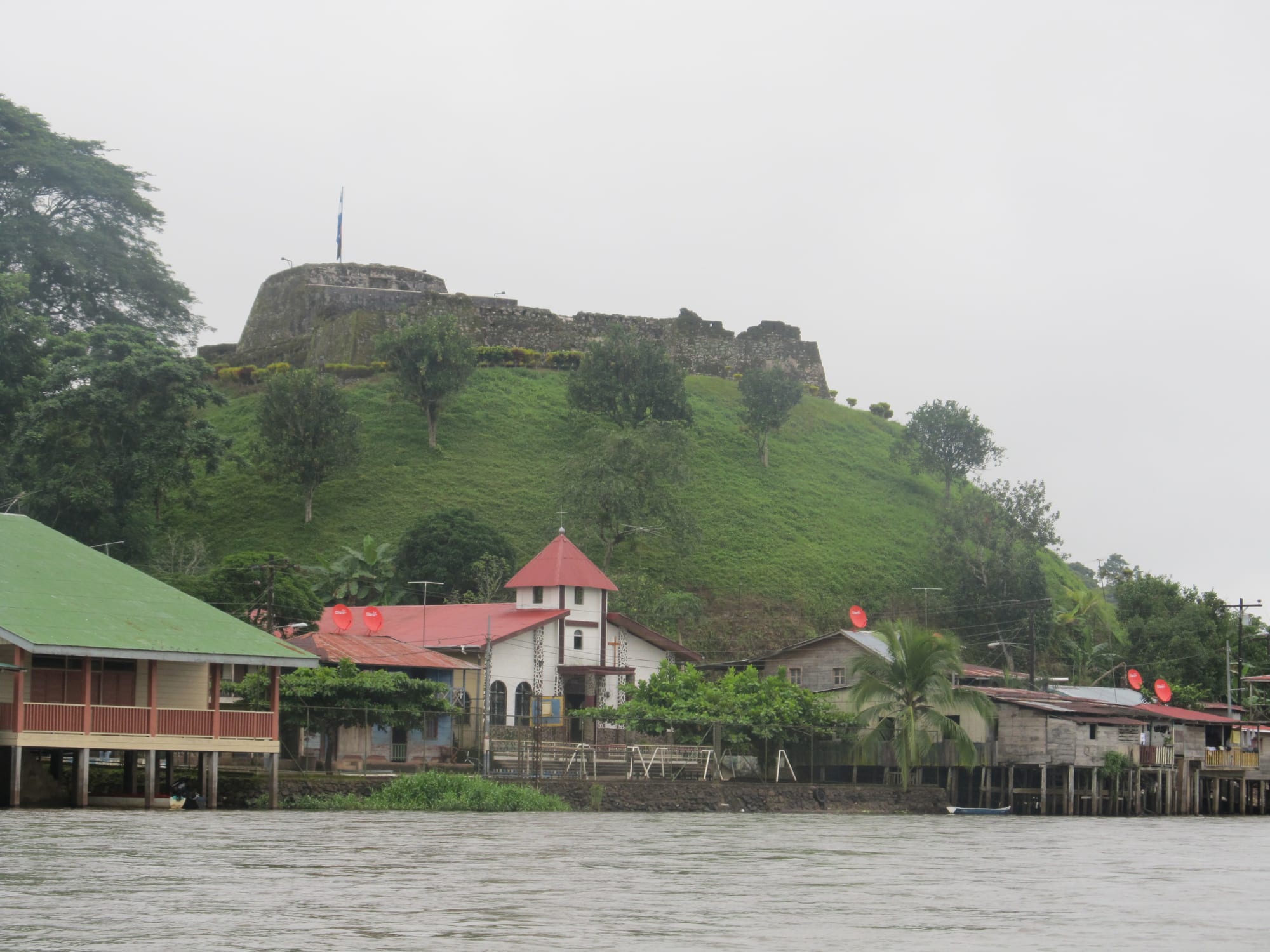
The Fortress of the Immaculate Conception above the village of El Castillo on the Río San Juan. (Stoschmidt / Wikimedia Commons · CC BY 3.0)

The eastern half of Nicaragua, made up of the two autonomous Caribbean coast regions and the department of Río San Juan — a wet, thinly populated land of rainforest, rivers, lagoons and offshore islands, home to Miskito, Creole, Mayangna, Rama and Garífuna communities and to Nicaragua's English-speaking Caribbean culture.

Explore The Caribbean Coast

History

Before Europeans arrived the coast was home to Indigenous peoples, among them the ancestors of the Misumalpan-speaking Mayangna and the Chibchan-speaking Rama. The Miskito emerged in the seventeenth century from mixing between Indigenous people, escaped and shipwrecked Africans and European traders, and allied themselves with the British, who crowned Miskito kings and treated the Mosquito Coast as a protectorate. Bluefields is thought to take its name from the Dutch pirate Abraham Blauvelt. Spain, meanwhile, guarded the Río San Juan, the route from the Caribbean to Lake Nicaragua and Granada, with the fortress at El Castillo, built in the 1670s. It held off a British attack in 1762 and fell to a British expedition, which included the young Horatio Nelson, in 1780, before disease forced the British out.

Britain gave up its protectorate in 1860, leaving a Mosquito Reserve that Nicaragua annexed in 1894. Moravian missionaries, working from Bluefields from 1848, made the Moravian Church a central institution on the coast, especially among the Miskito.

In the 1980s the Sandinista government's forced relocation of Miskito villages from the Coco River and the war that followed turned many Miskito against it. The 1987 Autonomy Statute created two self-governing regions, and Indigenous and Afro-descendant communities have since received collective land titles. In recent years settlers have moved into titled territories, and in 2023 police detained Brooklyn Rivera, a leader of the Indigenous party YATAMA, and days later its legal status was revoked. In 2012 the International Court of Justice upheld Colombia's sovereignty over San Andrés, Providencia and other disputed islands but drew a maritime boundary that gave Nicaragua a large share of the disputed sea; Colombia's government rejected the ruling.

Culture & Customs

The coast looks to the Caribbean rather than to Managua. Creoles, the English-speaking Afro-Caribbean community centred on Bluefields and the Corn Islands, speak a Creole English, and belong mostly to Protestant churches, including the Moravian and Baptist churches. The Miskito, the largest Indigenous people, live mainly in the north around Bilwi and along the Coco River, with their own language and communal land. The Mayangna live along the rivers of Bosawás, the Rama on Rama Cay near Bluefields, and the Garífuna in villages such as Orinoco on Pearl Lagoon. Spanish-speaking mestizos, many of them migrants from the Pacific, are now a large and growing part of the population.

Palo de Mayo, a May festival of dancing around a ribboned maypole, is the signature celebration of Bluefields, with its own music and carnival-style parades. Corn Island remembers 27 August 1841, when its enslaved people were declared free. Reggae, calypso and Miskito string bands fill the radio, and the Moravian hymn tradition runs deep.

Daily Life

The region covers roughly half of Nicaragua's land but holds a small share of its people. Bilwi, also called Puerto Cabezas, and Bluefields are the regional capitals and largest towns; the gold-mining towns of Siuna, Rosita and Bonanza form a mining belt inland, and San Carlos is the small capital of Río San Juan.

Fishing, especially for lobster and shrimp, supports the coast and the Corn Islands, and Miskito lobster divers work in dangerous conditions. Inland, farming, cattle and gold mining drive a moving agricultural frontier that pushes into the forest. Drug trafficking along the coast brings money and violence. Services are thin: many communities have no road, electricity is patchy, and travel is by boat along rivers and lagoons.

Daily life is shaped by the weather and the water, with boats as common as cars, and families spread between the coast, Managua and relatives abroad.

Food

Coconut defines the coast's cooking. Rondón, called rundown in Creole, is a stew of fish or meat, cassava, plantain, breadfruit and dumplings simmered in coconut milk. Rice and beans are cooked in coconut milk, and coconut bread is baked in Bluefields and on the Corn Islands.

Seafood is everywhere: lobster, conch, shrimp and snapper, and on Corn Island crab soup, the islands' signature dish. Patí, a spicy meat-filled pastry, is a Bluefields snack. Miskito cooking uses plantain, cassava and fish.

In Río San Juan, river fish and freshwater prawns are the local specialities. Nicaraguan rum and beer are the everyday drinks.

Attractions & Natural Wonders

The Corn Islands lie some 70 kilometres off Bluefields: Great Corn has beaches, reefs and small villages linked by a ring road, while Little Corn has no cars, only footpaths, and is the quieter place to snorkel and dive. Bluefields itself has its bayside market, Moravian church and boats to Rama Cay.

North of Bluefields, Pearl Lagoon is a broad, calm lagoon edged with mangroves, where the Creole town of Pearl Lagoon, the Garífuna village of Orinoco and Miskito villages such as Kakabila and Raitipura can be visited by panga. Offshore, the Pearl Cays are small palm-covered islands.

In the south, the Río San Juan flows from Lake Nicaragua to the Caribbean along much of the border with Costa Rica. From San Carlos, boats visit the Solentiname islands, known for their naive painting, and the Los Guatuzos wetlands, then run downriver to El Castillo, whose fortress museum looks over the rapids. Beyond it lies the Indio Maíz Biological Reserve.

In the far north, the part of the Bosawás Biosphere Reserve, a UNESCO biosphere reserve centred on Jinotega, that reaches into the region protects mountain rainforest and rivers where Mayangna and Miskito communities live, and Bilwi and the Coco River town of Waspam are the gateways to Miskito country.

Cities in The Caribbean Coast

Planning basics

Budget

Everyday prices are low, but getting around is expensive: flights, pangas (fast open boats) and river transport add up quickly, and goods shipped from the Pacific cost more. The Corn Islands, especially Little Corn's beach lodges, are among the pricier places in Nicaragua; Pearl Lagoon, San Carlos and El Castillo are cheap.

Daily Budget Midrange
USD 70–150 (island lodge or hotel, restaurant seafood, flights and chartered pangas, a river trip)
Daily Budget Shoestring
USD 25–45 (guesthouse, local meals, public boats)

Bring enough cash for the whole trip — ATMs are few, unreliable or absent outside Bluefields, Bilwi and Great Corn Island.

Safety

The coast lies on drug-trafficking routes, and Bluefields and Bilwi have problems with theft, robbery and drug-related crime; theft also occurs on the Corn Islands. In the Indigenous territories of the north and in and around Bosawás, conflict between communities and settlers over land has led to deadly attacks. Rough seas and overloaded boats are a real risk. The political situation affects the coast as it does the rest of the country.

Travel with established boat operators, avoid walking alone at night in Bluefields and Bilwi, and do not enter Bosawás or remote territories without an organised trip. Check current official travel advice before travelling.

Climate

Much wetter than the rest of Nicaragua. The coast is hot and humid, around 26–31°C, and rain falls in most months; the south, around Bluefields and the lower Río San Juan, is among the rainiest places in Central America. The driest stretch is roughly February to April. The coast lies in the hurricane belt: Joan struck Bluefields in 1988, Felix the far north in 2007, and Eta and Iota hit the northern coast in 2020.

Summer
hot, humid and very wet, 27–31°C, with the hurricane season from June to November
Winter
warm and rainy, 24–29°C, with drier weeks from February and rough seas when northern winds blow

Transportation

Small planes fly from Managua to Bluefields, Great Corn Island and Bilwi, and a paved road now reaches Bluefields from the Pacific side. From Bluefields, pangas reach Pearl Lagoon in about an hour and slower boats cross to Great Corn Island, from where pangas continue to Little Corn. San Carlos, at the head of the Río San Juan, is reached by road or by lake ferry from Granada, and river boats run downstream to El Castillo. Bosawás is reached only on organised trips from Siuna or Jinotega.

Allow spare days, as weather cancels flights and boats; wear a life jacket on pangas and keep luggage in waterproof bags.

Best Time to Visit

February to May, the least rainy months, with calmer seas for the crossing to the Corn Islands and better conditions on the rivers. Bluefields' Palo de Mayo festivities run through May. From August to October the hurricane risk is highest, and heavy rain can disrupt flights and boats at any time of year.