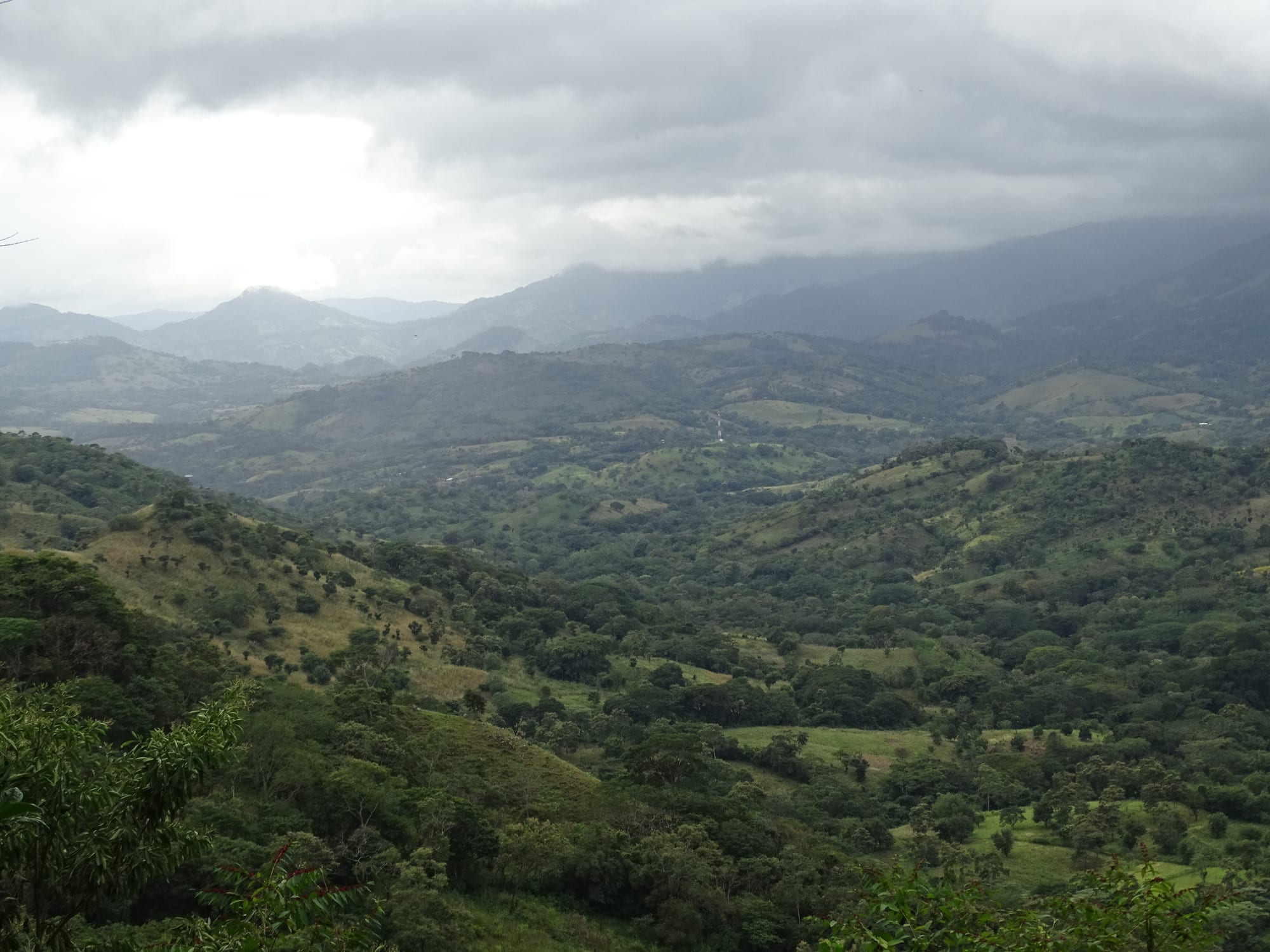
Green forested hills and farmland folding away towards cloud-capped mountains under a grey sky

Nicaragua

The Northern Highlands

The hills and mountains of the countryside outside Matagalpa, in Nicaragua's northern highlands. (Adam Jones / Wikimedia Commons · CC BY-SA 2.0)

The cooler, mountainous interior of Nicaragua, from the coffee country of Matagalpa and Jinotega and the tobacco town of Estelí up to the pine-covered Segovias on the Honduran border, with the cattle plains of Boaco and Chontales to the south-east — the land of Sandino, of the Contra war and of the country's best coffee and cigars.

Explore The Northern Highlands

History

The highlands were home to the Matagalpa and other Indigenous peoples, and the stone statues of Chontales show a distinctive pre-Columbian tradition. The Spanish founded Nueva Segovia, now Ciudad Antigua, in 1543, but the region stayed a thinly settled frontier raided by pirates.

In the late nineteenth century the government encouraged coffee growing, and German and other European immigrants founded estates around Matagalpa and Jinotega; in 1881 the Indigenous people of Matagalpa rose in revolt. Between 1927 and 1933 Augusto César Sandino fought the US Marines from the mountains of Nueva Segovia, and the Marines' attack on his forces at Ocotal in 1927 was an early use of dive-bombing. Carlos Fonseca, co-founder of the Sandinista Front, was born in Matagalpa, and Rubén Darío was born in Metapa, now Ciudad Darío.

The insurrection against Somoza brought heavy fighting to Estelí and Jinotega in 1978 and 1979. In the 1980s the highlands bore the brunt of the Contra war: rebel forces based in Honduras crossed into Nueva Segovia, Jinotega and Matagalpa, and many peasant families fought on one side or the other. In August 2022 the Bishop of Matagalpa, Rolando Álvarez, a critic of the government, was arrested; he was sentenced in February 2023 to 26 years in prison, and in January 2024 was released and sent to Rome.

Culture & Customs

The highlanders are known in Nicaragua as serious, hard-working and religious, and the region is more rural than the Pacific. Coffee shapes the calendar, with families moving up to the estates for the harvest from about November to February. Matagalpa keeps a strong Indigenous identity, and some towns have visible German heritage in their family names and estates.

Estelí has absorbed a strong tobacco culture since Cuban cigar makers arrived after 1959, and it is known as the city of murals. Northern music is distinct: the polka and mazurka, brought by immigrants, are played at dances in the Segovias and Jinotega. Artisans in the north make black pottery around Matagalpa and Jinotega.

Boaco and Chontales are cattle country, with rodeos, horse parades and a cowboy culture, and Cuapa in Chontales draws pilgrims to the site of reported Marian apparitions in 1980.

Daily Life

Matagalpa, Estelí and Jinotega are the main cities, each with roughly 100,000 to 150,000 people in their municipalities, and Juigalpa, Ocotal, Boaco and Somoto are smaller regional centres. Much of the population lives in villages spread over steep hillsides, and rural poverty is high.

Coffee is the backbone of the economy: Jinotega and Matagalpa grow most of Nicaragua's crop, on farms large and small. Estelí's economy rests on tobacco, with dozens of cigar factories exporting premium hand-rolled cigars, and Jalapa in Nueva Segovia also grows tobacco. Boaco and Chontales raise cattle and produce milk and cheese, and gold is mined around La Libertad and Santo Domingo in Chontales.

Seasonal work on Costa Rican and Honduran coffee farms, and emigration further afield since 2018, bring remittances into many households. Life starts early, with coffee at dawn and much of the work done before the afternoon rain.

Food

Highland cooking is built on maize, beans and dairy. Güirilas, thick, slightly sweet griddle cakes of fresh young maize, are eaten with cuajada (fresh curd cheese) or cream. Rosquillas, small crunchy rings of maize dough and cheese, are eaten with coffee in the afternoon.

Nacatamales and sopa de gallina, hen soup, are weekend and fiesta dishes, and tortillas and gallo pinto appear at every meal. Chontales and Boaco supply Nicaragua with cheese, including the salty dry cheese used for grating and the soft cuajada, and with beef for carne asada.

Coffee is drunk strong and sweet, but the estates also produce speciality coffees for export, and several farms near Matagalpa and Jinotega run tastings. Pinolillo and chicha, a fermented maize drink, are common, and Estelí's cigars, while not food, are part of every meal's conversation there.

Attractions & Natural Wonders

Matagalpa has its cathedral and the house where Carlos Fonseca was born; the hills around it hold coffee estates and cloud-forest reserves, of which Selva Negra, founded by descendants of German settlers, is the best known, with a coffee museum. Jinotega, an hour north, has the Cerro de la Cruz lookout above the town, Lake Apanás, a reservoir, and the Datanlí–El Diablo reserve.

Estelí's cigar factories offer tours of the rolling floors, and the town is covered in murals. North-east of the town, the Miraflor Nature Reserve spreads across cloud forest, pine woods, orchids and farms, with community lodges and horseback trails; to the south-west, the Tisey reserve has pine ridges and the Estanzuela waterfall.

Near Somoto, the Somoto Canyon, carved by the Coco River and protected as a national monument, is explored on guided trips that combine walking, swimming and rock jumping. Further north, Ocotal and the colonial church of Ciudad Antigua lie in the pine country of Nueva Segovia, Sandino's old battleground.

To the south-east, Juigalpa's museum displays the carved basalt statues of Chontales, and the hills of Boaco and Chontales offer ranch country and viewpoints over Lake Nicaragua.

Cities in The Northern Highlands

Planning basics

Budget

The highlands are cheaper than the Pacific tourist towns. Matagalpa, Estelí and Jinotega have inexpensive hotels and comedores, and the community lodges of Miraflor and guided trips into the Somoto canyon cost little. Coffee-farm lodges such as those around Matagalpa and cigar factory tours are the main extra costs.

Daily Budget Midrange
USD 55–110 (hotel or coffee-estate lodge, restaurant meals, guided canyon or cigar tours)
Daily Budget Shoestring
USD 20–40 (hospedaje, comedor meals, buses)

Book Somoto Canyon and Miraflor trips through local community guides in Somoto and Estelí; carry cash for the rural lodges.

Safety

The highland towns are generally calm, with petty theft the usual risk. Mountain roads are narrow and winding, the Somoto canyon's jumps and currents need a guide, and remote areas towards the Bosawás reserve in northern Jinotega have seen land conflicts as settlers move into Indigenous territory. The political climate is as tense here as elsewhere: Matagalpa's Catholic diocese has been a particular target of the government.

Use local guides for the canyon and reserves, avoid remote border areas and rural roads at night, and stay away from political gatherings. Check current official travel advice before travelling.

Climate

The highlands are the coolest part of Nicaragua. Estelí, Matagalpa and Jinotega sit between roughly 700 and 1,000 metres, with warm days and fresh nights, and the higher ridges of Miraflor and Jinotega are often in cloud. The rainy season runs from May to October and is longer and wetter on the eastern slopes towards Jinotega and Chontales, while Estelí and Madriz are drier. Boaco and Chontales, lower down, are hot.

Summer
rainy season, 20–28°C in the highland towns, afternoon storms and muddy rural roads
Winter
dry season, 16–28°C, clear days and chilly nights, with the coffee harvest in full swing

Transportation

Frequent buses link Managua with Matagalpa and Estelí in about three hours, and Estelí sits on the Pan-American Highway, which continues to Somoto and the El Espino border with Honduras. Jinotega is about an hour beyond Matagalpa, and Ocotal leads to the Las Manos border. Juigalpa, in Chontales, lies on the road east towards the Caribbean. Rural roads into Miraflor and the coffee farms are rough and best driven in a four-wheel-drive vehicle.

Travel by express bus between the main towns and hire local drivers or guides for the reserves and coffee farms.

Best Time to Visit

November to April, when trails are dry and the coffee harvest brings the estates to life. The Somoto canyon is best from about December to May, when the water in the gorge is low and calm; in the rainy season it can flood and trips may be cancelled. Miraflor is green and flowering from May, though trails get muddy.