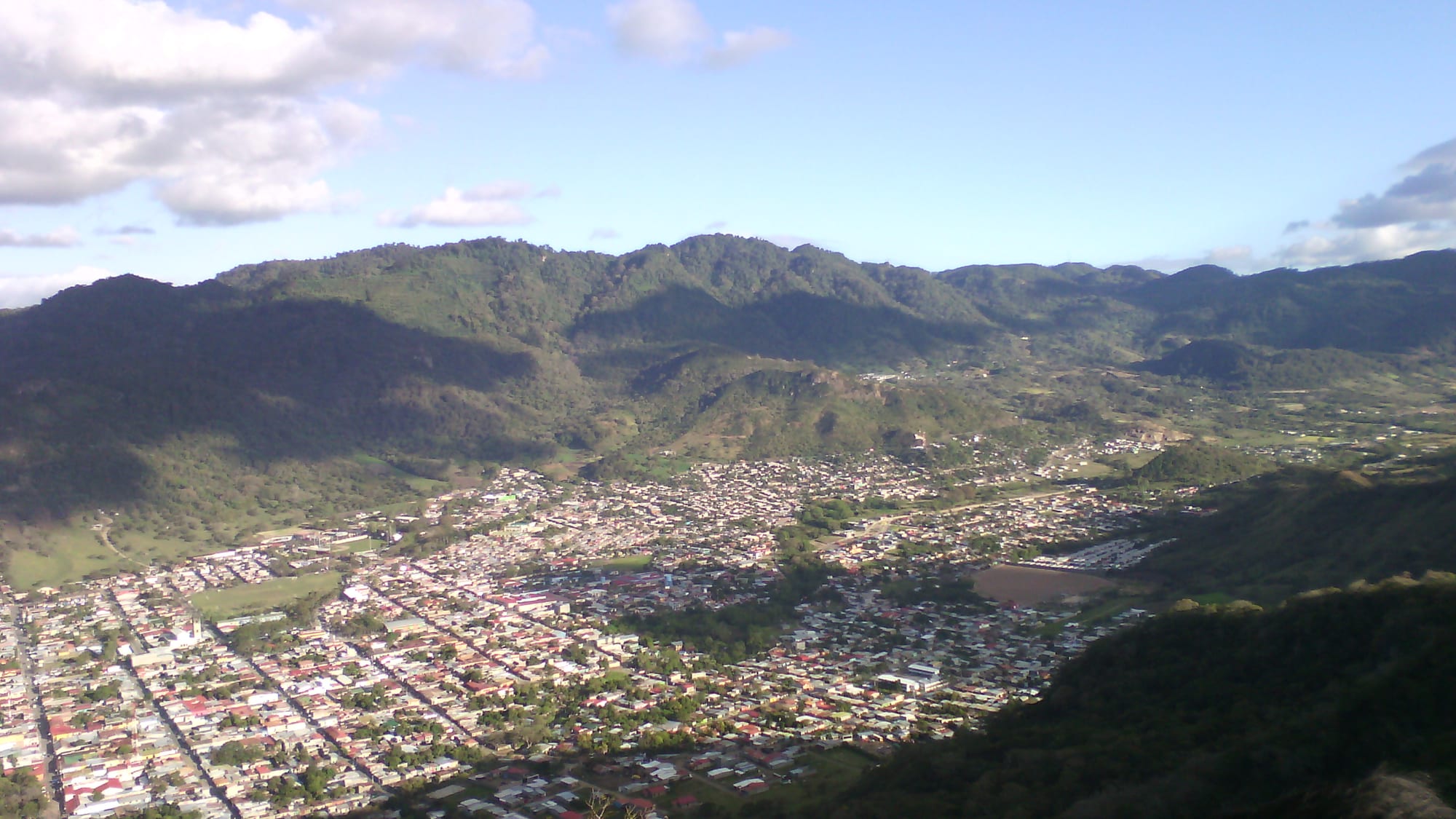
A town of red and grey roofs spread across a green valley floor, ringed by forested mountains under a blue sky

The Northern Highlands, Nicaragua

Jinotega

Jinotega and its valley seen from the Peña de la Cruz on the western edge of the city. (HeraldFrancisco NI / Wikimedia Commons · CC BY-SA 4.0)

A highland city in a long mountain valley 142 km north of Managua, known as the 'City of Mists' for the clouds that drift over the top of the valley. An Indigenous town that clung to its old name under Spanish rule, it became the heart of Nicaragua's coffee country in the late 19th century and sits just south of Lake Apanás, the reservoir that powers much of the country.

Neighbourhoods

  • The centre and Parque Central
    • First-time visitors
    • Close to public transport

    The grid around the central park, which faces the cathedral, the municipal museum, the library, the mayor's office, the university and many of the town's restaurants and guesthouses. The streets are safe to walk and easy to explore.

    Open in Maps
  • The western edge and the Peña de la Cruz
    • Views
    • Walks

    The western side of town at the foot of the cliff-like Cerro de la Cruz, where a cemetery marks the start of the cobbled pilgrims' path to the cross on the summit.

    Open in Maps
  • The coffee hills
    • Nature
    • Coffee farms
    • Quiet

    The mountains around the valley, including the cloud-forested Datanlí range to the east and the farm communities along the road to Matagalpa, are coffee country, with small and medium farms and estates offering tours.

    Open in Maps

Things to do

Landmarks and museums

  • Jinotega Cathedrallandmark

    The Cathedral of St John, whose first church was built in 1805 and rebuilt in 1882 and again in 1952–58, made the seat of a new diocese in 1991.

    Open in Maps
  • Municipal Museum of Jinotegamuseum

    The town's museum on the central park, beside the library and the mayor's office.

    Open in Maps
  • Parque Centralpark

    The central park in front of the cathedral, the meeting place of the town, with a skateboard track.

    Open in Maps

Walks and viewpoints

  • Peña de la Cruzviewpoint

    The hill on the west of town where the missionary Margil de Jesús placed a cross in 1703; a cobbled pilgrims' path climbs in 30–60 minutes to views over the city and the mountains, and the cross is lit at night.

    Open in Maps
  • Datanlí–El Diablo Nature Reservepark

    Cloud-forested mountains east of the valley, with coffee-farm and forest tours through the mist.

    Open in Maps

Short trips from the town

  • Lake Apanáspark

    A reservoir formed by the Mancotal Dam on the Tuma River north of the city, a source of much of the country's hydropower, with fishing and boat trips.

    Open in Maps
  • San Rafael del Norteattraction

    A small highland town to the north-west whose parish church is decorated with murals painted in the 1960s, and where the family house of Sandino's wife, Blanca, stands.

    Open in Maps
  • Matagalpaattraction

    The larger coffee city to the south, reached by a mountain road through coffee estates, with its cathedral and the house where Carlos Fonseca was born.

    Open in Maps

Seasonal events

  • Fiesta de la CruzMay

    A festival kept for three centuries, with a pilgrimage to the cross on the Peña de la Cruz and the local corn wine, agualoja.

Eat and drink

Long-standing places and food districts in Jinotega. Hours, ratings and directions come from your maps app, always current.

Jinotega classics

  • Agualojarestaurant

    A fermented corn drink, a kind of maize wine, made locally and drunk above all at the Fiesta de la Cruz.

    Open in Maps
  • Pupusasrestaurant

    Thick stuffed maize griddle cakes sold around the town as a snack.

    Open in Maps

Cafés and coffee

  • Cafés around the Parque Centralcafe

    Small cafés and restaurants near the central park serve the region's own coffee, most of which is grown for export.

    Open in Maps

Experience Jinotega

History

The name Jinotega comes from the Náhuatl Xiotenko, "the place next to the jiñocuajo trees", although its origin is debated, and most of the place names around it remain in the Matagalpa language. A Spanish census of 1581 listed it as an entirely Indigenous town with no Spanish presence. In the early 1600s the Mercedarian friar Juan de Albuquerque gave it the name San Juan de Jinotega, with John the Baptist as its patron, but its people clung to their old name.

Spanish settlers began to live near the town from 1690. In 1703 the missionary Margil de Jesús, who found still no permanent Spanish presence, had a large cross placed on the highest point of Cerro Chirinagua, on the western edge of the town; the hill is now called the Cerro de la Cruz. At the end of the 19th century and the start of the 20th, coffee transformed the economy, drawing entrepreneurs from Granada and León as well as German and British immigrants, and the community of La Fundadora, owned by a British man named Potter, became one of the first and largest coffee producers in the north.

Sandino's guerrillas fought the American occupation troops in these mountains. In the late 1970s Jinotega was a key battleground between the troops of Anastasio Somoza Debayle and the rebel population, and from 19 May 1979 the Sandinistas' Northern Front launched its final offensive here. From 1981 the mountains of the department became a battleground of the Contra war.

Culture & Customs

Jinotega is known as the "City of Mists" for the clouds that drift continually over the top of its valley, and also as "the Eternal City of Men". It calls itself the coffee capital of Nicaragua, and its coffee has won national and international prizes for quality. Coffee sets the calendar: during the December to February harvest, trucks move in and out of the north side of town and men carry coffee on their backs.

The town's great popular festival is the Fiesta de la Cruz in May, held for three centuries, when pilgrims climb the Peña de la Cruz to fulfil promises to the Holy Cross and drink agualoja, the local corn wine. The cathedral, dedicated to St John, is the centre of religious life.

Northern music and crafts survive: the polka and mazurka, brought by immigrants, are played at dances in the Segovias and Jinotega, and artisans make black pottery. Colonial Spanish surnames such as Castro, Duarte and Sobalvarro are still the most common in many villages, and the Indigenous names of the villages around the valley have outlasted the Spanish ones.

Daily Life

In 2012 about 124,000 people lived in the municipality of Jinotega, of whom about 38 per cent lived in the urban area; the rest live in villages scattered over the hills. The town is the capital of the department of Jinotega, which runs north to the Honduran border and the Bosawás reserve.

Coffee is everything here. The department grows a large share of the country's crop, and about 90 per cent of the coffee is in the hands of small and medium producers. Most of it is exported, to the United States, Russia, Canada and Europe. Lake Apanás, the artificial lake north of the town, feeds one of the country's main hydroelectric plants. Cattle are raised too, and their owners sell them directly to slaughterhouses in Managua, Chontales and Condega.

Life starts early, with coffee at dawn and much of the work done before the afternoon rain. Seasonal work on Costa Rican and Honduran coffee farms and emigration further afield bring remittances into many households.

Food

Highland cooking is built on maize, beans and dairy. Güirilas, thick, slightly sweet griddle cakes of fresh young maize, are eaten with cuajada, a fresh curd cheese, or cream, and local pupusas, stuffed maize cakes, are sold in the town. Gallo pinto, rice and beans fried together, and tortillas come with every meal.

Nacatamales, large banana-leaf parcels of maize dough with pork, rice and potato, and sopa de gallina, hen soup, are the weekend and fiesta dishes, and rosquillas, crunchy rings of maize dough and cheese, go with afternoon coffee.

The local drink is agualoja, a kind of corn wine drunk above all at the Fiesta de la Cruz, and chicha, another fermented maize drink, is common across the highlands. Coffee is drunk strong and sweet at home, while several farms near Jinotega run tastings of the speciality coffees grown for export. In the hills around the town, coffee tours combine walks through the cloud forest with a look at how the beans are grown, picked and dried, the crop locals call green gold.

Planning tools

Budget

Jinotega is one of the cheaper towns in Nicaragua. Guesthouses, comedores and buses cost little, and taxis within the town are cheap. Coffee-farm tours, stays in the hills and trips to the lake or the cloud forest are the main extra costs.

Daily Budget Midrange
USD 55–110 (hotel or coffee-estate lodge, restaurant meals, a coffee-farm or lake trip)
Daily Budget Shoestring
USD 20–40 (hospedaje, comedor meals, local buses)

Carry córdobas in small notes, and cash for rural visits beyond the town.

Best Time to Visit

November to May, from the end of the rainy season until the rains begin again. The coffee harvest from December to February fills the town with trucks and workers hauling coffee in from the farms. The Fiesta de la Cruz falls in early May.

Suggested Number of Days

A day or two covers the town and its viewpoint. Three or four days allow time for the lake, the cloud forest and the coffee farms around the valley. Rural roads in the rainy season can add time.

First Visit
1–2 days
With Surroundings
3–4 days

Transportation

The centre is small and walkable, and taxis are cheap for the edges of town. Buses run frequently to Matagalpa and to the towns of the department; rural roads into the coffee hills are rough and best done with a local driver or guide.

Hire local drivers or guides for the cloud forest and coffee farms.

Airport & Station Connections

Jinotega lies 142 km north of Managua. Direct express buses from Managua's Mayoreo terminal run without the need to change in Matagalpa; frequent buses also link the two cities, about an hour apart. Buses run to Estelí as well.

Walkability

The centre is compact and pleasant on foot, and it is considered safe to walk even in the shabbier-looking areas. The climb to the Peña de la Cruz starts on the western edge of town.

Safety

Nicaragua has historically had lower violent crime than its northern neighbours, but the political situation is now the dominant concern. Jinotega itself is generally calm, with petty theft the usual risk. Mountain roads are narrow and winding, and remote areas towards the Bosawás reserve in the north of the department have seen land conflicts as settlers move into Indigenous territory. The political climate is as tense here as elsewhere.

Avoid remote border areas and rural roads at night, and stay away from political gatherings. Check current official travel advice before travelling.

Climate

Jinotega's height gives it a pleasant climate compared with the hot Pacific cities. The municipality averages about 21°C a year, and the valley is often in cloud. The rainy season runs from May to October and is longer and wetter on the eastern slopes; the dry season brings clear days and cool nights.

Summer
rainy season May–October — across the northern highland towns about 20–28°C, with afternoon storms
Winter
dry season November–April — across the northern highlands about 16–28°C, with clear days and chilly nights

Local Customs

Jinotega is a devout, rural-minded town, and the pilgrimage to the cross on the Peña de la Cruz has been kept for three centuries, with people climbing to fulfil promises. Coffee sets the rhythm of the year, and northern dances still feature the polka and mazurka.

Dress modestly in churches, ask before photographing people, and avoid political conversations and gatherings.

Common Payment Methods

The currency is the córdoba (NIO); US dollars are accepted for larger purchases and by hotels. Cards work in some hotels and supermarkets, but buses, taxis, markets and comedores take cash.