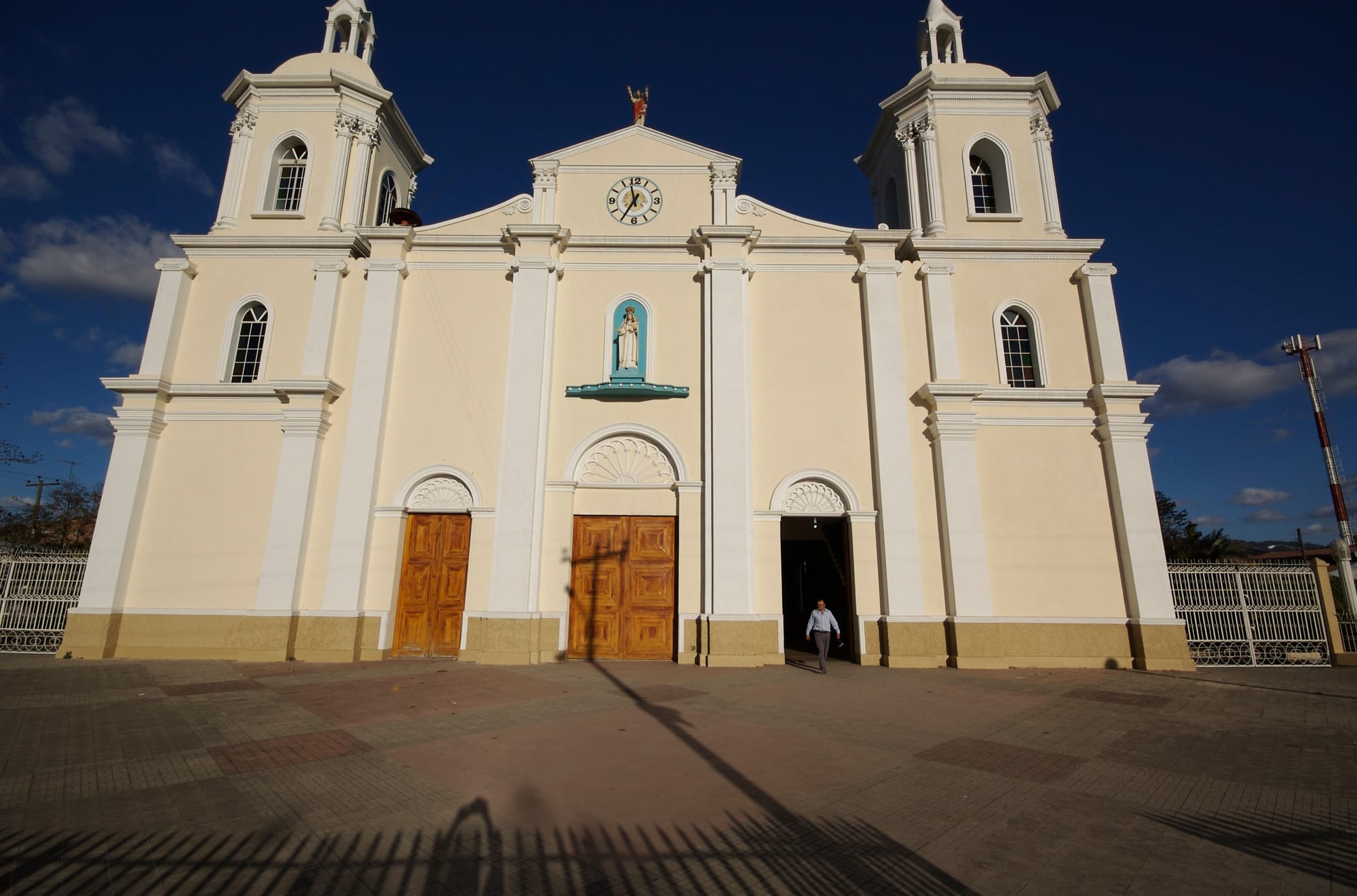
The cream and white twin-towered facade of Estelí Cathedral with wooden doors, facing a paved square under a deep blue sky

The Northern Highlands, Nicaragua

Estelí

The Cathedral of Our Lady of the Most Holy Rosary, seat of the Diocese of Estelí. (Lee Cohen / Wikimedia Commons · CC BY 2.0)

The commercial capital of Nicaragua's north, on the Pan-American Highway in a highland valley at about 840 metres, ringed by pine-covered mountains and nature reserves. Moved to its present site in the early 19th century and fought over heavily in the 1978–79 insurrection, it grew after 1959 into one of the world's most important cigar-making cities, its walls covered in murals.

Neighbourhoods

  • The centre and Parque Central
    • First-time visitors
    • Murals
    • Best for food

    The grid of streets around the Parque Central and the cathedral, easy to walk, with most of the city's cafés, restaurants, banks and guesthouses, and many of its murals on the walls of schools, plazas and public buildings.

    Open in Maps
  • The south and the Alfredo Lazo market
    • Markets
    • Local life

    The southern end of town around the Mercado Alfredo Lazo, the city's public market, with streets of leather shops just north of it and working barrios beyond.

    Open in Maps
  • The Pan-American Highway
    • Close to public transport

    The highway runs along the edge of the town past the two bus terminals, about twenty minutes' walk from the Parque Central, with shops and petrol stations.

    Open in Maps

Things to do

Landmarks and museums

  • Estelí Cathedrallandmark

    The neoclassical cathedral of Our Lady of the Most Holy Rosary, seat of the diocese since 1962.

    Open in Maps
  • Estelí's muralsattraction

    Murals painted by young people and children cover the walls of schools, parks and plazas across the city, many bearing witness to the revolution, and have earned Estelí the name "city of murals".

    Open in Maps
  • Museo de Héroes y Mártiresmuseum

    A museum where visitors can learn the history of the city and its part in the insurrection.

    Open in Maps

Cigars and markets

  • Cigar factory toursattraction

    More than ten factories in and around the city turn local tobacco into hand-rolled cigars, and many of them offer pre-arranged tours of the rolling floors.

    Open in Maps
  • Mercado Alfredo Lazomarket

    The public market at the south end of town, with leather shops on the streets just to the north.

    Open in Maps

Short trips from the city

  • Miraflor Natural Reservepark

    A reserve of cloud forest, farms and more than 200 species of orchids about 30 km from the city, with 236 bird species including the quetzal, visited from community lodges.

    Open in Maps
  • Cerro Tisey and Estanzuelapark

    A protected area of pine ridges south-west of the city, reached by local bus, with the Estanzuela waterfall on the way up.

    Open in Maps
  • Condegaattraction

    A small town further north on the Pan-American Highway, at a lower altitude than Estelí.

    Open in Maps
  • Somoto Canyonpark

    A narrow canyon near the Honduran border where the Coco River begins, a national monument since 2006, explored with local guides on foot and by swimming.

    Open in Maps

Seasonal events

  • Fiestas of the Virgen del RosarioOctober

    The religious celebrations of the patroness of the diocese, Our Lady of the Rosary, centred on the cathedral.

  • Civic fiestas patronalesDecember

    The city's civic festival, held separately from the religious feast, with hípicos, horse parades through the streets.

Eat and drink

Long-standing places and food districts in Estelí. Hours, ratings and directions come from your maps app, always current.

Estelí classics

  • Güirilasrestaurant

    Thick, slightly sweet griddle cakes of fresh young maize, eaten with cuajada, a fresh curd cheese, or cream — a highland speciality sold around the town.

    Open in Maps
  • Comedores around the centrerestaurant

    Simple eateries near the Parque Central serving set lunches of gallo pinto, meat, salad and tortillas.

    Open in Maps

Food districts and markets

  • Mercado Alfredo Lazomarket

    The city's public market, at the south end of town.

    Open in Maps
  • Cafés and bars of the centreneighborhood

    Cafés, restaurants and bars in the centre, part of the city's lively nightlife.

    Open in Maps

Experience Estelí

History

The first settlement that became Estelí was founded in 1685 at what is now called Villa Vieja by Spaniards fleeing Nueva Segovia, which was suffering pirate attacks. On 11 March 1823 the people of the settlement, then governed from León, sought permission to move again, pressed by attacks, wild animals that preyed on their cattle and poor land, and the town was rebuilt in the valley of Michigüiste beside the Río Estelí as the Villa de San Antonio de Estelí.

For most of its history it was a quiet highland market town. It was the scene of heavy fighting in the civil war against the Somoza government in 1978 and 1979, when many young people were killed on suspicion of supporting the insurrection, and in the 1980s attacks during the Contra war held back its recovery. The diocese was created in 1962.

The modern city was made by tobacco. The land around Estelí suits tobacco for cigars, and after the Cuban Revolution of 1959 the town became a refuge for Cuban cigar makers, who brought seed from the island in the 1960s and began an agro-industry that still dominates the city. After the war years the city recovered, and Estelí is now one of the most important cigar-producing cities in the world.

Culture & Customs

Estelí is known as the "Diamond of the Segovias", a name coined on a local radio show in 1960, and as the de facto capital of the north. It is also called the city of murals: young people and children have painted walls across the city, in schools, parks and plazas, and the murals hold a Guinness record for the longest chalk mural. Many of them bear witness to the revolution, and the city has almost as many murals as León.

Tobacco is the city's identity as well as its industry. Since 2012 Estelí has hosted the Puro Sabor tobacco festival, which brings cigar lovers from around the world to taste the city's cigars, and factory visits are a standard part of any stay.

The patroness of the diocese is Our Lady of the Rosary, and the city deliberately keeps its religious celebrations in October apart from its civic fiestas in December, with their hípicos, or horse parades. Real Estelí, founded in 1961, is one of the leading clubs in the national football first division, and the city's history is kept at the Museo de Héroes y Mártires and the municipal museum.

Daily Life

Estelí had an urban population of about 111,000 in 2022, with almost 85 per cent of the municipality's people living in the town. It is the active commercial centre of the north, with cafés, restaurants, supermarkets, banks, shopping centres and a lively nightlife.

Tobacco is the principal export: it is grown in the valleys around the town, and more than ten factories in the city process it into cigars considered among the best in the world. The industry has made Estelí a national economic power after the years of war. Leather shops and saddle-makers, several universities and trade along the Pan-American Highway add to the economy, and in the hills around the town, some of them protected as reserves, farmers grow coffee.

After Jinotega, Estelí has the most pleasant temperatures of any departmental capital in Nicaragua, and the cool evenings bring people out to the parks and cafés of the centre. Many families have relatives abroad, and remittances, like tobacco, are part of household income.

Food

Highland cooking here is built on maize, beans and dairy. Güirilas, thick, slightly sweet griddle cakes of fresh young maize, are eaten with cuajada, a fresh curd cheese, or cream, and rosquillas, small crunchy rings of maize dough and cheese, are eaten with coffee in the afternoon. Gallo pinto, rice and beans fried together, and tortillas come with every meal.

Nacatamales and sopa de gallina, hen soup, are the weekend and fiesta dishes, and comedores near the centre serve set lunches of meat, rice, beans, salad and tortillas. The public market at the south end of town sells fresh produce, and La Garnacha, a community of organic farmers in the hills nearby, is known for its cheese factory.

Coffee is drunk strong and sweet, and pinolillo, the toasted-maize and cacao drink, and chicha, a fermented maize drink, are common. Estelí's cigars, while not food, are part of every meal's conversation in the town.

Planning tools

Budget

Estelí is cheaper than the Pacific tourist towns. Guesthouses, comedores and local buses cost little, and shared taxis within the city are cheap. Cigar factory tours, guided trips into the Somoto canyon and stays in the Miraflor community lodges are the main extra costs.

Daily Budget Midrange
USD 55–110 (hotel, restaurant meals, a guided cigar or canyon tour)
Daily Budget Shoestring
USD 20–40 (hospedaje, comedor meals, local buses and shared taxis)

Book cigar factory visits in advance and carry cash for Miraflor and the canyon guides.

Best Time to Visit

November to April, when the trails are dry. December and January are the coolest months; March and April are the hottest, with days up to about 35°C. The Somoto canyon is best in the dry season, when the water is low and calm, while Miraflor is green and flowering from May.

Suggested Number of Days

One or two days cover the town and a factory visit. Three to five days allow time for the nature reserves and the canyon country to the north, with overnight stays in rural lodges. Bus timetables to the reserves add time.

First Visit
1–2 days
With Surroundings
3–5 days

Transportation

The centre is easy on foot. Local buses and shared taxis cover the city cheaply, and buses for the reserves leave from the two terminals on the Pan-American Highway on a fixed schedule. Rural roads into Miraflor are rough, best done with a local driver or guide.

Use shared taxis between the bus terminals and the centre, and arrange reserve and canyon trips with local community guides.

Airport & Station Connections

Estelí is on the Pan-American Highway, 150 km north of Managua, and buses from the capital leave every 30 minutes or so. The two bus terminals stand close together on the highway, a little out of the centre. Buses also run from Jinotega, León and Ocotal, the route from the Honduran border.

Walkability

The centre is a flat grid and easy to walk, with the Parque Central, cathedral and murals all close together. The bus terminals are about twenty minutes on foot from the Parque Central, and the market a short walk south.

Safety

Nicaragua has historically had lower violent crime than its northern neighbours, but the political situation is now the dominant concern. Estelí is generally calm, with petty theft the usual risk. The Somoto canyon's jumps and currents need a guide, and mountain roads are narrow and winding. The political climate is as tense here as elsewhere.

Use local guides for the canyon and reserves, avoid rural roads at night, and stay away from political gatherings. Check current official travel advice before travelling.

Climate

At about 844 metres, Estelí is one of the coolest cities in Nicaragua, with a temperate highland climate and mountains around it. March and April are the hottest months, with nights above 20°C and days up to 35°C; from December to January days are around 22°C and nights fall to about 16°C.

Summer
rainy season May–October — warm, with temperatures falling to around 30°C by day and afternoon storms
Winter
dry season November–April — about 22°C by day and 16°C at night in December and January, hot by March and April

Local Customs

Estelí is proud of its murals, its cigars and its nickname, the Diamond of the Segovias. Highlanders are known as serious, hard-working and religious, and religious and civic fiestas are kept apart.

Dress modestly in churches, ask before photographing people or factory workers, and avoid political conversations and gatherings.

Common Payment Methods

The currency is the córdoba (NIO); US dollars are accepted by hotels and for larger purchases. The city has banks, supermarkets and shopping centres where cards are accepted, but buses, taxis, markets and rural lodges take cash.