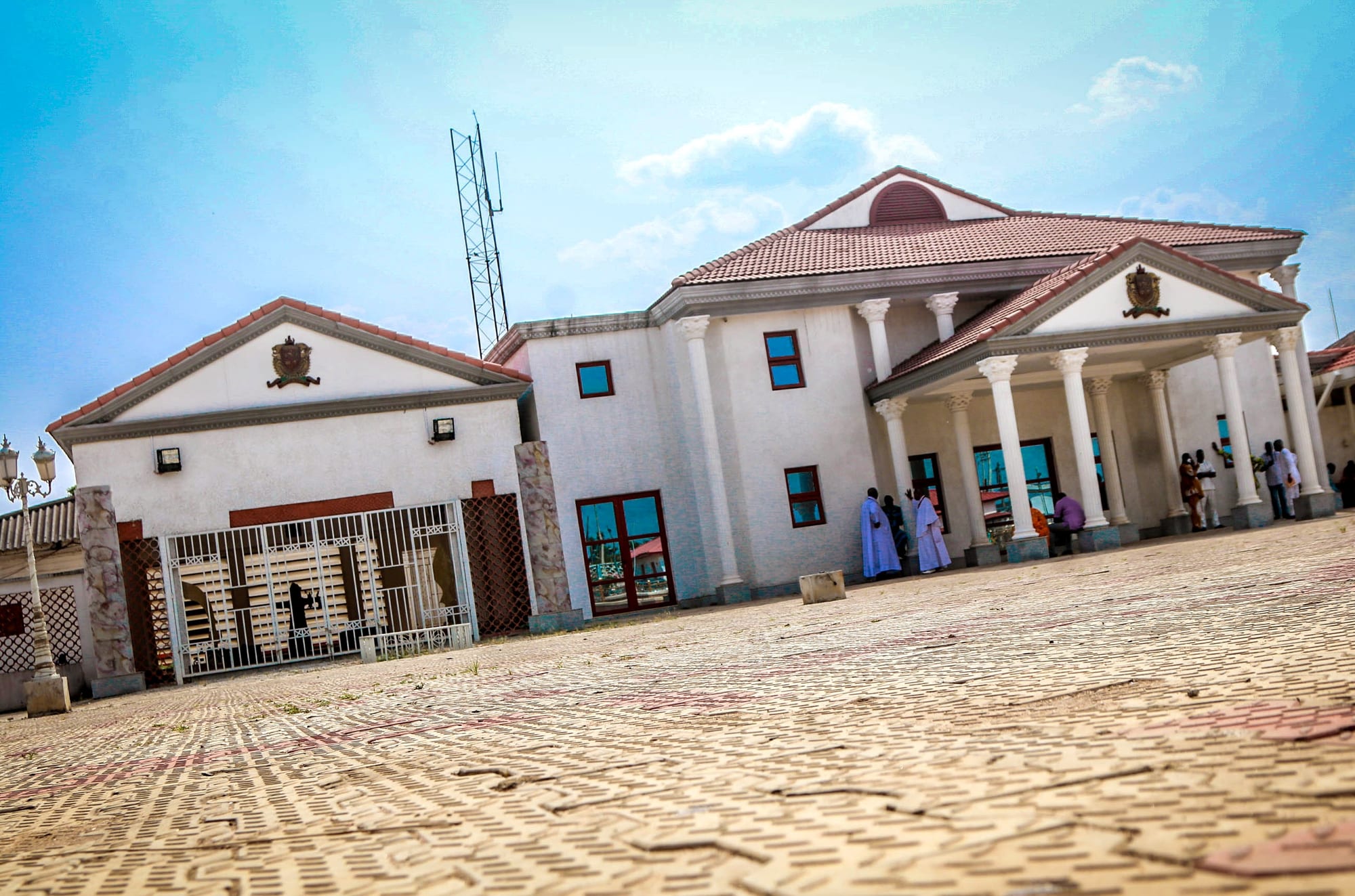
The white colonnaded front of the Oba of Benin's palace with a red-tiled roof and crested gables, seen across a wide brick-paved courtyard

Calabar & the Niger Delta, Nigeria

Benin City

The palace of the Oba of Benin in the centre of Benin City. (Kelechukwu Ajoku / Wikimedia Commons · CC BY-SA 4.0)

The capital of Edo State in southern Nigeria and the seat of the Kingdom of Benin, whose Oba still reigns from a palace in the middle of town. Once enclosed by vast earthen walls and moats and famous for the brass and ivory work carried off by a British expedition in 1897, it is now a busy trading and university city on the road between Lagos and the Niger Delta.

Neighbourhoods

  • King's Square and the Ring Road
    • First-time visitors
    • Historic district
    • Shopping

    The centre of the city is a large roundabout from which the main roads radiate, with the national museum standing in the middle of it. Banks, shops and offices line the ring, and the palace and the casters' street are a short walk away.

    Open in Maps
  • The palace quarter and Igun Street
    • Historic district
    • Crafts

    The area east of the centre around the Oba's palace, with chiefs' compounds, shrines and the brass-casters' workshops of Igun Street. It is the ceremonial heart of the Edo kingdom and comes alive during festivals.

    Open in Maps
  • Ugbowo
    • Students
    • Best for food
    • Nightlife

    The northern district built up around the main campus of the University of Benin, on the Lagos road. Cheap eating places, photocopy shops, bars and hostels give it a young, crowded feel.

    Open in Maps
  • G.R.A. and Ikpoba Hill
    • Quiet and residential
    • Hotels

    The old government reservation area with its larger houses and shaded streets, and the slope down towards the Ikpoba River, where hotels, offices and newer estates have spread.

    Open in Maps
  • Sapele Road and Ekehuan Road
    • Local life
    • Markets

    Two of the long approach roads out of the centre, lined with markets, workshops, churches and bus stops. Ekehuan Road runs west towards the river port at Ughoton, the kingdom's old outlet to the sea.

    Open in Maps

Things to do

The kingdom

  • Royal Palace of the Oba of Beninlandmark

    The residence and court of the Oba of Benin, rebuilt after 1897 on the site of the much larger palace of the old kingdom, and still the centre of Edo ceremonial life.

    Open in Maps
  • Walls of Beninlandmark

    The earth ramparts and ditches, known in Edo as iya, that once enclosed the city and its surrounding villages; the inner circuit ran about 12 kilometres, and sections survive around the town.

    Open in Maps
  • Igun Streetattraction

    The street of the hereditary brass-casters' guild, where bronze figures and plaques are still made by the lost-wax method for the palace and for sale.

    Open in Maps
  • Holy Aruosa Cathedrallandmark

    The temple of the Edo state religion on Akpakpava Street, founded in 1517 by Oba Esigie and Portuguese missionaries and one of the oldest churches in Nigeria.

    Open in Maps

Museums

  • National Museum, Benin Citymuseum

    The museum at the centre of King's Square, opened in 1973, holding bronzes, terracottas and cast-iron pieces from the kingdom and explaining the court art of Benin.

    Open in Maps
  • Museum of West African Artmuseum

    A museum campus in the centre of the city, built to house Benin art including works returned from European collections; it was due to open in November 2025 and has not yet opened.

    Open in Maps

City life and green space

  • Benin Airporttransit hub

    The city's airport, its runway inside the built-up area a few kilometres from the centre, with domestic flights to Lagos, Abuja and Port Harcourt.

    Open in Maps
  • University of Beninattraction

    The federal university, founded in 1970, whose Ugbowo campus on the northern edge of the city shapes a whole district of student life.

    Open in Maps
  • Ikpoba Riverattraction

    The river below the eastern side of the city, with the old road down the hill towards it and a dam upstream.

    Open in Maps

Short trips from the city

  • Okomu National Parkpark

    The smallest of Nigeria's national parks, a surviving patch of rainforest with forest elephants, the vulnerable white-throated guenon and many hornbills, crossed by forest tracks.

    Open in Maps
  • Sapeleattraction

    A river port and the centre of Nigeria's timber industry, with sawmills and a plywood and veneer factory, on the water route down towards the delta.

    Open in Maps
  • Ughotonattraction

    The creek-side village that served as the Kingdom of Benin's port, where Portuguese and later European traders moored from the 15th century.

    Open in Maps

Seasonal events

  • Igue festivalDecember

    Seven days of Edo court rites between Christmas and the New Year, in which the Oba blesses the land and its people, with processions, drumming and dances at the palace.

  • Christmas and homecoming seasonDecember

    The weeks when Edo families return from Lagos, Abuja and abroad for weddings, burials and church services, filling the roads and hotels.

  • Igue-related masquerades and chieftaincy ritesdry season, November to February

    Chiefs' ceremonies, title-takings and masquerade performances are concentrated in the drier months around the festival season.

Eat and drink

Long-standing places and food districts in Benin City. Hours, ratings and directions come from your maps app, always current.

Edo classics

  • Black soup kitchensneighborhood

    Edo cooks blend bitter and aromatic leaves into a dark, peppery soup eaten with starch or pounded yam, the dish visitors are most often told to try here.

    Open in Maps
  • Owo and banga soup placesneighborhood

    Owo, thickened with palm oil and potash, and banga, made from palm-fruit pulp, are served with starch in small restaurants across the city.

    Open in Maps

Markets and food streets

  • Oba Marketmarket

    The central market beside King's Square, selling pepper, palm oil, bush meat, dried fish and the leaves that go into Edo soups.

    Open in Maps
  • New Benin Marketmarket

    A large trading market on the northern side of the city, with foodstuffs, cloth and household goods and a ring of cooked-food sellers.

    Open in Maps
  • Ugbowo eating streetsneighborhood

    Student-priced canteens, grills and bars along the roads around the university campus, busiest in the evenings.

    Open in Maps

Experience Benin City

History

Benin City is the capital of one of West Africa's longest-lasting states. Edo tradition traces its rulers through the Ogiso kings to the Oba dynasty founded in about the 12th or 13th century, and from the 15th century the kingdom expanded under warrior obas such as Ewuare and Esigie until it reached from the Niger towards the Lagos lagoon. The city was laid out in wards of specialised guilds — casters, carvers, weavers, doctors — and enclosed by iya, earth walls and ditches that ran around the capital and its villages as part of a network estimated at some 16,000 kilometres in all.

Portuguese ships reached the kingdom's port at Ughoton in the 1480s, and European visitors described a broad, orderly city of long straight streets and a vast royal court whose walls were hung with cast brass plaques. Those plaques and the carved ivories and brass heads made for the palace are what the world now calls the Benin Bronzes. Trade in pepper, cloth, ivory and enslaved people ran through the same channels, and the kingdom guarded its independence into the 19th century.

In February 1897 a British punitive expedition, sent after a British party was ambushed and killed, captured and burned Benin City, deposed and exiled Oba Ovonramwen, who died in 1914, and removed thousands of works of art, which were sold and dispersed through European and American museums. The monarchy was restored under Eweka II in 1914 in a reduced form and the palace rebuilt. It became capital of Bendel State and, from 1991, of Edo State. Since 2021 European institutions have begun returning bronzes, and in 2023 the Nigerian president declared repatriated works the property of the royal family. The Museum of West African Art, built in the centre to receive them, has not yet opened.

Culture & Customs

Edo court culture is the city's defining feature. The Oba stands at the head of a hierarchy of palace chiefs, town chiefs and guild heads whose titles and duties are centuries old, and the palace year turns on ceremonies that culminate in the Igue rites in December. Coral beads — worn in strands at the neck and wrist and in a high beaded collar by the Oba — are the mark of rank, and the palace is still served by guilds of casters, carvers, leather-workers and drummers.

Bronze casting at Igun Street is the best known of these crafts, carried on in small open workshops by families who trace their trade to the old guild; wood and ivory carving, weaving and cast-iron work continue alongside it. Shrines to ancestors and to Olokun, the deity of the waters and of wealth, are kept in compounds across the city, and the Aruosa church represents an Edo form of worship distinct from both Christianity and the traditional shrines.

Most residents today are Christian, and Pentecostal churches are large and numerous. Edo is the everyday language of Benin City alongside Pidgin and English. The city has a strong musical tradition — Victor Uwaifo, born here and winner of the first gold record in Africa, made his name in highlife — and it takes football seriously. Edo's heavy emigration to Europe, and the trafficking that came with it, is a subject of continuous public discussion and church campaigning.

Daily Life

Benin City was the fourth-largest city in Nigeria at the 2006 census, after Lagos, Kano and Ibadan, and has gone on growing outwards along the Lagos, Sapele, Auchi and Agbor roads. It is the seat of the Edo State government, a market city for a wide farming region, and a university town: the University of Benin at Ugbowo brings tens of thousands of students each year.

Work is in government, trade, transport, construction, small manufacturing and services, with rubber, palm oil and timber from the surrounding country and oil-industry business drifting in from Delta State. Markets are the economic spine — Oba Market beside the palace and New Benin to the north among them — and street trading fills the roadsides. Grid electricity is unreliable and generators are everywhere; flooding and erosion damage roads in the rainy season.

The day starts with church services or market deliveries before the heat, thins in the afternoon, and ends with evening trading and roadside grills. Families keep close ties to ancestral villages in Edo State and return for burials and festivals. Emigration is a defining feature: many households have relatives in Italy, Spain or Britain, and remittances support a good deal of local building.

Food

Edo cooking is based on soups eaten with swallows and on starch, the smooth, stretchy cassava pudding coloured with palm oil that is the local alternative to pounded yam. Black soup, ebe-omoebe, is the city's signature: a mixture of bitter and aromatic leaves blended smooth and cooked with palm oil, meat and dried fish. Owo soup, thickened with palm oil and potash, and banga, made from boiled palm-fruit pulp and delta spices, are eaten across the city.

Ogbono and egusi soups appear as they do throughout the south, and pepper soup made with goat, catfish or bush meat is the usual evening dish in bars. Yam is central — pounded, boiled with palm oil and pepper, or roasted at the roadside — and plantain is fried as dodo or roasted whole. Rice and beans, akara fritters and moin moin fill out everyday eating, and suya grills set up along the main roads at dusk.

Fresh palm wine, tapped in the villages around the city and brought in each morning, is the traditional drink and is poured at ceremonies; ogogoro, the spirit distilled from it, is used in libations. Beer, malt drinks, zobo made from hibiscus and chapman are drunk in the bars, and roasted groundnuts and coconut are sold at every junction.

Planning tools

Budget

Benin City is cheaper than Port Harcourt or Abuja. Hotels are plentiful and modest in price, local restaurants are inexpensive, and the city is small enough that transport costs little. Costs rise around the festival and Christmas season in December, when rooms are harder to find.

Daily Budget Midrange
USD 110–260 (comfortable hotel, restaurants, a car with driver)
Daily Budget Shoestring
USD 35–60 (simple hotel, local restaurants, shared taxis and tricycles)

Arrange a guide through a hotel or the museum for the palace and Igun Street, and book rooms early for December.

Best Time to Visit

November to February is drier and more comfortable, and December brings the Igue rites at the palace and the homecoming season. The rains from about March to October are heavy, flooding parts of the city and making forest trips harder, although the surrounding country is greenest then.

Suggested Number of Days

The palace quarter, the museum and the casters' street can be seen in a day or two. Three or four days allow for the forest reserve and the river towns west and south of the city. Timing a visit around the December ceremonies calls for longer.

First Visit
1–2 days
With Surroundings
3–4 days

Transportation

Shared taxis, minibuses and keke napep tricycles run along the radial roads from the Ring Road, which is the reference point for almost every journey. Motorcycle taxis operate on the outskirts. Most visitors take a car with a driver for a day's sightseeing. Traffic knots around King's Square and the markets in the late afternoon.

Use the Ring Road as a landmark when giving directions, agree fares in advance, and keep road travel between cities to daylight hours.

Airport & Station Connections

Benin Airport, a few kilometres from the centre, has domestic flights to Lagos, Abuja and Port Harcourt. The city sits on the main Lagos–Asaba highway, and long-distance buses run from Lagos, Onitsha, Warri and Port Harcourt. Highway robbery on the Edo roads makes night travel unwise.

Walkability

The historic centre is walkable: the museum, the market, the palace and Igun Street all lie within a kilometre or so of King's Square, and the old quarter is best seen on foot. Beyond that the city spreads along long, busy roads with uneven pavements and open drains, and distances are covered by tricycle or taxi.

Safety

The city is a working commercial centre with the usual urban risks of theft and street crime, worse after dark. The wider region is uneven: some highways in Edo State see robbery and abduction, and governments advise against travel to the riverine parts of the Niger Delta. Cult-gang violence occurs in the city and around the university, though it rarely touches visitors, and malaria and road accidents are the practical health risks.

Avoid the creeks and riverine areas unless on essential business with security arrangements, keep to daylight road travel and stay alert in Port Harcourt. Check current official travel advice before travelling.

Climate

Hot and humid all year with a long rainy season from about March or April to October, heaviest in June, July and September, and a dry season from November to February when the harmattan brings haze and cooler nights. Rainfall is high and storms are sudden.

Summer
rainy and humid, about 23–30°C, with frequent heavy downpours
Winter
drier, about 21–33°C, with harmattan haze and cooler mornings

Local Customs

The Oba of Benin is deeply respected, and the palace, its chiefs and its shrines are treated with formality: visits are arranged in advance and photography inside is restricted. Edo is spoken alongside English and Pidgin. The city is largely Christian, with the Edo religion of the Aruosa and traditional shrines also present, and greetings to elders come before business.

Dress modestly and remove hats at the palace, ask permission before photographing people, shrines, ceremonies or government buildings, and do not photograph the Oba or chiefs without consent.

Common Payment Methods

The currency is the naira. Hotels, supermarkets and larger restaurants accept cards; markets, tricycles, the casters' workshops and small eateries take cash. ATMs stand along the Ring Road and the main approach roads, but foreign cards work unpredictably, so most visitors bring US dollars to change.