💰 Budget
David is one of the cheaper places in western Panama to stay: hotels in the centre come at every price, fondas are cheap, and buses to the rest of the province cost little. Costs rise with day trips — boats in the Gulf of Chiriquí, guides in the highlands, or a hire car.
- Daily Budget Midrange
- USD 100–200 (business hotel, restaurant meals, a hire car or a boat day trip)
- Daily Budget Shoestring
- USD 40–70 (hostel or budget hotel, fonda meals, local buses)
Use David as a base for day trips by bus; the bus terminal also has cheap luggage storage for those moving on.
📅 Best Time to Visit
The dry season, roughly mid-December to mid-April, brings sunshine and the easiest trips to the highlands and the islands, and the city's big fair is held in March. The rest of the year is the long wet season, hot and humid with heavy rain, although the gulf islands can be visited all year and whales pass offshore from August to October.
⏳ Suggested Number of Days
A day is enough for the city itself, and many visitors only pass through on longer journeys. Allow three to five days to use David as a base for the surrounding highlands and coast; the wet season and boat schedules can add time.
- First Visit
- 1 day
- With Surroundings
- 3–5 days
🚆 Transportation
The centre is compact and easy to cover on foot. Taxis are cheap and the usual way to get around the spread-out city. The bus terminal, the second largest in Panama, has services across Chiriquí and beyond, and local buses can be flagged down along the main roads.
Drive defensively if hiring a car: junctions can be chaotic, and stop signs read 'Alto'.
🛬 Airport & Station Connections
Enrique Malek International Airport is about 5 km south of the centre, with flights to Panama City. Buses from Albrook terminal in Panama City take about seven hours along the Pan-American Highway, which runs through the city; David is some 434 km from the capital. Buses reach the Costa Rican border at Paso Canoas in about an hour and a half, Boquete in about an hour, and Almirante, for Bocas del Toro, in three to four hours.
🚶 Walkability
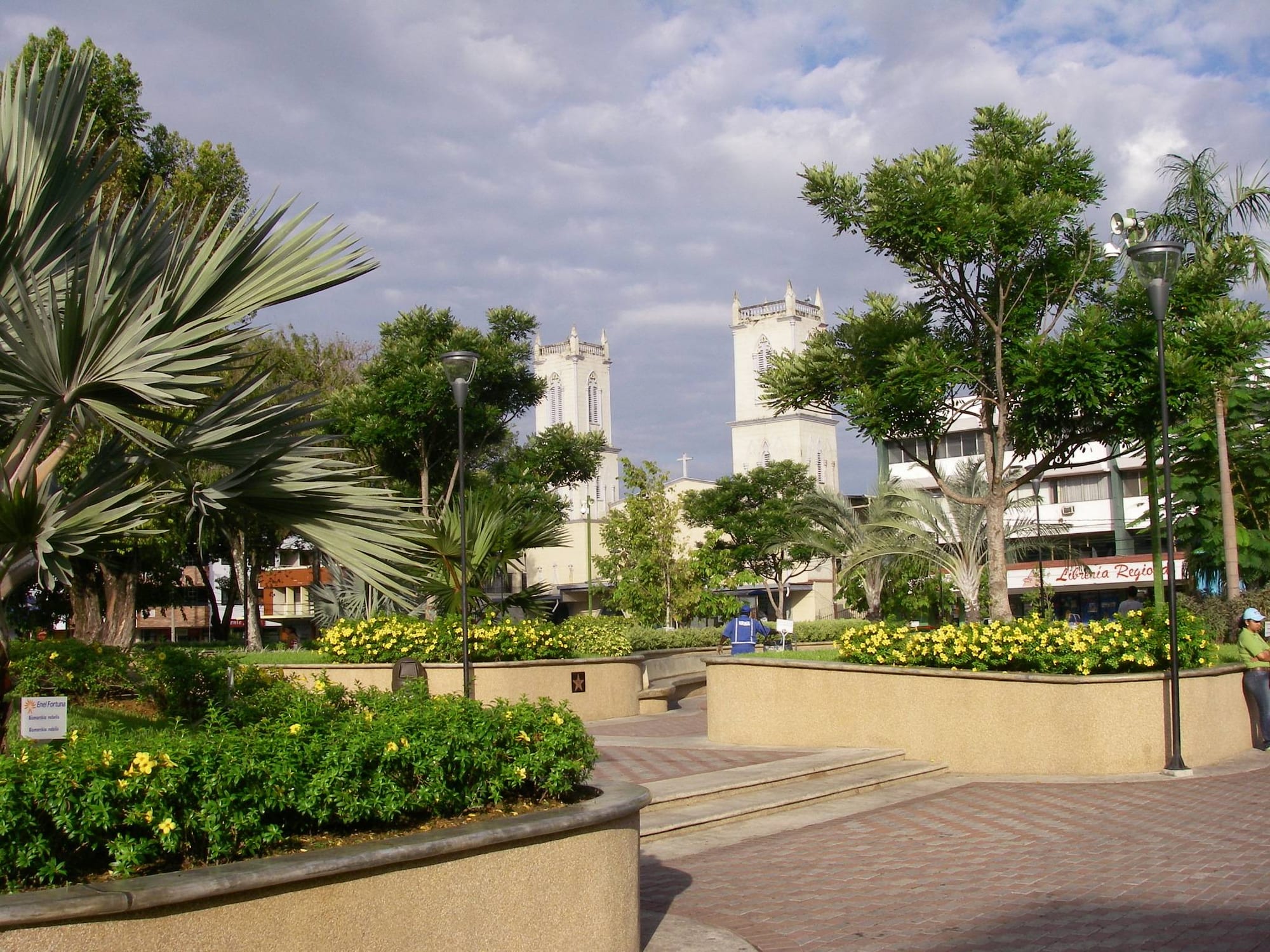
The flat centre, with Parque Cervantes, the banks and Barrio Bolívar, can be walked, but the heat makes long walks tiring in the middle of the day. Beyond the centre the city spreads out in low-density suburbs of single-family homes, and taxis are the practical choice.
🛡️ Safety
Panama is one of the safer countries in Central America, and the main tourist areas are generally fine with normal precautions. Western Panama is generally safe, and David is a prosperous commercial city. The main hazards for visitors lie outside it: strong currents at some Pacific beaches, boat crossings in the gulf, and steep trails and fast-changing weather in the highlands.
Keep valuables out of sight, use registered taxis at night, swim only where it is safe and take boats from licensed operators with life jackets. Check current official travel advice before travelling.
🌦️ Climate
David has one of the hottest climates in Central America, a tropical monsoon climate with a short dry season from mid-December to mid-April and a long, humid wet season the rest of the year. Daytime temperatures in David average around 32°C across the year; the air cools quickly towards the highlands to the north.
- Summer
- the wet season, mid-April to mid-December: about 25–33°C in David, humid, with heavy rain
- Winter
- the dry season, mid-December to mid-April: about 32°C by day in David, sunny and sweltering
🤝 Local Customs
Chiricanos are known in Panama for their strong pride in their province, and David is its proud, practical capital, more a city of business, farming and trade than of tourism. Spanish is the language of daily life, and much less English is spoken than in Boquete. Dress is light for the heat but neat in banks and offices.
Greet with a 'buenos días' or 'buenas tardes' before asking for anything, dress modestly in churches, and ask before photographing people.
💳 Common Payment Methods
Panama uses the US dollar as paper currency, with its own balboa coins of the same size and value as US coins. As the region's banking centre, David has plenty of banks and cash machines, and cards are accepted in hotels, malls and larger restaurants. Buses, taxis, fondas and small shops need cash.