Long wooden motorboats moored at a muddy concrete landing on a wide brown river lined with trees

Guna Yala & the Darién, Panama

Yaviza

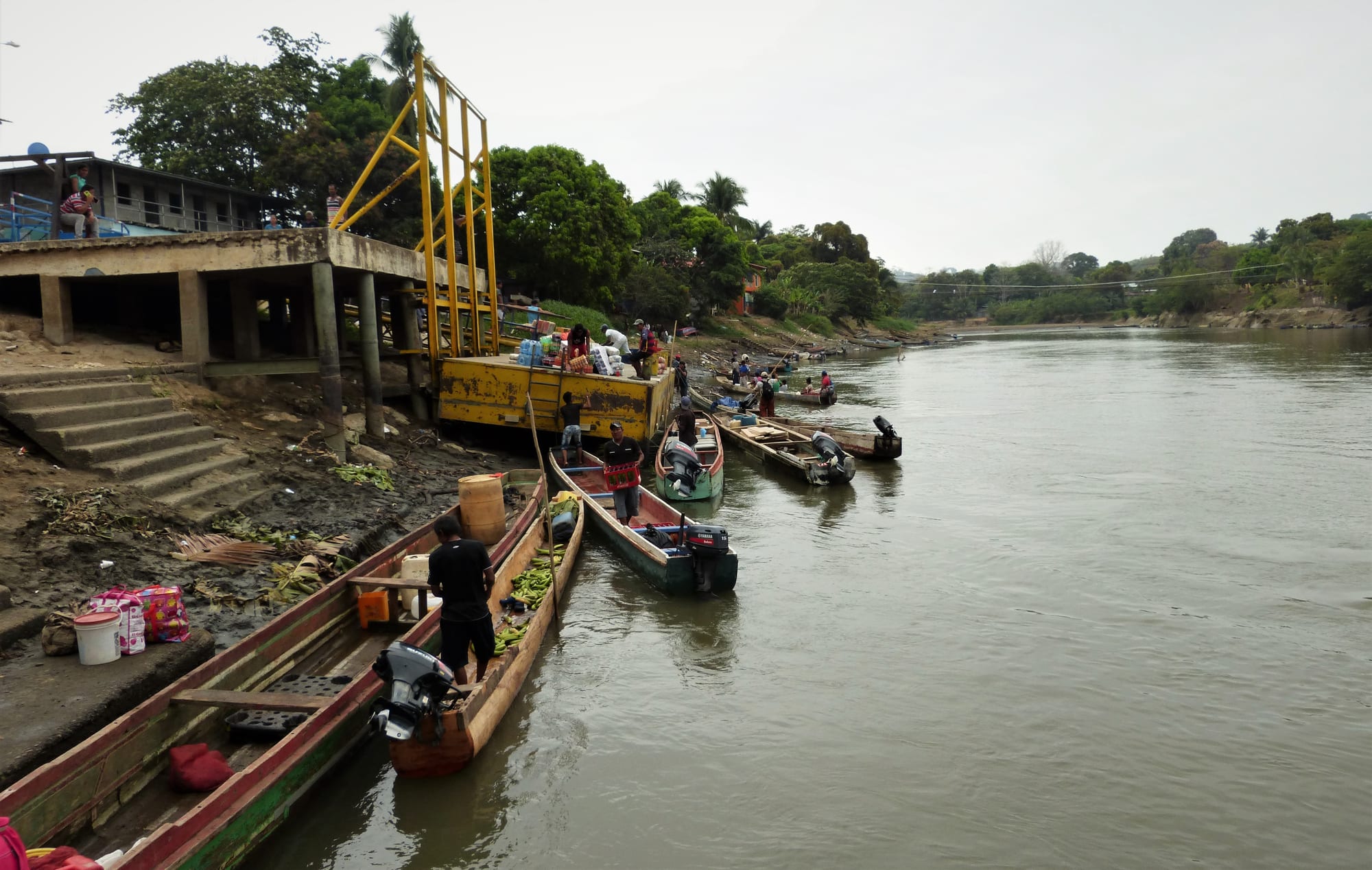
Boats at the landing on the river at Yaviza, where the Pan-American Highway ends. (gailhampshire / Wikimedia Commons · CC BY 2.0)

A small river town in Panama's Darién province, where the Pan-American Highway stops at the Chucunaque River and the roadless Darién Gap begins. Founded by Spanish missionaries in 1638 and guarded by a colonial fort, it is now a trading post of boats and road traffic for Afro-Darienite, Emberá, Wounaan and settler communities.

Neighbourhoods

  • The river landing
    • Local life
    • River trips

    The waterfront on the Chucunaque, where the Chico River joins it, and the busiest part of town. Long wooden motorboats load and unload people, fuel and produce from the riverside villages, and boats leave downriver towards El Real.

    Open in Maps
  • The town on the highway
    • Close to transport
    • Services

    The streets where the paved Pan-American Highway ends, with small shops, simple eateries and the stop for vehicles heading back west towards Metetí. The ruins of the colonial fort stand near the river.

    Open in Maps

Things to do

In the town

  • Fort of San Gerónimolandmark

    The ruins of the Spanish fort built in 1760 facing the Chucunaque River, damaged in a Guna attack in 1780; a flood carried away half of what remained in the mid-20th century.

    Open in Maps
  • End of the Pan-American Highwaylandmark

    The point where the northern half of the highway from North America stops; the road resumes at Turbo in Colombia, about 106 km away across the Darién Gap.

    Open in Maps
  • Chucunaque Riverattraction

    Panama's longest river, a tributary of the Tuira, which runs past the town and carries the boat traffic of the eastern Darién.

    Open in Maps

Short trips from the town

  • El Real de Santa Maríaattraction

    The seat of Pinogana District, 17 km from Yaviza by boat on a tributary of the Tuira, founded as a Spanish fort in 1665 to guard the gold mines and seized by the buccaneer Bartholomew Sharp in 1680.

    Open in Maps
  • Metetíattraction

    The last large town on the highway before Yaviza, settled mainly by people from Chiriquí province, with a bank, restaurants and places to stay.

    Open in Maps
  • Darién National Parkpark

    Panama's largest national park and a UNESCO World Heritage Site of rainforest, swamps and mountains along the Colombian border, visited at the Cana and Pirre ranger stations on guided trips.

    Open in Maps

Eat and drink

Long-standing places and food districts in Yaviza. Hours, ratings and directions come from your maps app, always current.

Yaviza classics

  • Fondas in townrestaurant

    Simple local eateries serving river fish, rice, plantains and cassava, with sancocho and coconut rice from the Afro-Darienite kitchen.

    Open in Maps
  • The river landingmarket

    Boats from the riverside communities land plantains, bananas and other produce at the waterfront, the town's busiest spot.

    Open in Maps

Experience Yaviza

History

Spanish missionaries founded the town in September 1638 as San Jerónimo de Yaviza, beside the Chucunaque River where the smaller Chico River joins it. The Darién was then a frontier of gold mines and resistant Indigenous peoples: downriver, El Real de Santa María was founded as a fort in 1665 to protect the mines, and the buccaneer Bartholomew Sharp seized it in 1680. In 1760 the Spanish built a fortified house at Yaviza, the Fort of San Gerónimo, facing the river; it was heavily damaged in a Guna attack in 1780, and a flood in the mid-20th century carried away half of the surviving ruins.

When the Federal State of Panama was set up in 1855, a Darién territory was created with Yaviza as its seat, but in 1890 the seat moved to Chepigana, and Yaviza remained a small town on the edge of the forest. Its modern identity came with the Pan-American Highway. The road eventually reached Yaviza as a dirt track, but plans to complete it to Colombia were stopped, leaving the town as the end of the highway's northern half; the road resumes at Turbo, some 106 km away. The final sections to Yaviza have since been paved.

In recent years the town has stood at the edge of a major migration route. By 2021 the Darién Gap had become a major route for migrants heading north, with more than half a million crossing in 2023, a figure that fell to about 300,000 in 2024.

Culture & Customs

Yaviza is a meeting point of the Darién's peoples. Most of its residents are Afro-Darienites, descendants of Africans brought to the region in colonial times, alongside Emberá and Wounaan people and people displaced from Colombia. Along the highway to the west, towns such as Metetí were built largely by settlers from Chiriquí and central Panama who moved east as the road advanced.

The Emberá and Wounaan live in riverside communities of stilt houses along the Chucunaque, Tuira and other rivers. Emberá people paint their skin with black jagua dye, and both peoples are known for their woven baskets; their villages can be visited on guided trips that include traditional music, dance and craft demonstrations.

The river shapes the town's character as much as the road does. Yaviza faces the Chucunaque, the longest river in Panama, and boats from the villages along it and the Tuira tie up at its landing. Spanish is the common language among the town's different communities, while Emberá and Wounaan families also keep their own languages.

Daily Life

The corregimiento of Yaviza had 4,441 inhabitants at the 2010 census, down from 8,452 in 1990. It lies in Pinogana District in Darién, Panama's least populated province, about 97 km from the Colombian border. El Real de Santa María, the district seat, lies 17 km away by boat.

Life depends on farming, cattle, logging, fishing and river transport. Yaviza is the place where the highway meets the river traffic of the eastern Darién, along which travel by boat continues. Deforestation along the highway and the pressure of logging and cattle ranching on the forest are major issues for the province.

The migrant route has shaped the province, and the Senafront border police patrol the frontier, so checkpoints are part of daily life on the road to Yaviza. Services are basic, and the larger town of Metetí to the west has a bank with a cash machine. The wet season, when rivers rise sharply, governs travel and work for much of the year.

Food

Yaviza eats what the river and the farms provide. River fish, plantains, rice and cassava are the staples, often cooked over wood fires in Emberá homes, where fish is sometimes wrapped in leaves and steamed. In Afro-Darienite and settler households, coconut rice, sancocho — the chicken soup that is Panama's national dish — and fried plantains are everyday food.

Tropical fruits such as pineapple, banana, papaya and the fruit of the peach palm are sold locally, and the boats arriving at the landing bring plantains and bananas from the riverside farms. Bush meat has traditionally been part of the diet in the Darién, although hunting protected species is illegal.

Eating out means a fonda, a simple eatery serving a plate of rice with fish, chicken or meat, beans and fried plantain. Visitors on organised trips eat what their lodge or the village cooks — simple, fresh food based on the day's catch.

Planning tools

Budget

Yaviza itself is cheap and basic, but travel beyond it in the Darién is done on organised tours with guides, boats and permits, which makes it expensive for what is simple lodging. Boat hire is the largest single cost.

Daily Budget Midrange
USD 120–300 (guided Darién tour with boats, guides and lodging)
Daily Budget Shoestring
USD 40–80 (basic room, fonda meals, shared road transport)

Bring enough cash in US dollars, and book any trip beyond the town through a licensed Darién operator.

Best Time to Visit

January to April, the drier months, are the easiest for river travel and forest trails. The Darién is one of the wettest parts of Panama; from May to December heavy rain swells the rivers and turns trails to mud.

Suggested Number of Days

The town itself needs no more than a day. Guided trips into the forests and river villages of the Darién usually take several days, depending on the operator, the season and the state of the rivers.

First Visit
1 day
With Surroundings
3–5 days

Transportation

The town is small enough to cross on foot. Beyond it there are no roads: travel is by motorised dugout along the Chucunaque and Tuira rivers, and the El Real area has an airstrip. Police checkpoints on the highway are part of daily life.

Use licensed Darién operators and guides, and carry passport copies for police checkpoints.

Airport & Station Connections

Yaviza is reached by the Pan-American Highway, which runs east through Metetí to the town; the final sections, once a dirt road, are now paved. There is no road further east. Boats continue downriver to El Real, and La Palma and other Darién towns are reached by boat or light aircraft.

Walkability

The town is compact and walkable, from the end of the highway to the river landing and the fort ruins. Streets can be muddy in the wet season, and heat and humidity make walking hard work in the middle of the day.

Safety

Panama is one of the safer countries in Central America, and the main tourist areas are generally fine with normal precautions. The Darién is different: the forest along the Colombian border is used by drug traffickers, armed groups and migrant smugglers, and independent travel there is strongly advised against. Several governments advise against travel to parts of Darién province and to the eastern end of Guna Yala near the Colombian border. Malaria, dengue and yellow fever are risks.

Visit the Darién only on organised tours with licensed guides, and do not attempt the Darién Gap overland. Check current official travel advice before travelling.

Climate

Hot and humid all year, in one of the wettest parts of Panama. The wet season runs from about May to December, when the rivers rise sharply; the drier months from January to April bring more sunshine.

Summer
the wet season, May to December: about 25–32°C in the Darién, with heavy rain and flooded rivers
Winter
the drier season, January to April: about 24–32°C in the Darién, sunnier

Local Customs

Yaviza's people are mainly Afro-Darienite, with Emberá and Wounaan communities and people displaced from Colombia, and settlers from central and western Panama live along the highway. Spanish is the common language. Emberá and Wounaan villages are visited only on guided trips, which may include music, dance and craft demonstrations.

Ask before photographing people, especially in Indigenous villages, follow the guide's lead, and cooperate politely at police checkpoints.

Common Payment Methods

Panama uses the US dollar as paper currency, with its own balboa coins of the same size and value as US coins. Cash is the norm for boats, food and lodging. Metetí, the larger town on the highway, has a bank with a cash machine, so it is wise to arrive with all the cash needed.