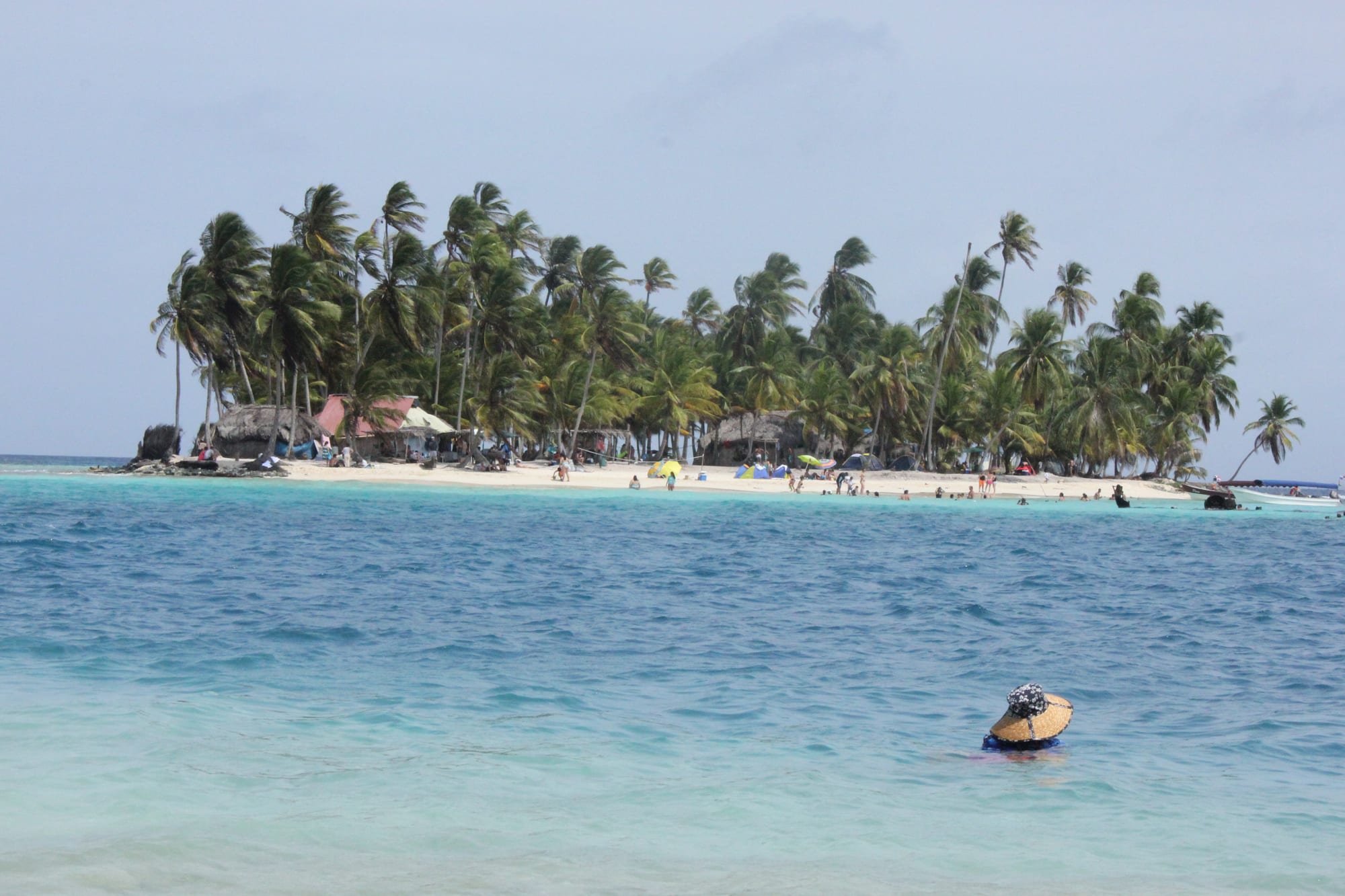
A small island of coconut palms and thatched huts behind a white-sand beach, across clear turquoise water

Panama

Guna Yala & the Darién

Isla Perro, one of the small palm-covered islands of the Guna Yala comarca on Panama's Caribbean coast. (Mónica J. Mora / Wikimedia Commons · CC BY-SA 3.0)

Eastern Panama towards the Colombian border, joining the self-governed Guna Yala comarca, a strip of Caribbean coast and hundreds of small islands, with Darién province and the Emberá-Wounaan comarca, a region of rainforest, rivers and Indigenous villages where the Pan-American Highway ends at Yaviza.

Explore Guna Yala & the Darién

History

Eastern Panama was among the first parts of the American mainland the Spanish explored. In 1513 Vasco Núñez de Balboa crossed the isthmus through this region to reach the Pacific, and in the 17th century the Spanish mined gold at Cana in the Darién highlands. The dense forest limited colonial control. The Guna first lived along the rivers flowing into the Caribbean and, from the mid-19th century, moved out onto its islands.

In 1698 Scotland sent colonists to found a settlement called New Caledonia on the Guna Yala coast, hoping to control a trading route across the isthmus. Disease, hunger and Spanish attacks destroyed the Darien scheme within two years, and its losses helped push Scotland into the 1707 union with England.

In the early 20th century, Panamanian authorities tried to suppress Guna dress, customs and self-government. In February 1925 the Guna rose in the Guna Revolution, led by Nele Kantule and Simral Colman, and a peace agreement involving the United States led to the recognition of their territory, set up as a district in 1938, defined by law in 1953 and now called Guna Yala. The Emberá-Wounaan comarca followed in 1983. In the Darién, the Pan-American Highway eventually reached Yaviza but was never completed to Colombia. By 2021 the Darién Gap had become a major route for migrants heading north, with more than half a million crossing in 2023, a figure that fell to about 300,000 in 2024. In 2024 about 300 families from Gardi Sugdub moved to Isber Yala, a new mainland village, a move linked to overcrowding and rising sea levels.

Culture & Customs

Guna Yala is a self-governing Indigenous territory. The Guna General Congress and village sailas, leaders who also chant sacred history in the congress house, make decisions about land, fishing and tourism, and the land belongs to the Guna. Guna is the everyday language, and many Guna women wear traditional dress: a mola blouse, a printed wrapped skirt, a red and yellow headscarf, beads wound around arms and legs, and a gold nose ring.

Molas, reverse-appliqué panels of layered cloth cut to reveal patterns of animals, plants and geometric shapes, are Guna women's art and an important source of income. Coming-of-age feasts for girls, known as inna, and the annual commemoration of the 1925 revolution are central events.

In the Darién, the Emberá and Wounaan live along rivers in stilt houses. Emberá people paint their skin with black jagua dye, and both groups weave baskets. Afro-Darienite communities, descendants of Africans brought in colonial times, live in the river towns, alongside settlers from central Panama who moved east along the highway.

Daily Life

Guna Yala has only small communities, spread across a few dozen inhabited islands and some mainland villages. Families live from fishing, coconuts, lobster and crab, and increasingly from tourism, which Guna authorities regulate through fees and local ownership. Many Guna also live in Panama City and Colón, travelling back to the islands for ceremonies and holidays. Overcrowding, fresh water, rising seas and the move of families from Gardi Sugdub to the mainland are pressing concerns.

The Darién is Panama's least populated province. Metetí and Yaviza are the main towns along the highway, and La Palma is the provincial capital on the Gulf of San Miguel. Life depends on farming, cattle, logging, fishing and river transport. Deforestation along the highway and the pressure of logging and cattle ranching on the forest are major issues.

The migrant route has shaped the province, and the Senafront border police patrol the frontier, so checkpoints are part of daily life.

Food

Guna cooking is based on the sea, coconuts and plantains. Fish stewed in coconut milk with green plantains is an everyday dish, and fried fish, rice cooked in coconut milk, crab and lobster are common in visitor lodges. Coconuts and lobster are the Guna's most important exports, and plantains and root crops are grown on the mainland.

In the Darién, river fish, plantains, rice and cassava dominate, often cooked over wood fires in Emberá homes, with fish sometimes wrapped in leaves and steamed. Afro-Darienite and settler households cook coconut rice, sancocho and fried plantains, and bush meat has traditionally been part of the diet, although hunting of protected species is illegal.

Tropical fruits such as pineapple, banana, papaya and peach palm fruit are sold in local markets. Visitors eat what the lodge or village cooks, and meals are simple, fresh and based on the day's catch.

Attractions & Natural Wonders

The San Blas islands of Guna Yala are the main draw. Islands such as Isla Perro have white sand, palms and simple Guna-run lodges, and nearby reefs offer snorkelling. The Cayos Holandeses, further out, are known for clear water and sailing anchorages. Island villages such as Gardi Sugdub, Nargana and Ustupu show daily Guna life, with mola workshops and congress houses, and visitors pay small fees to land on individual islands.

The Darién rainforest is one of the wildest parts of Central America. Darién National Park, a UNESCO World Heritage Site, stretches along the Colombian border and includes the Cerro Pirre ridge and the historic Cana mining area, known for birdwatching and the harpy eagle. The Punta Patiño nature reserve is home to harpy eagles, sloths and capybaras.

Emberá and Wounaan villages along the Chucunaque, Tuira and Sambú rivers can be visited on guided trips that include traditional music, dance and craft demonstrations. Yaviza, where the Pan-American Highway ends, marks the start of the Darién Gap, the roadless stretch of forest between Panama and Colombia.

Cities in Guna Yala & the Darién

Planning basics

Budget

Guna Yala is priced by package: island stays usually include simple meals and boat transfers, and 4x4 transport from the capital, comarca entry fees and small charges for landing on individual islands add to the cost. Accommodation is basic, from hammocks to thatched cabins. In the Darién, travel is mostly by organised tour with guides, boats and permits, which makes it expensive for what is simple lodging.

Daily Budget Midrange
USD 120–300 (better island cabins or a sailing trip, guided Darién tours with boats and guides)
Daily Budget Shoestring
USD 60–100 (basic Guna Yala island stay with meals, shared 4x4 and boat)

Carry enough cash in US dollars for the whole trip, since there are no cash machines on the islands, and book through operators that work with Guna communities.

Safety

Guna Yala's western islands, visited with organised transport, are generally calm, but boat crossings can be rough and medical care is far away. The Darién is different: the forest along the Colombian border is used by drug traffickers, armed groups and migrant smugglers, and independent travel there is strongly advised against. Several governments advise against travel to parts of Darién province and to the eastern end of Guna Yala near the Colombian border. Malaria, dengue and yellow fever are risks.

Visit the Darién only on organised tours with licensed guides, do not attempt the Darién Gap overland, and respect Guna rules on photography and island fees. Check current official travel advice before travelling.

Climate

Hot and humid year-round. The Guna Yala coast has a wetter season from about May to December and drier months from January to April, when the trade winds make the seas rougher. The Darién is one of the wettest parts of Panama, with heavy rain for most of the year; rivers rise sharply in the wet season, and the mountains around Cerro Pirre are cooler and misty.

Summer
the wet season, May to December: 25–32°C, heavy rain, flooded rivers and muddy trails in the Darién
Winter
the drier season, January to April: 24–32°C, sunnier, with windy seas in Guna Yala

Transportation

Guna Yala is reached by road from the Pan-American Highway to the coast at Cartí, followed by a boat to the islands, and light aircraft also fly to the islands. The Pan-American Highway runs east through Metetí to Yaviza; beyond, travel is by river boat. La Palma and other Darién towns can be reached by boat or light aircraft.

Use registered transport and guides approved by the Guna authorities or licensed Darién operators, and carry passport copies for police checkpoints.

Best Time to Visit

January to April is the easiest time for the Darién's trails and river travel, and the most reliable weather for Guna Yala, though boat crossings can be choppy. Guna Yala is visited all year, and the calmer seas of the wetter months suit sailing trips. Communities celebrate the anniversary of the Guna Revolution in late February.