💰 Budget
Częstochowa is one of the cheaper cities in southern Poland. Rooms and meals generally cost less than in Kraków or Wrocław, though demand for rooms is highest around the big August pilgrimage feasts.
- Daily Budget Midrange
- USD 100–200 (central hotel, restaurant dinners, museum entries and taxis)
- Daily Budget Shoestring
- USD 40–70 (pilgrim hostel or guesthouse, milk-bar and avenue meals, trams and buses)
Give only to official collection points at the monastery, and arrange a room well in advance if visiting in mid- or late August.
📅 Best Time to Visit
May to September is the most pleasant, and the area has some of the warmest summers in Poland. The first half of August brings the walking pilgrimages, with the biggest crowds around 15 and 26 August — an extraordinary sight but a crowded time to visit. Winters are colder than in western Poland but the shrine is open all year and much quieter.
⏳ Suggested Number of Days
One or two days are enough for the city itself. Three or four allow time for the castles and limestone hills of the surrounding upland at a relaxed pace; pilgrimage feasts can make a stay longer.
- First Visit
- 1–2 days
- With Surroundings
- 3–4 days
🚆 Transportation
The city centre is small and best walked, with most sights strung east to west along the main avenue. About 30 bus lines and three tram lines, the first opened in 1959, are useful for outlying sights. Taxis and ride-hailing apps such as Bolt are available. The castles of the upland are easiest to reach by car.
The ticket machines on trams and buses have no English menus, so ask for help or use a ride-hailing app to avoid a fine.
🛬 Airport & Station Connections
The nearest airport is Katowice Airport at Pyrzowice, 30 km north of Katowice; Flixbus coaches run from it several times a day, or there is a shuttle into Katowice and an hourly train taking about 90 minutes. Częstochowa main railway station has trains to Warsaw in about two and a quarter hours, while trains from Kraków, taking about an hour and forty minutes, use Częstochowa Stradom station, two kilometres south of the centre. The bus station is 200 metres south of the main railway station.
🚶 Walkability
Good. The main avenue is a wide, largely pedestrian promenade running from the old town to Jasna Góra, and the monastery, the cathedral, the museums and the restaurants are all within walking distance of the main station. Raków, the Jewish cemetery and the outer districts need a tram, bus or taxi.
🛡️ Safety
Poland is a safe country with low violent crime. Crime against visitors in Częstochowa is rare; the commonest nuisance is people around the monastery soliciting money for supposed restoration or charity. At the August feasts the monastery and its grounds are extremely crowded, so pickpockets and the heat are the main concerns.
Refuse street collectors near the monastery, keep valuables close in crowds, and carry water on hot summer days. Check current official travel advice before travelling.
🌦️ Climate
A humid continental climate with some oceanic influence. The area has some of the hottest summers in Poland and winters colder than those of the west and the Baltic coast, with an average of four hours of sunshine a day across the year and few windless days.
- Summer
- warm to hot; in Katowice, to the south, July averages 17.9°C
- Winter
- cold; in Katowice, to the south, January averages −2.0°C
🤝 Local Customs
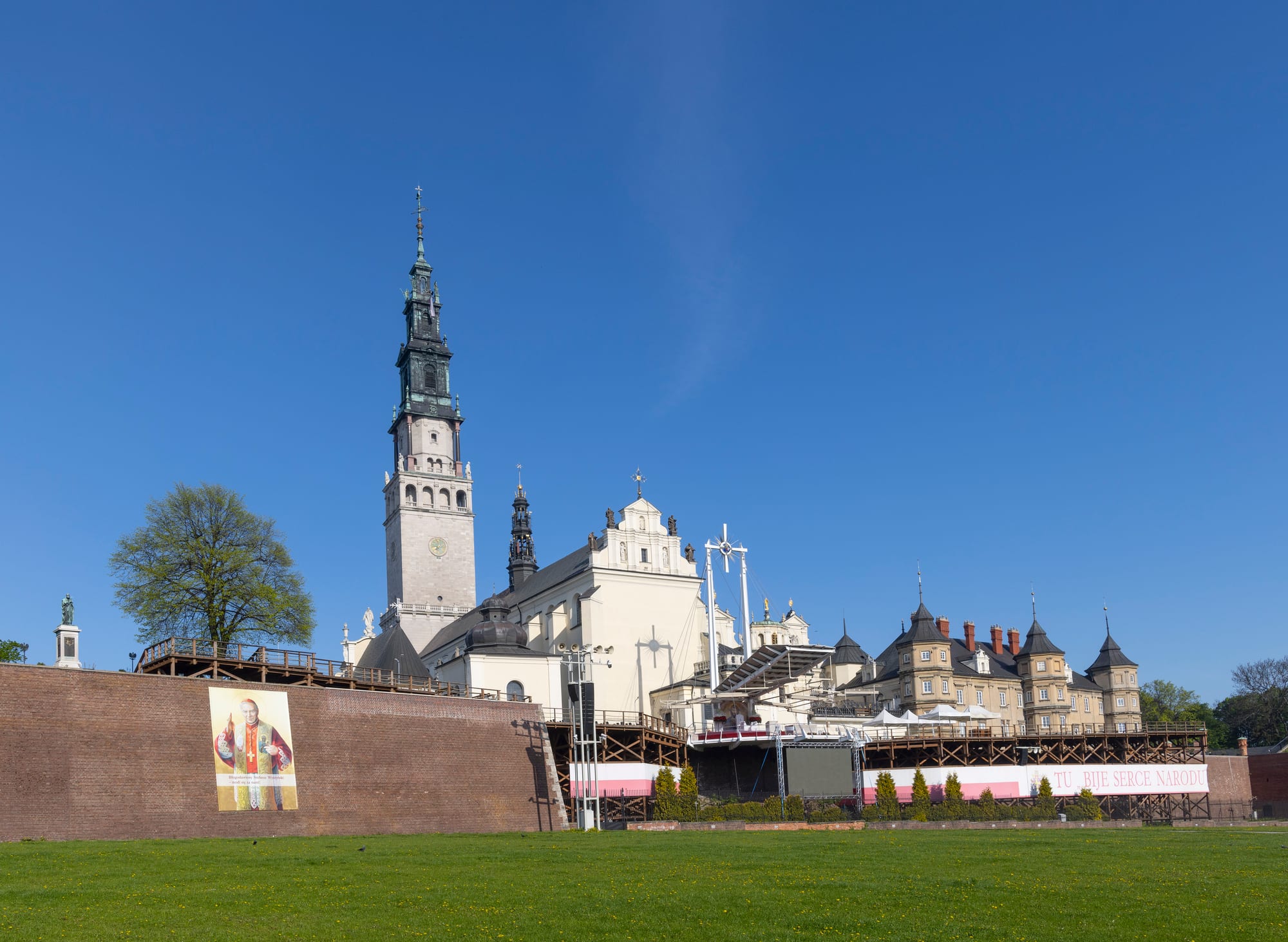
Jasna Góra is an active shrine and Poland's most visited pilgrimage site, and it is often crowded, above all in the pilgrimage season. A tip of around 10 per cent is usual in restaurants. Drinking alcohol in public outside venues that serve it is illegal.
Allow time for the crowds at the chapel of the Black Madonna, and keep voices low inside the shrine.
💳 Common Payment Methods
Poland uses the złoty (PLN), not the euro. Cards and contactless payment are accepted almost everywhere, though a little cash is useful for souvenir stalls, candles and small bakeries. ATMs are easy to find along the main avenue.