💰 Budget
Karpacz is busy and pricier in the ski season and the summer holidays, when Polish families and hikers fill the guesthouses; spring and autumn outside the holidays are better value. Lift passes are the main extra cost in winter, and parking in town is scarce and usually paid.
- Daily Budget Midrange
- USD 110–220 (resort hotel or good guesthouse, restaurant dinners, chairlift or ski pass, museum entries)
- Daily Budget Shoestring
- USD 45–80 (guesthouse room or mountain hut bed, bar meals, buses)
Check that a guesthouse has its own parking before arriving by car, as free spaces in town are rare.
📅 Best Time to Visit
Summer and early autumn suit walking. Winter, roughly December to March, is the ski season, when snow lies on the slopes above the town. Late autumn and early spring are wet and grey, and some lifts close between seasons.
⏳ Suggested Number of Days
Two or three days give time for the town and a climb towards the main ridge. Four to six allow for more mountain walks and trips into the surrounding valley; skiers often stay a week. Bad weather on the ridge is a reason to leave spare days.
- First Visit
- 2–3 days
- With Surroundings
- 4–6 days
🚆 Transportation
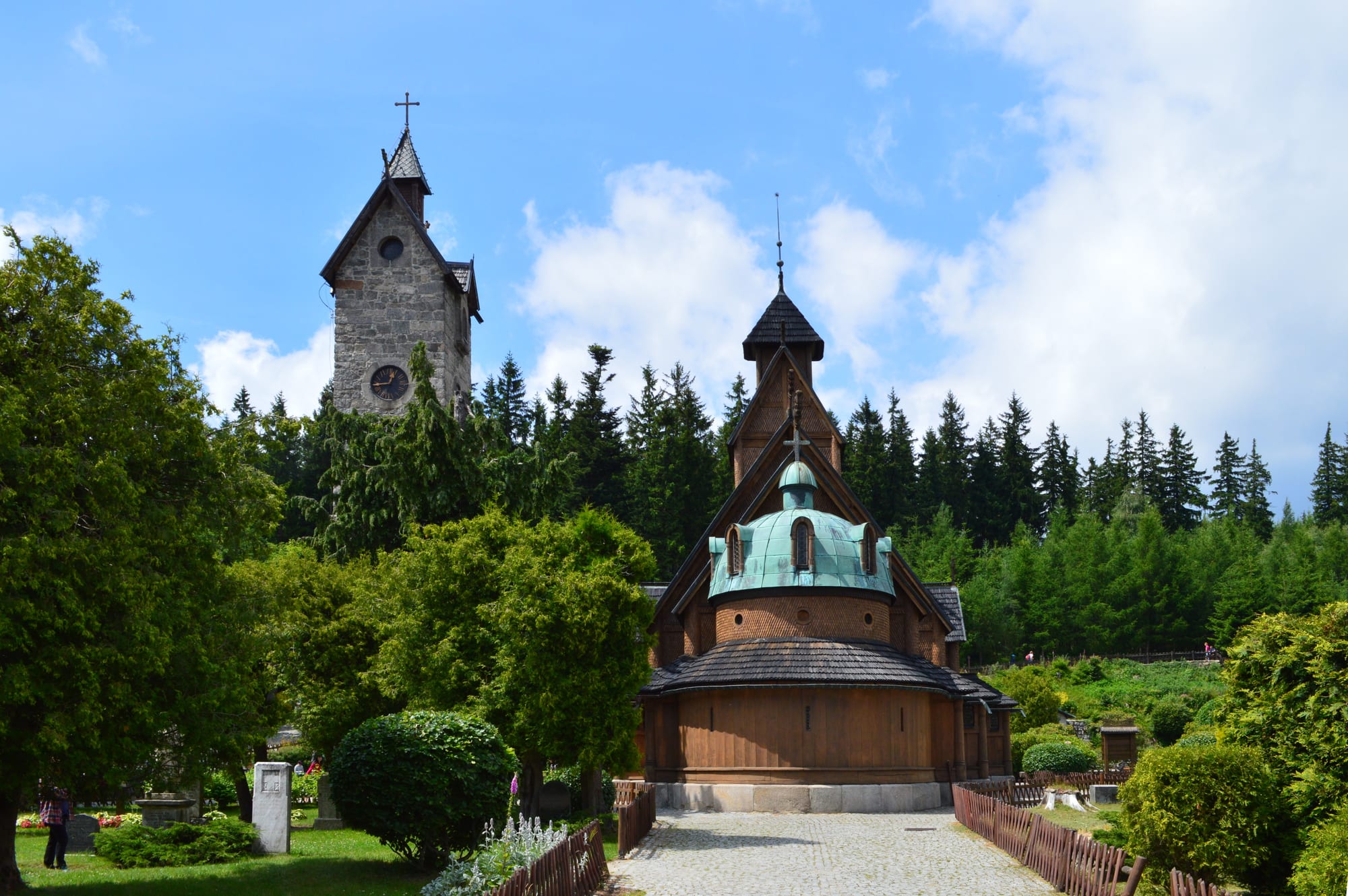
A town bus runs up the slope from the lower town past the centre to the Vang church, with fewer stops on the way back down. The town can be crossed on foot in about two hours, but it is steep, so distances feel longer than on a map. Chairlifts carry walkers and skiers up the mountain, and buses link Karpacz with Jelenia Góra and, in summer, Szklarska Poręba.
Walkers heading for the ridge can save a long climb by taking the chairlift to Kopa, but should check that it is running before relying on it for the descent.
🛬 Airport & Station Connections
Regional trains from Jelenia Góra returned to Karpacz in June 2025 after a 25-year gap, and buses run from Jelenia Góra about hourly, taking around an hour; Jelenia Góra itself has trains from many Polish cities. Coaches also run from Wrocław, whose airport is the nearest with regular international flights.
🚶 Walkability
The centre is walkable and most visitors leave the car at their guesthouse, but the town climbs steeply from the lower streets to Karpacz Górny, and pavements can be icy in winter. Marked trails start from the edge of town, so many walks begin on foot from the front door.
🛡️ Safety
Poland is a safe country with low violent crime. In Karpacz the real hazards are in the mountains: fog and strong wind on the Karkonosze ridge and around Śnieżka, winter ice, and avalanche risk in some of the glacial cirques. The weather can change quickly even in summer.
Keep to marked trails on the Karkonosze ridge and turn back in fog. Check current official travel advice before travelling.
🌦️ Climate
A cool mountain climate. The average temperature over the year is about 6°C, and on about 93 days a year the daily average stays below freezing, usually from early December to mid-March. The summit of Śnieżka, a thousand metres higher, is much colder and windier.
- Summer
- cool to mild — July averages about 15°C, the warmest month
- Winter
- cold and snowy — January averages about −5°C
🤝 Local Customs
Karpacz is a resort of Polish families, hikers and skiers, and dress is casual everywhere. Its villas and two churches still show the town's German past, and the Vang church is both a sight and a working Lutheran church. National park rules ask walkers to stay on the marked trails.
Keep quiet in the Vang church during services, and keep to the marked paths inside the national park.
💳 Common Payment Methods
The currency is the Polish złoty (PLN). Cards and contactless payment are taken in hotels, restaurants and most shops; carry some cash for small guesthouses, snack stalls and mountain huts. There are ATMs in the town centre.