History
Oradea's story begins with its church. King Ladislaus I of Hungary founded a bishopric here in the 11th century, and the king himself was buried in the city. A fortress was first recorded in 1241, during the Mongol invasion — the Italian churchman Rogerius, archdeacon of Várad, described the devastation in his Carmen miserabile — and in the later Middle Ages statues of Hungary's royal saints stood in the town, including an equestrian statue of St Ladislaus of 1390, among the first of its kind in Europe. In 1538 the Peace of Várad, concluded here, saw two rival kings of Hungary recognise each other.
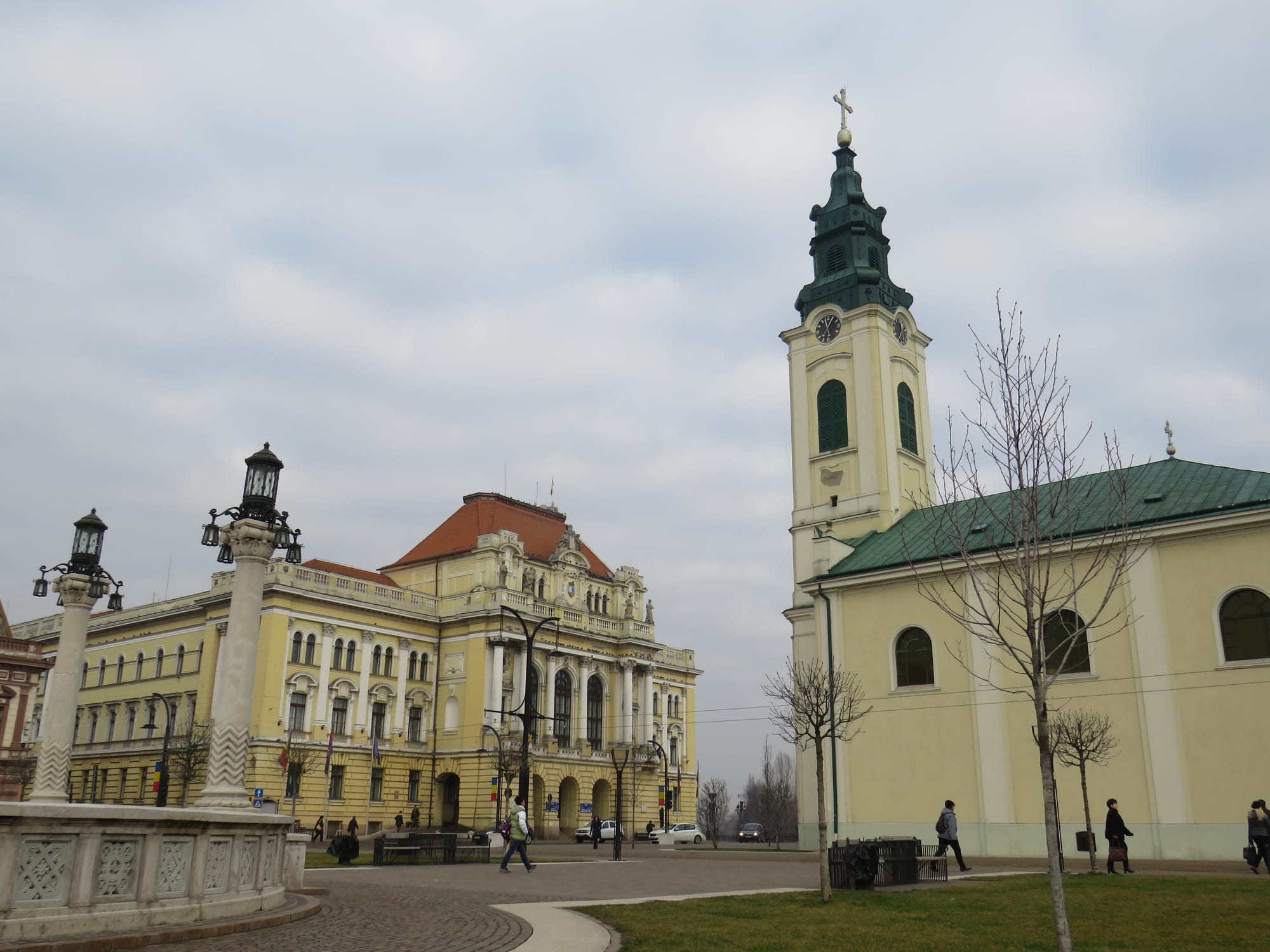
After the Ottoman conquest of Hungary the city was fought over by Transylvania, the Ottomans and the Habsburgs. An Ottoman army took it in 1660 and made it the capital of a province; Habsburg forces retook it in 1692 after a 14-month siege. What followed was a golden age: from 1752 the Baroque cathedral, the bishop's palace, the Moon Church and later the theatre rose, and by the late 19th century, with a large and prosperous Jewish community, writers called Nagyvárad "Paris on the River Pece". Before 1914 its architects added Art Nouveau palaces influenced by Ödön Lechner and the Vienna Secession.
The city passed under Romanian control in 1919, and the Treaty of Trianon assigned it to Romania in 1920, when over 90 per cent of its people were Hungarian. The Second Vienna Award returned it to Hungary in 1940. In 1944 the Hungarian authorities forced the Jews of Oradea into a ghetto and deported some 25,000 to Auschwitz, among them the 13-year-old diarist Eva Heyman. Soviet troops captured the city in October 1944 and Romanian administration returned in 1945. In the 21st century its restored centre and Art Nouveau architecture have earned it the nickname 'Little Paris'.