History
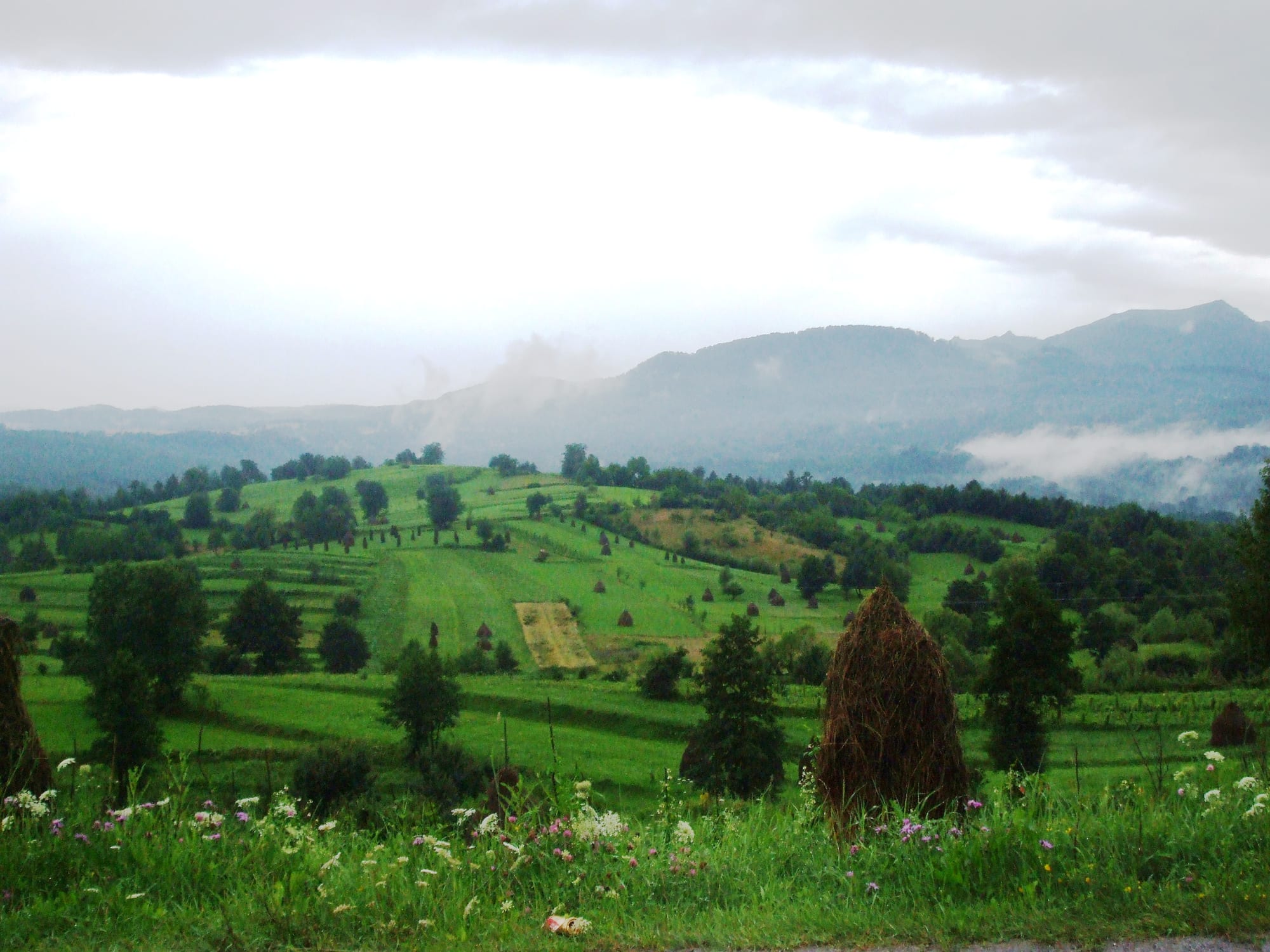
Maramureș grew up as an enclosed basin on the upper Tisza, where Romanian villages lived under their own voivodes and a class of small free nobles within the medieval Hungarian kingdom. Two of its leaders, Dragoș and later Bogdan, crossed the mountains in the 14th century and founded the principality of Moldavia. The region stayed under Hungarian and then Habsburg rule, and its remoteness preserved a village world that elsewhere in Europe disappeared. After 1918 the land north of the Tisza went to Czechoslovakia and is now part of Ukraine, splitting historic Maramureș in two.
Crișana, on the edge of the Great Hungarian Plain, was more exposed. Oradea (Nagyvárad) was an important bishopric from the 11th century and the shrine of King Ladislaus I. The Treaty of Oradea of 1538 divided Hungary between rival kings, the Ottomans held the city from 1660 to 1692, and the Habsburgs then rebuilt it as a Baroque garrison and cathedral town, while the Károlyi counts brought Swabian German settlers to the Satu Mare area. Baia Mare and the surrounding hills were mined for gold and silver from the Middle Ages.
The whole region passed to Romania in 1920, returned to Hungary between 1940 and 1944 — when its large Jewish community, including the teenage Elie Wiesel of Sighet, was deported to Auschwitz — and then came back. Under communism the prison at Sighet held many of the interwar political elite, dozens of whom died there. In 2000 a tailings dam at a Baia Mare gold-processing plant burst, sending cyanide into the Tisza and the Danube.