History
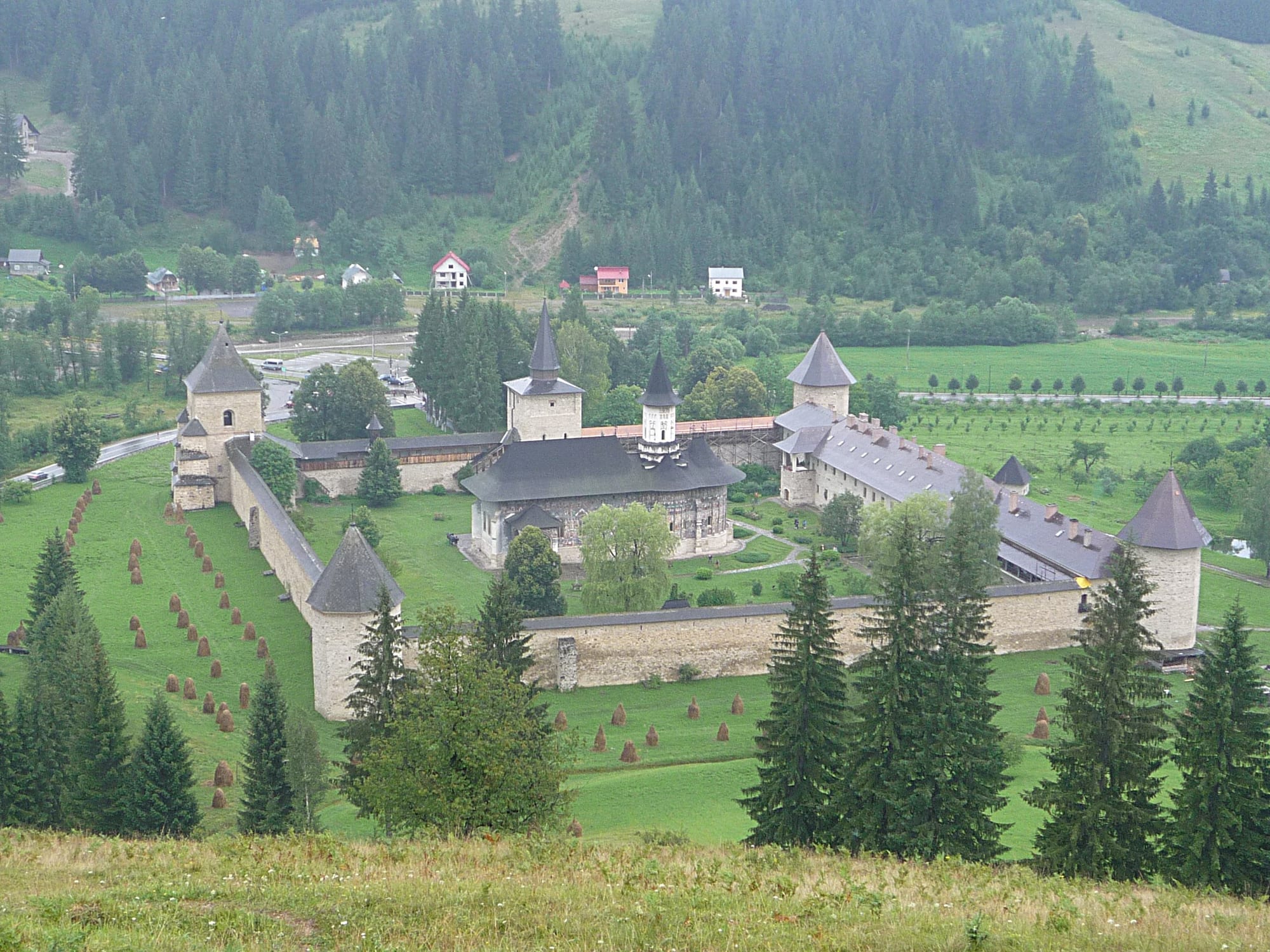
Long before the principality, the Moldavian hills were home to the Cucuteni culture, whose painted Neolithic pottery is named after a village near Iași. Moldavia itself was founded in the mid-14th century by voivodes from Maramureș, Dragoș and Bogdan I, who broke free of Hungary. Its early capitals were Baia, Siret and Suceava. Stephen the Great, who ruled from 1457 to 1504, fought Hungarians, Poles, Tatars and above all the Ottomans, winning at Vaslui in 1475, and built dozens of stone churches and monasteries; the Orthodox Church canonised him in 1992. Under his son Petru Rareș, in the 1530s and 1540s, the Bucovina churches were painted inside and out.
Moldavia eventually accepted Ottoman overlordship, and its capital moved to Iași in the 16th century. In 1775 the Habsburgs annexed the north-west, which they named Bucovina, the "beech land", and settled with Germans, Poles and Ukrainians alongside Romanians and a large Jewish population; its capital, Czernowitz, now lies in Ukraine. In 1812 Russia took Bessarabia, the land east of the Prut, and in 1859 Moldavia and Wallachia united under Alexandru Ioan Cuza, a Moldavian.
During the First World War, with Bucharest occupied, Iași served as Romania's capital, and the front ran along Vrancea, where the battles of Mărășești and Mărăști were fought in 1917. In June 1941 the Iași pogrom killed thousands of the city's Jews. After 1940 the north of Bucovina became part of the Soviet Union. Under communism Galați's steelworks and Bacău's factories grew, but the region has stayed the poorest part of Romania.