History
Muntenia is the larger, eastern part of Wallachia, the principality that took shape at the foot of the Carpathians in the 14th century. Its early princes ruled from Curtea de Argeș, where Basarab I and his successors built the princely court and church, and in 1330 Basarab defeated a Hungarian army at the battle of Posada. The capital later moved to Târgoviște, where Vlad III, the Impaler, ruled in the 1450s and 1460s; a document of his from 1459 is the first written record of Bucharest, which became the princes' main seat in the 16th and 17th centuries.
The late 17th century was a golden age under Constantin Brâncoveanu, who built palaces and monasteries in a new style blending Byzantine and Renaissance forms before the Ottomans executed him in Istanbul in 1714. A century of princes appointed from the Greek Phanar district of Istanbul followed. Bucharest grew into a cosmopolitan city of boyars' houses, merchants' inns and churches, and after the union of 1859 it became the capital of Romania.
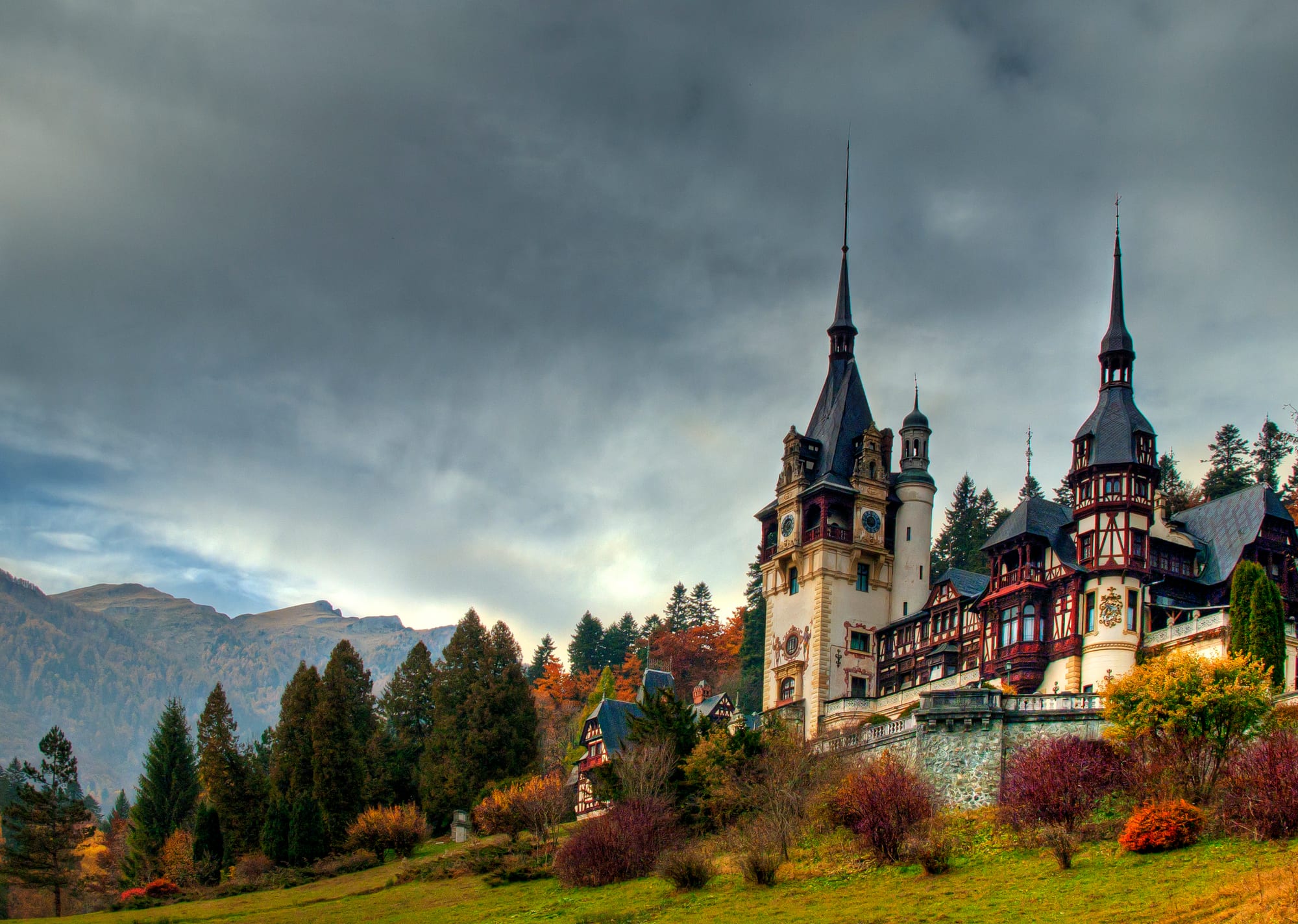
Carol I, the German prince chosen in 1866, built his summer palace of Peleș at Sinaia, turning the Prahova Valley into a royal resort, while the oilfields around Ploiești made the region one of Europe's first petroleum centres — and a target for Allied bombers in 1943 and 1944. Under communism Bucharest was industrialised and partly rebuilt: after the 1977 earthquake Ceaușescu cleared much of the southern old city for his Civic Centre and palace. The 1989 revolution reached its climax in Bucharest, and since then the capital has pulled far ahead of the rest of the region in wealth.