History
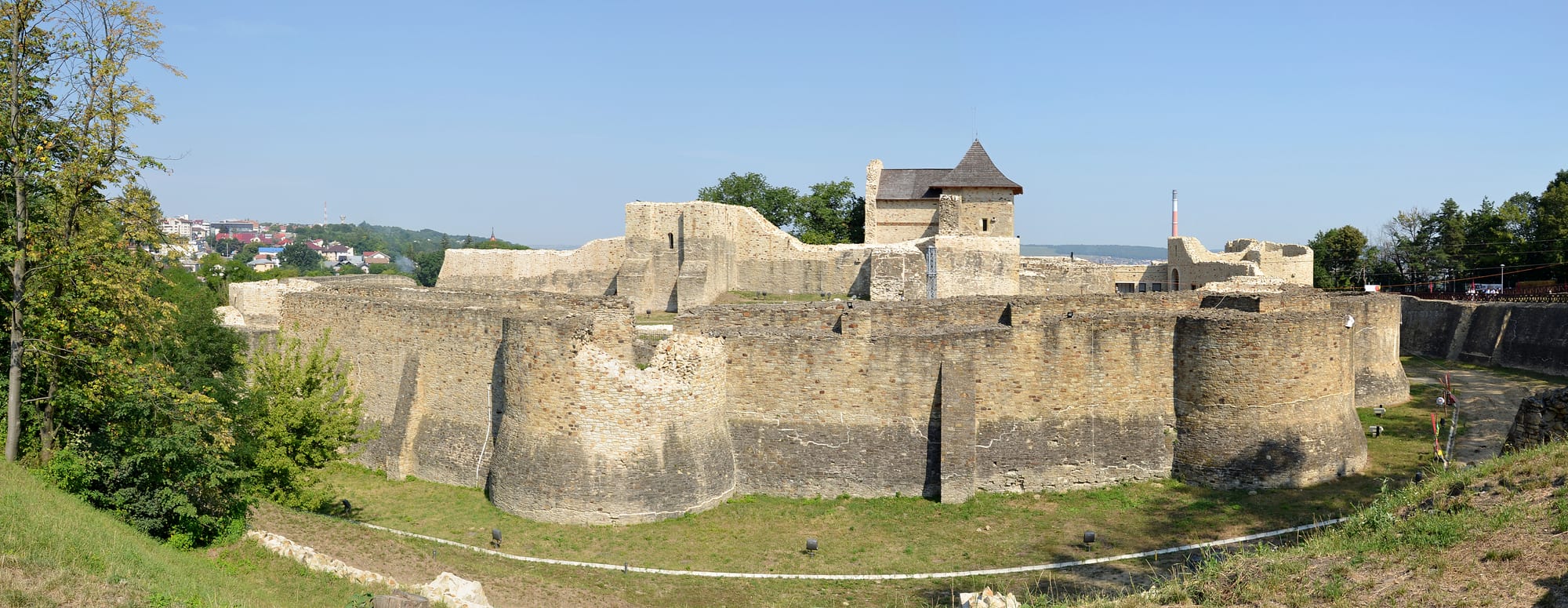
People lived around Suceava from the Paleolithic onwards, and there are traces of a Dacian fortified settlement of the 2nd century; the area was never part of the Roman Empire. The town grew at a crossroads of trade routes towards Hungary and Poland, helped by German potters and merchants, probably Transylvanian Saxons, who settled here early and gave it Magdeburg town law. Petru Mușat moved the Moldavian capital here from Siret in 1388 and built the fortress, and his successors made Suceava a princely city: Alexander the Good brought the relics of St John the New in 1402, and Stephen the Great, crowned at Mirăuți in 1457, strengthened the fortress so well that it resisted Sultan Mehmed II in 1476. Stephen died in Suceava in 1504.
Alexandru Lăpușneanu moved the capital to Iași in the 1560s, and Suceava declined. Michael the Brave took it in 1600, the town was besieged in 1653, and the fortress was destroyed in 1675. In 1775 the Habsburgs annexed Bukovina, and Suceava became an Austrian border town facing the Romanian kingdom, with a large German-speaking population alongside Romanians, Jews, Poles, Ukrainians and Armenians — a "miniature Austria", as one writer called it. In 1918 it joined Romania with the rest of Bukovina.
The town's Jews were deported to Transnistria in 1941, and most of the remaining Germans and Poles left after the Second World War. Under communism Suceava was industrialised and its population grew about tenfold, while much of the historic centre, including the whole of Franz Josef Strasse, was demolished. After 1989 industry and population fell again, but the city has since drawn investors as a commercial centre, and in early 2026 the restoration of the fire-damaged Administrative Palace was complete.