💰 Budget
Castries is a working capital rather than a resort, and its market, local eateries and minibuses are among the cheapest ways to see Saint Lucia. Most visitors stay in the resort areas to the north or the south and come in for the day; the money goes on rooms, taxis and tours.
- Daily Budget Midrange
- USD 170–400 (mid-range hotel, restaurants, taxis or a hire car, tours)
- Daily Budget Shoestring
- USD 60–110 (guesthouse, market food and local eateries, minibuses)
Agree taxi fares before setting off; the minibuses from the centre are a cheap way to reach Gros Islet and other districts.
📅 Best Time to Visit
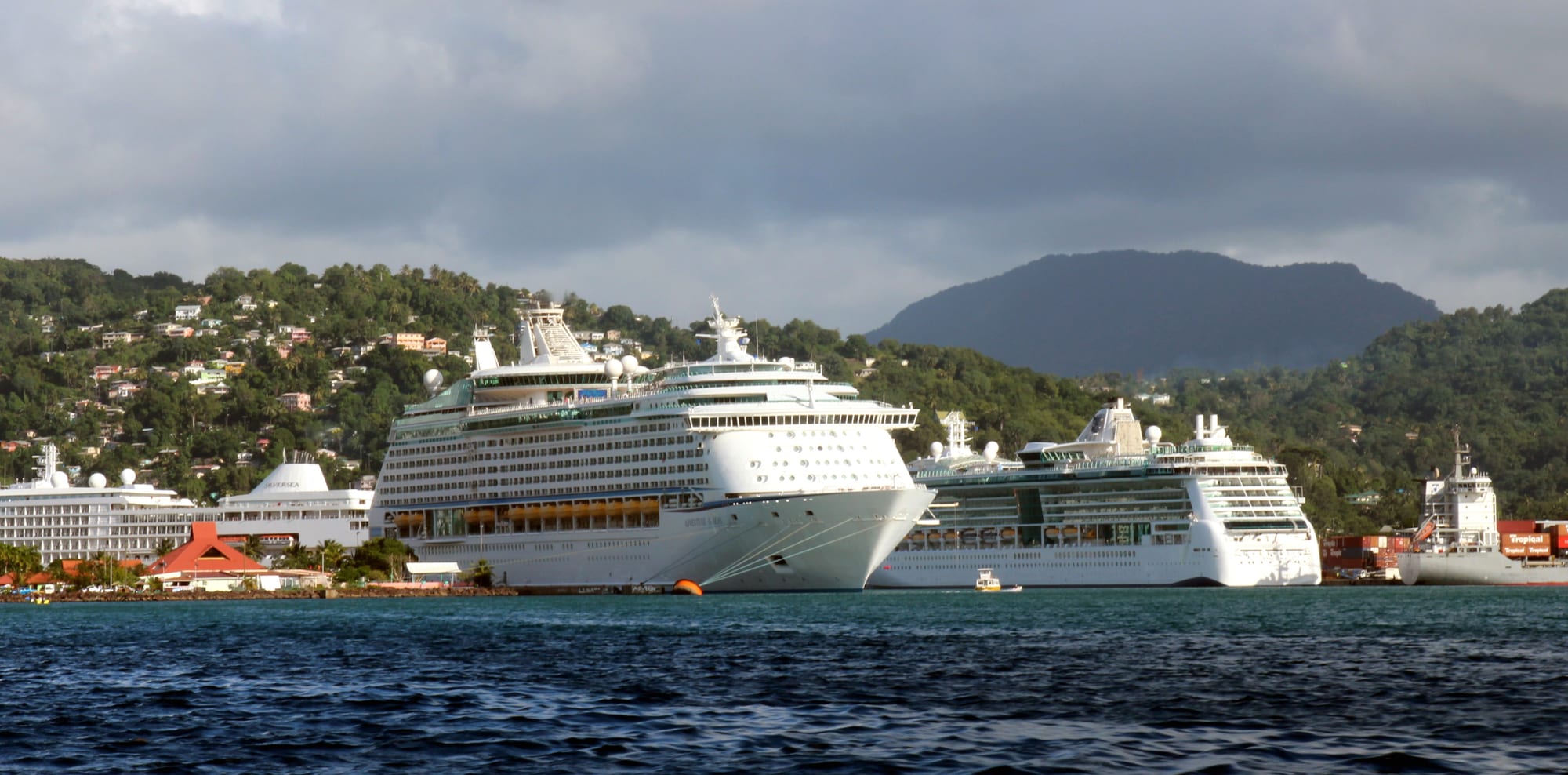
December to April is dry, breezy and the busiest time, when the cruise season fills the harbour. May brings the jazz festival, July the carnival, and the wet season runs from June to November, when hurricanes are possible. Town life goes on all year.
⏳ Suggested Number of Days
The town itself is small and is usually seen in a day, or as a stop on the way to other parts of the island. Allow three or four days using Castries as a base for the northern beaches and the west coast; heavy cruise traffic and a reliance on taxis can slow things down.
- First Visit
- 1 day
- With Surroundings
- 3–4 days
🚆 Transportation
The centre is easily walked. For anything further, private minibuses with green number plates starting with M run from Castries to every district of the island, and fixed-rate taxis wait at the cruise port and in town. Hire cars drive on the left and need a local permit. Boats run down the west coast towards Soufrière.
Allow plenty of time for the steep, winding west-coast road to Soufrière, or take a boat.
🛬 Airport & Station Connections
George F. L. Charles Airport, known as Vigie Airport, is about 1.2 miles north of the centre and handles regional flights. Longer international flights land at Hewanorra International Airport near Vieux Fort in the south; the drive to Castries can take an hour and a half. Cruise ships dock at Pointe Seraphine, and ferries link Castries with Fort-de-France in Martinique.
🚶 Walkability
The grid of the centre is flat and compact: the market, the cathedral, the square and the waterfront are all within a few minutes of each other, and the cruise terminal at Pointe Seraphine is about a quarter of an hour's walk away. Morne Fortune is a steep climb from the centre.
🛡️ Safety
Saint Lucia is a popular destination and the resort areas are generally safe, but it has a relatively high violent-crime rate for its size, with periodic spikes in gang- and drug-related homicides, and there have been robberies and some assaults affecting tourists. Travel advisories urge visitors to be wary in Castries after dark.
Use licensed taxis, especially at night, keep valuables out of sight in the crowded market streets, and avoid isolated beaches. Check current official travel advice before travelling.
🌦️ Climate
Castries has a tropical rainforest climate, warm all year and cooled by the north-east trade winds. Across the island the dry season runs from December to May and the wet season from June to November, which is also the Atlantic hurricane season, with the greatest risk from August to October.
- Summer
- the wet season, June to November — hot and humid, with heavy showers; across the island days average about 30°C and nights about 24°C
- Winter
- the dry season, December to May — sunny and breezy, with similar temperatures of about 30°C by day and 24°C at night
🤝 Local Customs
English is the official language, but Kwéyòl, the French-based creole, is spoken by most people on the island, and visitors manage entirely in English. Saint Lucia is strongly Roman Catholic, and the cathedral is a working church. The town is a capital of offices and courts, and is more formal in dress than the beach resorts.
Dress modestly in the cathedral and keep beachwear for the beach; ask before photographing market vendors.
💳 Common Payment Methods
The currency is the Eastern Caribbean dollar (EC$), pegged to the US dollar at 2.70. US dollars are widely accepted, cards work at hotels and larger restaurants, and there are ATMs in the town. Cash is needed in the market, the small eateries and on the minibuses.