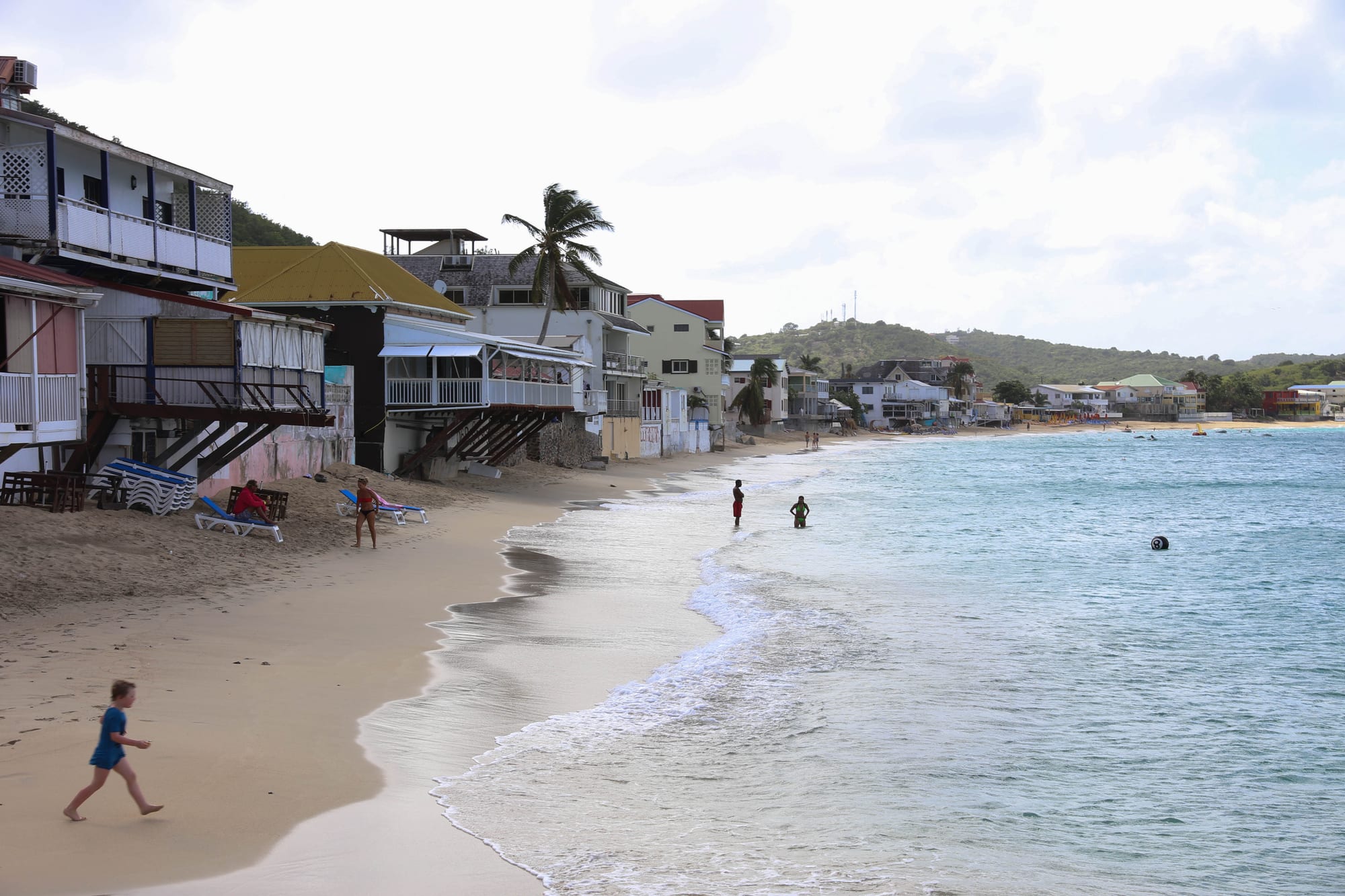
A sandy beach curving away past houses on stilts and verandas, with calm turquoise water and green hills beyond

Saint-Martin

Grand-Case

The beach at Grand-Case. (Paul Sableman / Wikimedia Commons · CC BY 2.0)

A former fishing and salt-working village on the French side of Saint Martin, strung along a sand bar between the sea and three brackish ponds, facing Anguilla. Its single main street of restaurants and beachside lolo grills has made it the island's best-known place to eat, with a long sandy beach beside it.

Neighbourhoods

  • Grand Case Boulevard and the beach
    • First-time visitors
    • Best for food
    • Beaches

    The village's long main street runs beside the sand with more than two dozen restaurants, bars and the lolos along it. It is crowded late into the evening, and the beach is a few steps away.

    Open in Maps
  • Petite-Plage
    • Beaches
    • Quiet and residential

    The quieter area at the far end of Grand Case Bay, one of the named districts next to the village, with a small beach facing Creole Rock offshore.

    Open in Maps
  • La Savane
    • Local life
    • Quiet and residential

    One of the districts beside the village, where the gendarmerie, the fire station and a karting track are — the working side of Grand-Case rather than the restaurant strip.

    Open in Maps

Things to do

Beaches and the sea

  • Grand Case beachbeach

    The long sandy beach in front of the village, on the Anguilla Channel, with Anguilla in view across the water.

    Open in Maps
  • Creole Rockattraction

    An uninhabited islet off the bay, part of the National Nature Reserve of Saint-Martin, with a reef and many fish; it is a popular snorkelling and diving spot, and glass-bottom boats visit it, though climbing the rock is forbidden.

    Open in Maps

In the village

  • Mary Star of the Sea Churchlandmark

    The Catholic church on Grand Case Boulevard, one of the churches of the French side's parishes.

    Open in Maps
  • Grand Case–Espérance Airporttransit hub

    The French side's small airport, right beside the village, mainly used by regional aircraft flying to Guadeloupe and Saint Barthélemy and by private planes; its terminal was modernised in 2017.

    Open in Maps

Short trips from the village

  • Pic Paradisviewpoint

    At 424 metres the highest point on the island, in the hills inland on the French side.

    Open in Maps
  • Pinel Islandbeach

    A small island off the French coast of Saint Martin, part of the nature reserve, reached by boat.

    Open in Maps
  • Cul-de-Sacneighborhood

    A former fishing village on the north-east coast opposite Pinel and Tintamarre, close to Orient Bay and the beaches of Anse Marcel.

    Open in Maps
  • Marigotneighborhood

    The capital of the French side, a short drive to the south, with its waterfront market and Fort Louis.

    Open in Maps

Seasonal events

  • Les Mardis de Grand-CaseTuesday evenings in the tourist season

    An evening street event along the main street, run by a local association, with craft stalls and local musicians.

  • Carnivalthe weeks before Lent

    The French side's Carnival season, before Lent.

Eat and drink

Long-standing places and food districts in Grand-Case. Hours, ratings and directions come from your maps app, always current.

Grand-Case classics

  • The lolosrestaurant

    A group of four or five open-air Creole grills on the beach side of the boulevard, serving grilled meat and fish and traditional Antillean dishes; the cheapest food on the street, with generous portions.

    Open in Maps
  • Grand Case Boulevard restaurantsneighborhood

    The string of French, Creole and seafood restaurants that earned the village its claim to be the gastronomic capital of the French Antilles; many have a bar, and some offer a shot of house rum after the meal.

    Open in Maps

Experience Grand-Case

History

The village takes its name from a corruption of its old name, "La grande case" — the big house. It grew up on a tombolo, a bar of sand between the hills of Smith and First Stick Hill that separates the sea from three brackish ponds, known simply as the big, middle and small ponds. Salt was the reason people settled here: the families of workers at the salt pans built homes on the beach without title to the land, and many of them came from Anguilla, the island facing the village across the channel. They lived as fishermen and salt-workers.

As the population grew, people too poor to buy land filled in the edges of the ponds to build houses, a practice that shaped local attitudes and that even the municipal council used to find room for public buildings. That history explains why the low-lying village floods easily.

Today the old fishing village is best known as the restaurant centre of the island. Its main street now holds more than two dozen places to eat, and the small airport beside the village was renovated in 2017, with a modernised terminal and a new control tower. Grand-Case is one of the three towns where most of the French side's people live.

Culture & Customs

Food is the village's identity. Grand-Case presents itself as the gastronomic capital of the French Antilles, and people come from all over the island to eat on its boulevard. The contrast between its upmarket French restaurants and the lolos — open-air Creole grills beside the beach — is part of its character, and both are crowded late into the evening.

In the tourist season a local association runs Les Mardis de Grand-Case, evening street events with craft stalls and local musicians on the main street. Most weekends a live band plays at one of the restaurants with a bar, and the bars along the beach keep a relaxed, Caribbean atmosphere with a French touch.

The village has Methodist and Catholic churches and several Protestant congregations, reflecting the island's mix of English-speaking Caribbean and French traditions, and a youth and cultural centre. English is the everyday language, French the language of school and government, and courtesy follows French habit — a greeting on entering a shop or restaurant.

Daily Life

Grand-Case is one of the main towns on the French side, although it still feels like a village, with one main street, a beach and the ponds behind. It has nursery and primary schools, a post office, the territorial police, and in La Savane the gendarmerie and fire station, along with basketball and football grounds and private dance schools.

The economy runs on restaurants and tourism. Day visitors arrive by car and taxi from the rest of the island and from the cruise ships at Philipsburg. The airport brings regional flights to Guadeloupe and Saint Barthélemy to the edge of the village.

Life has its difficulties. Housing built on filled-in pond land is prone to flooding, and muggings at night are not rare. The rhythm of the day follows the restaurants: the main street fills up in the evening and stays busy late, especially on Tuesdays in season. Many restaurants close on Mondays.

Food

Grand-Case is the island's restaurant street. The upmarket restaurants along the boulevard serve French cooking, seafood and French-Caribbean dishes, some with long wine lists, and many offer a shot of house rum after the meal. The village calls itself the gastronomic capital of the French Antilles.

The lolos are the other half of the story: a group of four or five open-air Creole grills on the beach side of the street, serving grilled meat, fish and traditional Antillean dishes off the barbecue. They are the cheapest food on the boulevard, with generous portions and large menus.

Creole cooking across the French side includes accras, salt-cod fritters; colombo, a curry of chicken or goat; johnnycakes; and locri, the island's one-pot rice dish with meat or fish. Conch, red snapper and curried goat appear on Creole menus in the village. Local rums and guavaberry liqueur, shared with the Dutch side, are the usual drinks.

Planning tools

Budget

Grand-Case covers both ends of the island's price range. The fine-dining restaurants on the boulevard are expensive, while the lolos are the cheapest food on the street. The village and the hills above it have guesthouses and apartments that are better value than the big resort areas.

Daily Budget Midrange
USD 200–420 (hotel, restaurants, car hire, a boat trip to Pinel or Tintamarre)
Daily Budget Shoestring
USD 80–140 (guesthouse or apartment, lolo and supermarket food, buses or a shared car)

Eat at the lolos at least once, and book a car only for the days spent touring the island — the village itself is walkable.

Best Time to Visit

January to April is the drier season, and December to April is the main tourist season, when the Tuesday-evening street markets take place. May and November are quieter. June to November is wetter and hotter and is the hurricane season, with the greatest risk from August to October.

Suggested Number of Days

The village is small, but many visitors base themselves here for a week and drive out to the rest of the island. A short stay suits a food-focused visit; boat trips and the other beaches add days.

First Visit
2–3 days
With Surroundings
5–7 days

Transportation

Within the village almost everything is within walking distance or a short taxi ride. For the rest of the island a hire car or taxi is the usual choice; the roads are narrow, with sharp bends and hills, and there are few road signs, so directions are often given by landmarks.

Walk within the village, and keep a hire car for the days spent touring the island.

Airport & Station Connections

Grand Case–Espérance Airport is right beside the village, with regional flights from Guadeloupe and Saint Barthélemy. Most visitors arrive at Princess Juliana International Airport on the Dutch side and hire a car or take a taxi. Cruise passengers landing at Philipsburg often come for lunch by taxi.

Walkability

The village is made for walking: the restaurants, bars, lolos and beach are all along one long main street. Watch for cars on the narrow boulevard, especially in the busy evenings.

Safety

Saint-Martin has a higher crime rate than many Caribbean islands, with robberies and break-ins to cars and villas, concentrated away from the main beaches and worse after dark; petty theft on the sand is common. In Grand-Case itself, muggings at night are not rare, and the low-lying village floods easily in heavy rain.

Keep to the lit, busy parts of the boulevard at night, take a taxi back to accommodation outside the village, and leave nothing in parked cars. Check current official travel advice before travelling.

Climate

Tropical, hot and humid, cooled by the trade wind. The drier season runs from January to April; June to November is wetter and hotter and is the Atlantic hurricane season.

Summer
hot, humid and wetter — across the island temperatures are around 28–31°C, with the hurricane risk at its peak from August to October
Winter
drier, sunny and breezy, still around 28°C by day across the island

Local Customs

French is the official language and English the everyday one. Courtesy follows French habit, with a greeting on entering a shop or restaurant.

The legal age for buying alcohol is 18, as in France; ask before photographing people at the lolos.

Common Payment Methods

The currency is the euro, though US dollars are widely accepted, often at a poor rate. Cards are standard in the restaurants; carry some cash for the lolos and small shops.