💰 Budget
Dammam is a business city and hotel prices reflect that, rising on weekdays and falling at weekends when the corporate traffic goes home. Food is the bargain: the large South Asian and Filipino communities support inexpensive restaurants everywhere. Transport is the other main cost, since the metropolitan area is large and built for cars.
- Daily Budget Midrange
- USD 160–350 (four-star hotel in Khobar or Dammam, restaurants, a hire car, a guided desert or oasis trip)
- Daily Budget Shoestring
- USD 55–95 (budget hotel, local restaurants, ride-hailing and intercity buses)
Compare weekend rates, which are often much lower than weekday ones, and use ride-hailing rather than hiring a car if staying within the conurbation.
📅 Best Time to Visit
November to March, when the coast is mild and the corniche, the beaches, Tarout and trips inland to Al-Ahsa and the desert are comfortable. Summer combines extreme heat with heavy humidity and is best avoided; early summer also brings dusty northerly winds. Since the war began in late February 2026, air travel, events and tourism across the Gulf have been disrupted, so dates should be confirmed before booking.
⏳ Suggested Number of Days
Two days cover the city and its immediate neighbours in the conurbation. Four or five allow the oasis, the islands and the desert as well. Heat is the main variable: in summer far less can be done outdoors in a day.
- First Visit
- 2 days
- With Surroundings
- 4–5 days
🚆 Transportation
The Dammam–Khobar–Dhahran area is a car city, spread over a wide area with motorway-scale roads between its centres. Ride-hailing apps are cheap, reliable and the usual choice for visitors; taxis and a limited bus network also operate. Trains run west to Riyadh through Hofuf, and the King Fahd Causeway carries road traffic to Bahrain. Air travel across the Gulf has been disrupted by the war since late February 2026, and the Strait of Hormuz has been largely closed to commercial shipping over the same period.
Allow extra time at the Bahrain causeway at weekends, and take the train rather than driving between Dammam and Riyadh or Hofuf.
🛬 Airport & Station Connections
King Fahd International Airport lies in the desert about thirty kilometres north-west of the centre, roughly half an hour by road, with domestic and international flights. The railway from Riyadh terminates in Dammam after running through Hofuf and Abqaiq, taking about four hours, and long-distance buses serve Riyadh, Jubail, Hofuf and the Bahrain causeway. Air travel across the Gulf has been disrupted by the war since late February 2026.
🚶 Walkability
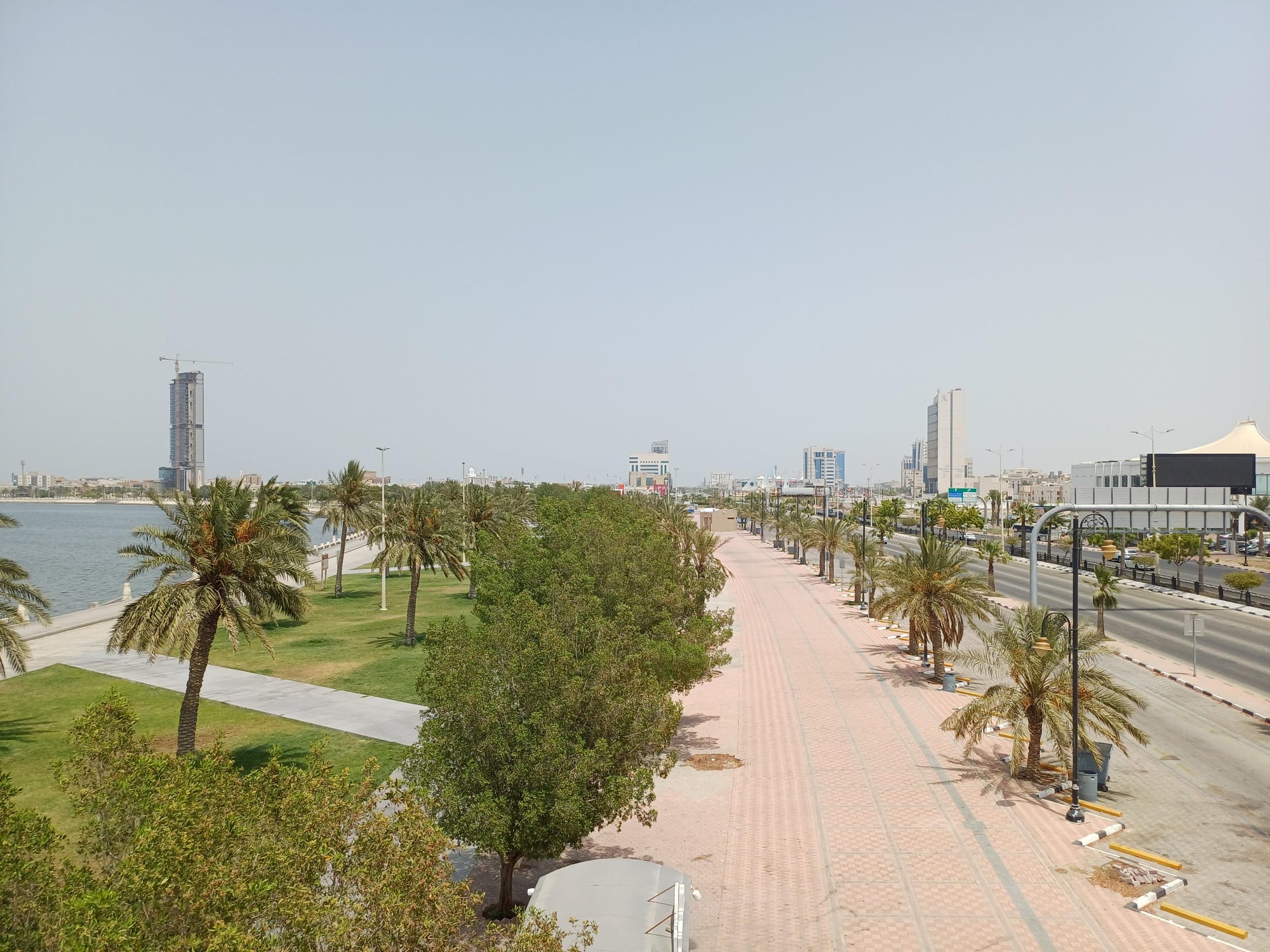
The corniche is the one long, genuinely pleasant walk, and the old souq district is compact and best explored on foot. Otherwise the city is low-density and divided by wide highways, with long blocks and little shade, so walking between districts is impractical. From May to October heat and humidity make daytime walking unwise anywhere.
🛡️ Safety
Dammam is a safe city with low crime, and most problems visitors encounter involve traffic rather than people: fast driving, sudden lane changes and long highway journeys. Summer heat and humidity are a genuine health risk, and dust storms can disrupt travel. Oil installations are heavily guarded and photographing them is prohibited. In the war that began in late February 2026 the Eastern Province was among the areas struck by Iranian missiles and drones, Aramco's Ras Tanura refining facility was hit in early March, and projectiles have since fallen near shipping off Ras Tanura; the conflict is continuing.
Avoid photographing oil, industrial, port or security sites, drink far more water than feels necessary in summer, and take care as a pedestrian near fast roads. Check current official travel advice before travelling.
🌦️ Climate
A hot desert climate made harder by Gulf humidity. Rain is slight and falls mainly between November and April, sometimes heavily enough to flood roads, and dusty northerly winds blow in spring and early summer.
- Summer
- extremely hot and very humid, with days commonly 43–48°C and warm, sticky nights
- Winter
- mild and pleasant, about 15–24°C by day, with cool nights and occasional rain
🤝 Local Customs
Dress is modest for everyone: shoulders and knees covered and loose clothing in public, with many women wearing an abaya, though it is not required of foreign visitors. Greetings are unhurried and right-handed, coffee and dates are offered to guests and should be accepted, and non-Muslims do not enter mosques. Alcohol is illegal throughout the kingdom. Shops close for each of the five daily prayers, and social life runs late into the evening. The province has large Shia communities, particularly in Qatif and Al-Ahsa, and religious practice varies between neighbourhoods.
Ask before photographing people, never photograph oil or security installations, and avoid eating or drinking in public during daylight in Ramadan.
💳 Common Payment Methods
The currency is the Saudi riyal, pegged to the US dollar. Cards and contactless payment are accepted almost everywhere, including taxis and small restaurants, and ATMs are plentiful. Cash remains useful in the souqs and at fish markets. Bahraini dinars are not generally accepted on this side of the causeway. Visitors normally need a visa arranged before arrival or online.