💰 Budget
Pietermaritzburg is cheaper than Durban and much cheaper than Cape Town. Guesthouses in the leafy suburbs and small hotels on the Howick road are good value, restaurant prices are modest, and the museums charge little. The main extra costs are a hire car, since the sights are spread out, and rooms during the Comrades and Dusi weekends, when the city fills.
- Daily Budget Midrange
- USD 120–280 (guesthouse or park chalet, car hire, restaurants, guided game drives)
- Daily Budget Shoestring
- USD 40–70 (backpacker lodge or budget guesthouse, curry houses and takeaways, self-catering)
Book months ahead for the Comrades Marathon weekend, when beds fill in both Pietermaritzburg and Durban, and keep the museums for a single day, as several stand within a few blocks.
📅 Best Time to Visit
April to September is the most comfortable season: dry, sunny days, cool nights and clear views towards the Drakensberg. October and November bring the jacarandas and the first storms, and the summer months from December to February are hot and humid in the bowl of hills, with heavy afternoon rain.
⏳ Suggested Number of Days
A day or two covers the central museums, gardens and colonial streets. Three or four allow the Midlands, the battlefields to the north or the Drakensberg foothills as well. A hire car makes the difference, since the city's sights lie further apart than the centre suggests.
- First Visit
- 1–2 days
- With Surroundings
- 3–4 days
🚆 Transportation
Most residents travel by minibus taxi, and most visitors drive. The N3 between Durban and Johannesburg runs along the city's edge, and the older roads climb north-west to Howick and the Midlands. Metrorail and long distance trains use the historic station, though services are limited, and ride-hailing apps operate in the city.
Hire a car for the Midlands and the Drakensberg, use ride-hailing rather than walking between districts after dark, and allow for slow traffic through the centre on weekday mornings.
🛬 Airport & Station Connections
Most visitors arrive by road from Durban, about 80 kilometres and an hour away on the N3, or from Johannesburg, five to six hours north-west. King Shaka International, north of Durban, is the nearest large airport; Pietermaritzburg's own airport, east of the city, handles a small number of domestic flights. Intercity coaches on the Durban–Johannesburg route stop here.
🚶 Walkability
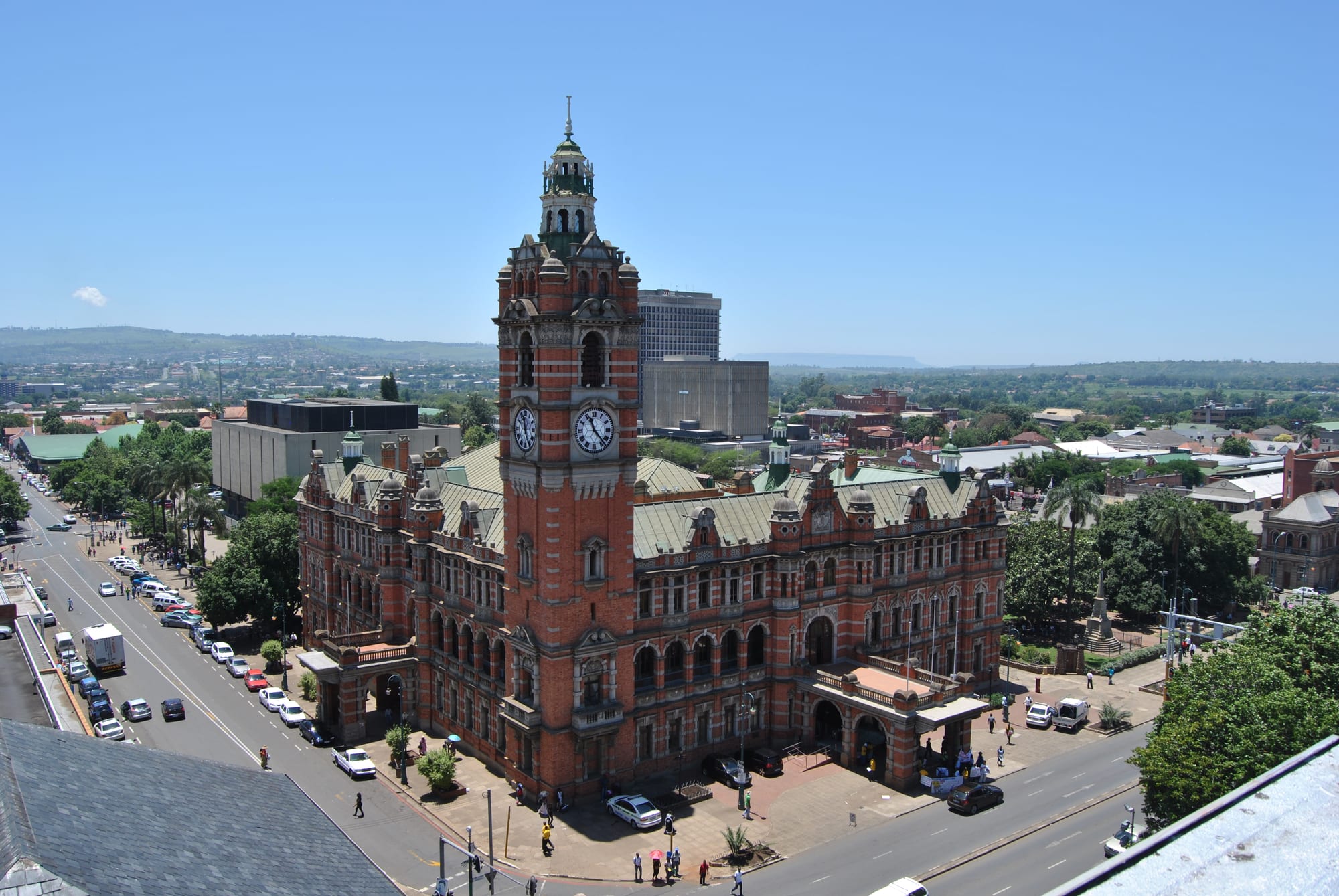
The old centre is a flat, walkable grid, and the City Hall, the museums, the art gallery and the main shopping streets stand within a few blocks of each other. Beyond it the city climbs steep hills and spreads into suburbs that need a vehicle. Walking is normal by day in the centre and in the suburban parks, and uncommon after dark.
🛡️ Safety
Street crime — pickpocketing, phone snatching and mugging — is the usual risk in the crowded central streets and around the station and taxi ranks, and rises sharply after dark when the centre empties. The suburbs, the university area and the Midlands roads see fewer problems. The province has a history of political violence, and unrest in July 2021 and floods in April 2022 hit it hard.
Violent crime rates are high, but most of it is concentrated in areas visitors do not go. Keep phones and cameras out of sight in the centre, avoid the city centre and the station area after dark, use ride-hailing at night, and keep car doors locked in traffic. Check current official travel advice before travelling.
🌦️ Climate
Warm and humid subtropical, tempered by an altitude of about 650 metres and by the surrounding hills, which trap heat in summer. Rain falls mainly in the southern-hemisphere summer, from October to March, in heavy afternoon thunderstorms; winters are dry, sunny and cool with occasional frost.
- Summer
- hot and humid from December to February, often 27–32°C by day, with thunderstorms most afternoons
- Winter
- dry and mild from June to August, around 22–24°C by day, with cold nights and occasional frost
🤝 Local Customs
The city is largely isiZulu-speaking, with English widely used in business and government and long-established communities of Indian and British descent. Greetings matter: sawubona to one person, sanibonani to several, before asking a question. Tipping of about ten per cent is normal in restaurants, and car guards in parking areas are usually given small change.
Ask before photographing people, dress modestly for churches, temples and mosques, and expect Sunday to be quiet, as much of the centre closes and churches fill.
💳 Common Payment Methods
The currency is the South African rand. Cards and contactless payment are accepted in shops, restaurants, hotels and filling stations, and ATMs are common in the malls and the centre. Cash is needed for street traders, taxis, car guards and small stalls, and the safest ATMs are those inside shopping centres.