💰 Budget
Incheon is cheaper than central Seoul for rooms and meals, and many travellers use it as a base for an early flight or a quieter stay. Airport hotels on Yeongjong and the towers in Songdo are the expensive end; the older districts around the port and Bupyeong are much less. Seafood is the item that pushes a bill up.
- Daily Budget Midrange
- USD 130–240 (mid-range or airport hotel, seafood dinners, museum entry, taxis)
- Daily Budget Shoestring
- USD 50–85 (guesthouse or motel near the port or Bupyeong, market food, metro and buses)
The same T-money card works on Incheon's metro, city buses and the Seoul network; airport hotels charge most around holiday weekends.
📅 Best Time to Visit
Late April to early June and September to early November. Sea breezes make the summer slightly less oppressive than in Seoul, but July brings monsoon rain and August is humid. Autumn is the season for blue crab and shrimp at the fishing ports, and clear winter days give the sharpest views across the water, though the wind off the Yellow Sea is cold.
⏳ Suggested Number of Days
A day is enough for the historic core, and a second takes in the newer districts and a stretch of coast. Allow a third for the islands, where ferry sailings depend on the weather.
- First Visit
- 1–2 days
- With Surroundings
- 2–3 days
🚆 Transportation
Two metro lines serve the city and connect with Seoul's network, and the AREX line runs from the airport through the city to Seoul Station. Local buses cover the districts and the airport islands, and the Incheon Airport Maglev and a light-rail line serve particular corridors. Ferries leave from the coastal and international terminals for the Yellow Sea islands and for Chinese ports.
Distances between the port quarter, Songdo and the airport are large — allow around an hour between them by public transport, less by taxi.
🛬 Airport & Station Connections
Incheon International Airport lies on Yeongjong Island within the city, about 50 kilometres from central Seoul, with AREX trains, limousine buses and taxis to both. From Seoul the metro reaches the old centre in about an hour and a quarter, and express buses and the airport railway are quicker. Ferries connect the international terminals with several ports in China.
🚶 Walkability
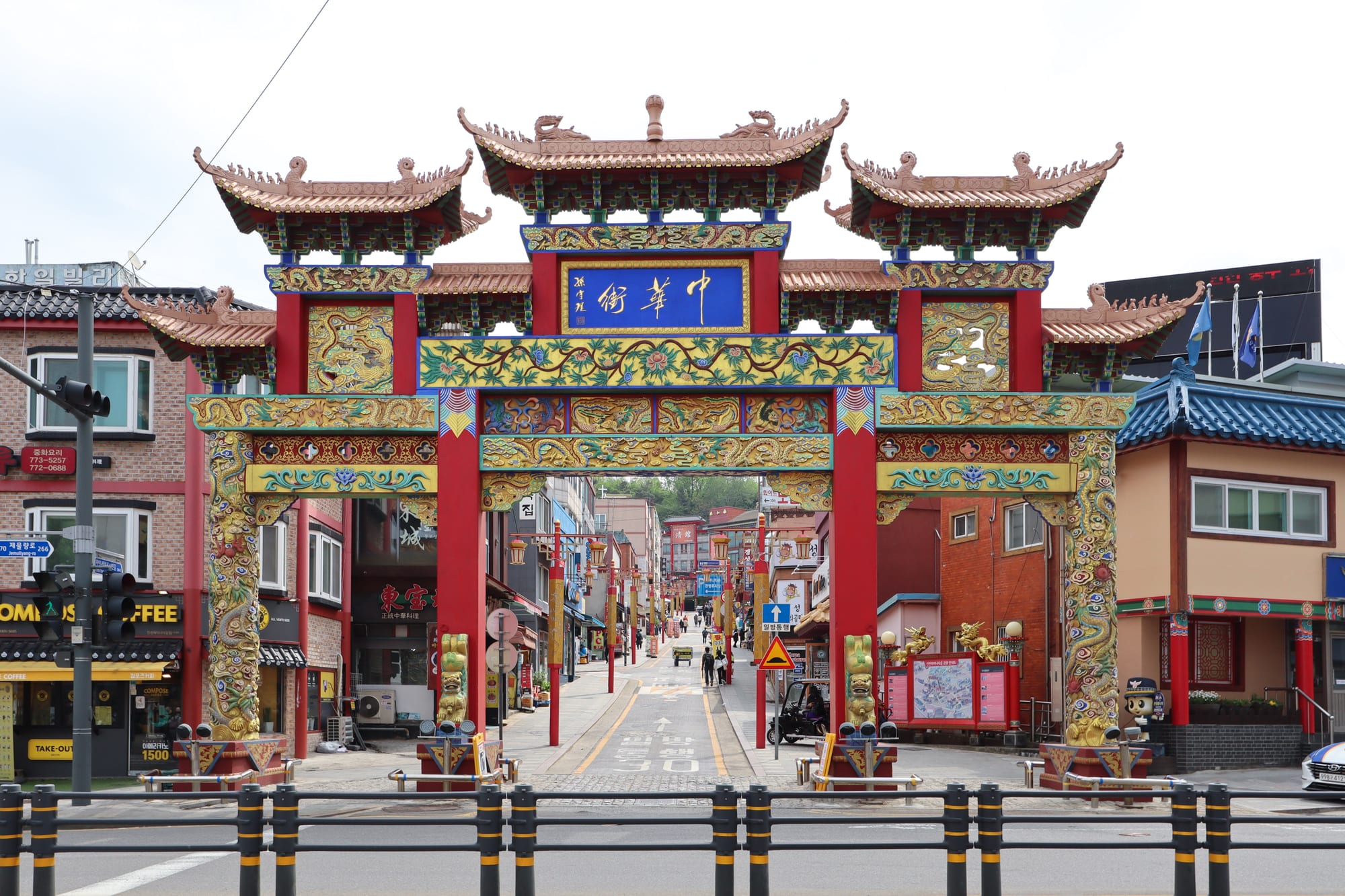
The open port quarter is the one part made for walking: Chinatown, the old concession streets, the art platform and Jayu Park sit within a few hundred metres of one another on a hillside, with steps and slopes throughout. Wolmido adds a flat seafront promenade. Songdo has wide, well-made pavements but long blocks, and the rest of the city is spread out and needs transport.
🛡️ Safety
Incheon is as safe as the rest of the capital area, with very low levels of violent crime and streets that stay busy in the evening. The practical cautions are the sea itself — the Yellow Sea has a very large tidal range, and people are occasionally caught out on the mudflats — along with summer heat, monsoon flooding and spring fine dust.
Check tide times before walking out onto tidal flats, expect ferry sailings to be cancelled in poor weather, and keep valuables in sight in crowded market lanes. Check current official travel advice before travelling.
🌦️ Climate
A continental climate moderated by the sea, with four clear seasons. Winters are cold and dry but a little milder than inland Seoul, summers are hot and humid with monsoon rain concentrated in July, and the coast is windier than the capital all year.
- Summer
- hot and humid, typically 28–31°C by day in July and August, with heavy monsoon rain and sea fog
- Winter
- cold and dry, with January days near 0°C, nights often below −5°C, and a raw wind off the Yellow Sea
🤝 Local Customs
Customs are those of the capital area: no tipping, shoes off indoors in homes and traditional restaurants, two hands used to give and receive, and quiet behaviour on public transport. The city's Chinese community is long established and Korean-Chinese food is treated as local rather than foreign.
Ask before photographing people working at the fish markets, and note that smoking is banned in restaurants, cafés and much of the airport.
💳 Common Payment Methods
The currency is the South Korean won. Cards and mobile payment work almost everywhere, including on buses and taxis, and the airport has extensive currency exchange and ATMs that accept foreign cards. Small market stalls and harbour restaurants may prefer cash.