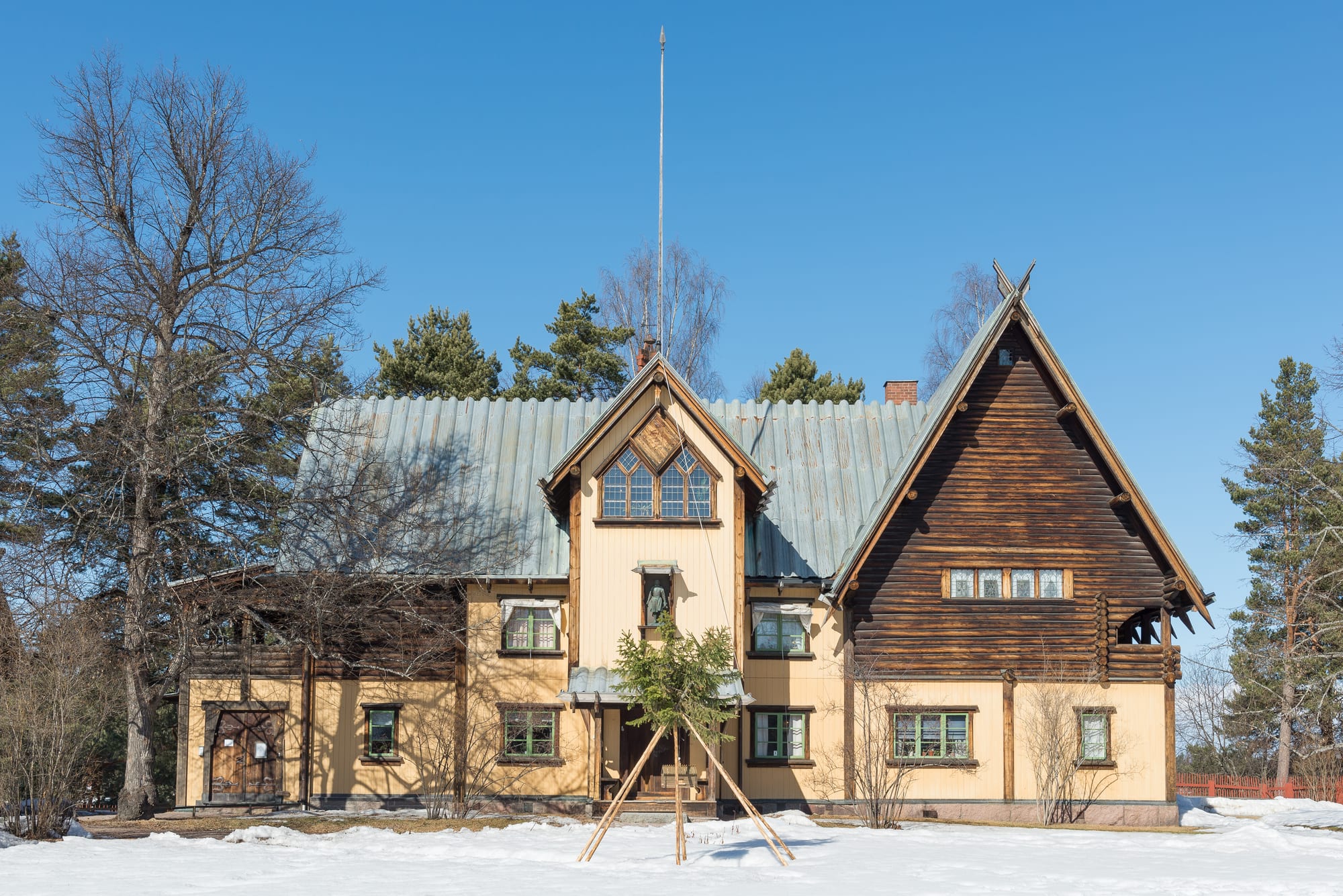
Zorngården, a large house of pale timber and dark logs with steep gables and a green metal roof, standing in snow under a clear blue sky

Dalarna, Värmland & Central Sweden, Sweden

Mora

Zorngården in Mora, the home of the painter Anders Zorn and his wife Emma. (Arild Vågen / Wikimedia Commons · CC BY-SA 3.0)

A small Dalarna town between Lake Siljan and Orsa Lake, on the west side of Europe's largest meteorite impact structure. Mora is linked with Gustav Vasa's flight of 1520–21, which the 90 km Vasaloppet ski race now retraces to a finish in the town, and with the painter Anders Zorn, whose home and museum stand beside the church. Mora knives are made in the town and Dala horses at nearby Nusnäs.

Neighbourhoods

  • Central Mora and the church
    • First-time visitors
    • Museums
    • Historic sights

    The compact centre near the shore of Lake Siljan, with Mora Church, Zorngården and the Zorn Museum side by side, and the Vasaloppet finish on Vasagatan. Morastrand station brings trains right into this part of town.

    Open in Maps
  • Southern Mora and Gammelgård
    • Open-air museum
    • Quiet and residential

    The southern part of town holds Zorn's Gammelgård, about forty old timber buildings collected by the painter, among quiet residential streets. The main railway station lies a short walk from the centre.

    Open in Maps

Things to do

Zorn and the church

  • Zorn Museummuseum

    Ragnar Östberg's last work, a classical brick building displaying Anders Zorn's oil paintings, watercolours, etchings and sculpture, part of the state-run Zorn Collections.

    Open in Maps
  • Zorngårdenmuseum

    The home of Anders and Emma Zorn next to Mora Church, a striking timber house shown as it was when Emma Zorn died in 1942.

    Open in Maps
  • Zorn's Gammelgårdmuseum

    Zorn's old farm of about forty historic houses, with a mill, chalets and boathouses, which he collected to keep alive the craft of building in timber and to show how Dalarna farmers lived.

    Open in Maps
  • Mora Churchlandmark

    A large church dedicated to Saint Michael since before the Reformation, built on this scale because the parish once covered the whole of northern Dalarna; it stands by the Vasaloppet finish.

    Open in Maps

The Vasaloppet

  • Vasaloppet finish and Gustav Vasa statuelandmark

    The finish portal of two red pillars stands on Vasagatan all year, inscribed 'In our fathers' footsteps, for future victories', near Zorn's statue of Gustav Vasa on a small hill.

    Open in Maps
  • Vasaloppet museummuseum

    A museum dedicated to the race, first run in 1922, next to the finish portal on Vasagatan.

    Open in Maps

Sport

  • Wibe Arenaattraction

    The 4,500-capacity ice hockey arena of Mora IK, built in 1967, which hosted the 2007 World Junior Ice Hockey Championships.

    Open in Maps

Short trips from the town

  • Nusnäsattraction

    The village about 10 km south-east of Mora where the Dala horse is made, with several Dala horse workshops.

    Open in Maps
  • Sollerönattraction

    The largest island in Lake Siljan, with Dalarna's largest known Viking-age grave field and the start and finish of the Siljan Runt cycle races in June.

    Open in Maps
  • Santaworldattraction

    Tomteland, a theme park of wooden houses on Gesunda Mountain south of Mora, opened in 1984, with actors as Santa, his helpers and trolls.

    Open in Maps
  • Orsa Lakepark

    The lake on the north side of the town, joined to Siljan by a narrow sound about 4 km long.

    Open in Maps

Seasonal events

  • Vasaloppetfirst Sunday in March

    The world's oldest cross-country ski race and the one with most participants, run over 90 km from Berga near Sälen to the finish in Mora, at the end of a week of ski races.

  • MidsummerJune

    As around the rest of Lake Siljan, people dress in folk costume, raise maypoles, play traditional music and dance.

  • Cykelvasansummer

    The summer cycling version of the Vasaloppet, with its start and finish in Mora.

Eat and drink

Long-standing places and food districts in Mora. Hours, ratings and directions come from your maps app, always current.

Mora tastes

  • Blåbärssopparestaurant

    Blueberry soup, the drink of choice for Vasaloppet skiers, a cup of which is included with entry to the Vasaloppet museum.

    Open in Maps
  • Cafés in central Moraneighborhood

    Fika in the centre and around the town, including a café in Nusnäs that also sells handmade crafts and an open-air café in summer.

    Open in Maps

Experience Mora

History

People have lived around Mora since about 4000 BC, drawn by its position between Lake Siljan and Orsa Lake, where the Österdal River enters Siljan. The oldest buildings found date from the 7th century, finds from around 1000 AD point to a rich culture of fur hunting, bog-iron working and fishing, and the name, from a dialect word for dense forest on damp land, appears in writing in 1325. The parish was established in the 13th century, and its church served all of northern Dalarna.

Mora's place in national history comes from late 1520, when the young Gustav Vasa stopped here to raise a rebellion against the Danish forces occupying Sweden. The people first refused him, then changed their minds, and according to the legend two men from Mora, Lars and Engelbrekt, skied after him and caught up with him at Sälen as he headed for Norway. The rebellion succeeded and Vasa became king. In the 17th century the town was the scene of the Mora witch trial.

Famine in the 18th century drove many people to Stockholm and southern Sweden, where they learned new crafts; returning home, they built up cottage industries making clocks, sewing machines, knives and water taps. The Gustavian Mora clock was made from the late 18th century through most of the 19th, and knives and taps are still made today. In 1922 the first Vasaloppet was run from Sälen to Mora, with 119 starters.

Culture & Customs

To many Swedes, Dalarna is the essence of the country, and Mora contributes much of that image. The Dala horse, carved and painted with kurbits decoration since the 17th century, is made in the workshops of Nusnäs nearby. The painter Anders Zorn, born in the village of Utmeland just outside the town, made Mora his home; his house, museum and collected farm buildings are now the state-run Zorn Collections.

Midsummer is the central festival. As around the rest of Lake Siljan, people dress in folk costume, raise maypoles, play traditional music and dance. The church, dedicated to Saint Michael, gave the town its coat of arms, adopted in 1946 from the statue of Michael and the dragon by its gate. Many members of the folk band Francis come from Mora.

Sport defines the winter. The Vasaloppet, the oldest cross-country ski race in the world and the one with the most participants, ends here each March under the motto "In our fathers' footsteps, for future victories", and Cykelvasan, a summer cycling race, uses its course. Mora IK plays ice hockey in the second tier, and Leksand, across the lake, is its arch-rival. The town hosted the 1984 World's Strongest Man and the 2007 World Junior Ice Hockey Championships.

Daily Life

Mora had about 11,000 inhabitants in 2010, and the municipality about 20,400 in 2026. The town never held the title of city before the local government reform of 1971, but with more than 10,000 people it is now counted as one by Statistics Sweden.

Crafts and industry remain at the heart of the economy. Mora knives, small fixed-blade sheath knives, are made in the town, where the Frosts and KJ Eriksson companies merged their brands under Mora of Sweden, later renamed Morakniv; water taps are still produced, and the steel company Ovako has a plant in the town. Tourism adds the summer lake season, Midsummer and the Vasaloppet week at the start of March, which draws more than 48,000 participants across all its ski events.

The town sits where the Dala Line from Stockholm ends and the Inland Line crosses it, and the northern part of the municipality marks the beginning of the Scandinavian mountains. Life follows the seasons: the lake in summer, the hockey season from September to March, and skiing through the winter.

Food

Mora's food is the food of rural Dalarna and of Sweden as a whole. Everyday eating is husmanskost, traditional home cooking based on local ingredients such as pork, fish, potatoes, root vegetables, cabbage and berries, with pea soup, herring and meatballs with brown cream sauce and lingonberry jam among the classics. Breakfast is often open sandwiches on crispbread, and many meat dishes are served with lingonberry jam.

The town's own food tradition belongs to the Vasaloppet. Blueberry soup, blåbärssoppa, is the energy drink of choice for skiers on the 90 km course, and a cup is included with entry to the Vasaloppet museum. Its course commemorates the journey of Gustav Vasa, run in the opposite direction from Berga near Sälen to Mora, and the finish on Vasagatan is the town's best-known landmark.

Drinks have a local side too: a small family-owned brewery in Mora makes beer, cider, soft drinks and svagdricka. Fika, the coffee break with a bun or pastry, fills the cafés in and around the town, one of which, in Nusnäs, also sells handmade crafts, while an open-air café opens in summer.

Planning tools

Budget

Mora is a small town and cheaper than the cities, with parking free on many streets. Prices and demand peak during the Vasaloppet week in late February and early March and at Midsummer, when rooms around Lake Siljan are booked far ahead. Taxis are pricey. The museums are the main paid sights.

Daily Budget Midrange
USD 140–260 (hotel or guesthouse, restaurant dinners, museum tickets, a hire car)
Daily Budget Shoestring
USD 60–95 (hostel, cabin or campsite, self-catering, local buses)

Book Vasaloppet week and Midsummer accommodation many months ahead.

Best Time to Visit

June to August for the lake, Midsummer and summer cycling; late February and early March for the Vasaloppet week, when the town is full of skiers. The hockey season runs from September to March.

Suggested Number of Days

One to two days are enough for the town and its museums. Three or four leave time for the villages and islands around Lake Siljan, which are easiest with a car or bicycle.

First Visit
1–2 days
With Surroundings
3–4 days

Transportation

Mora is small enough to explore on foot, and Dalatrafik runs local buses, including a route to Nusnäs from the railway station. Parking is free on many streets, and taxis are expensive.

A bicycle or car makes the villages around Lake Siljan much easier to reach.

Airport & Station Connections

Mora is the terminus of the Dala Line from Stockholm, about four hours by train, and an important stop on the Inland Line, which crosses it here. Morastrand station, closer to the shore and the centre, has some regional trains. Buses run from Stockholm. By road, route 70 leads to Rättvik and route 26 joins the E45 about 40 km south.

Walkability

The church, Zorngården, the Zorn Museum, the Vasaloppet finish and the lakeshore are all within a few minutes' walk, and Gammelgård is a short walk south. Snow and ice cover pavements for much of the winter.

Safety

Sweden is a very safe country for visitors. The practical risks around Mora are severe cold and ice in winter, elk on the roads at dusk, cold water on the lakes and the ski trails in bad weather.

Dress in layers in winter, take care on lake ice, and watch for wildlife when driving at dawn and dusk. Check current official travel advice before travelling.

Climate

A cool version of the humid continental climate, unusually mild for an inland place this far north thanks to Atlantic air. Mora is more continental than the big Swedish cities, with relatively warm summers and winters that swing between cold and milder years.

Summer
relatively warm — in nearby Falun, July averages a high of 23°C
Winter
cold and variable — the mildest January on record averaged 1.9°C (2020) and the coldest -18.1°C (1987)

Local Customs

Tipping is not customary in Sweden; a bill may be rounded up for good service. Midsummer is the high point of the year around Lake Siljan, with folk costume and dancing round the maypole. Strong alcohol is sold only by the state-owned Systembolaget, which does not serve anyone under 20. A Dala horse or a Mora knife is the classic souvenir.

Carry identification for bars and Systembolaget, and buy Dala horses from the Nusnäs workshops for a genuine one.

Common Payment Methods

The currency is the Swedish krona (SEK). Sweden is one of the world's most cashless countries: credit and debit cards are used almost everywhere, as is the Swedish payment app Swish, and businesses that do not take cash at all are common.