💰 Budget
There is almost no visitor economy at Palmyra, and the dominant cost is the long drive across the desert with a car and driver, plus fuel. Anything spent in the town itself — bread, water, tea — is a small part of the total, and all of it is cash. Figures are indicative only.
- Daily Budget Midrange
- USD 90–180 (city hotel in Homs or Damascus, restaurants, private driver) — indicative only
- Daily Budget Shoestring
- USD 30–50 (simple room, local food, shared transport where it runs) — indicative only
Agree a full-day price with a driver before leaving, and carry water, fuel and clean US dollar notes; nothing here can be relied on for supply.
📅 Best Time to Visit
Historically spring, from March to May, and October to November, when the desert is not at its hottest and the light is good early and late. Summer is severe in open ground with no shade. Flights have served Damascus and Aleppo again since 2025, but security conditions, not the season, decide whether any visit is possible.
⏳ Suggested Number of Days
The site is large enough to fill a full day on foot, and the town itself has little else. Allow longer to take in the desert monuments further out. Much of the time goes on the drive across the steppe, which depends on checkpoints and conditions rather than distance.
- First Visit
- 1 day
- With Surroundings
- 2 days
🚆 Transportation
Palmyra stands on the desert road between Homs and Deir ez-Zor, about 150 km east of Homs, and is reached by that road with a private car and driver. Bus and shared taxi services across the steppe are thin and irregular. The ancient site is walked; there is no local transport within it, and the distances between monuments are considerable in open sun.
Keep to main roads in daylight with a local driver; do not attempt desert routes towards Palmyra without current local knowledge.
🛬 Airport & Station Connections
There is no passenger airport or railway service. The approach is the highway east from Homs across the steppe, roughly two to three hours in normal conditions, with Damascus about 215 km to the south-west. The road continues north-east towards Deir ez-Zor and the Euphrates.
🚶 Walkability
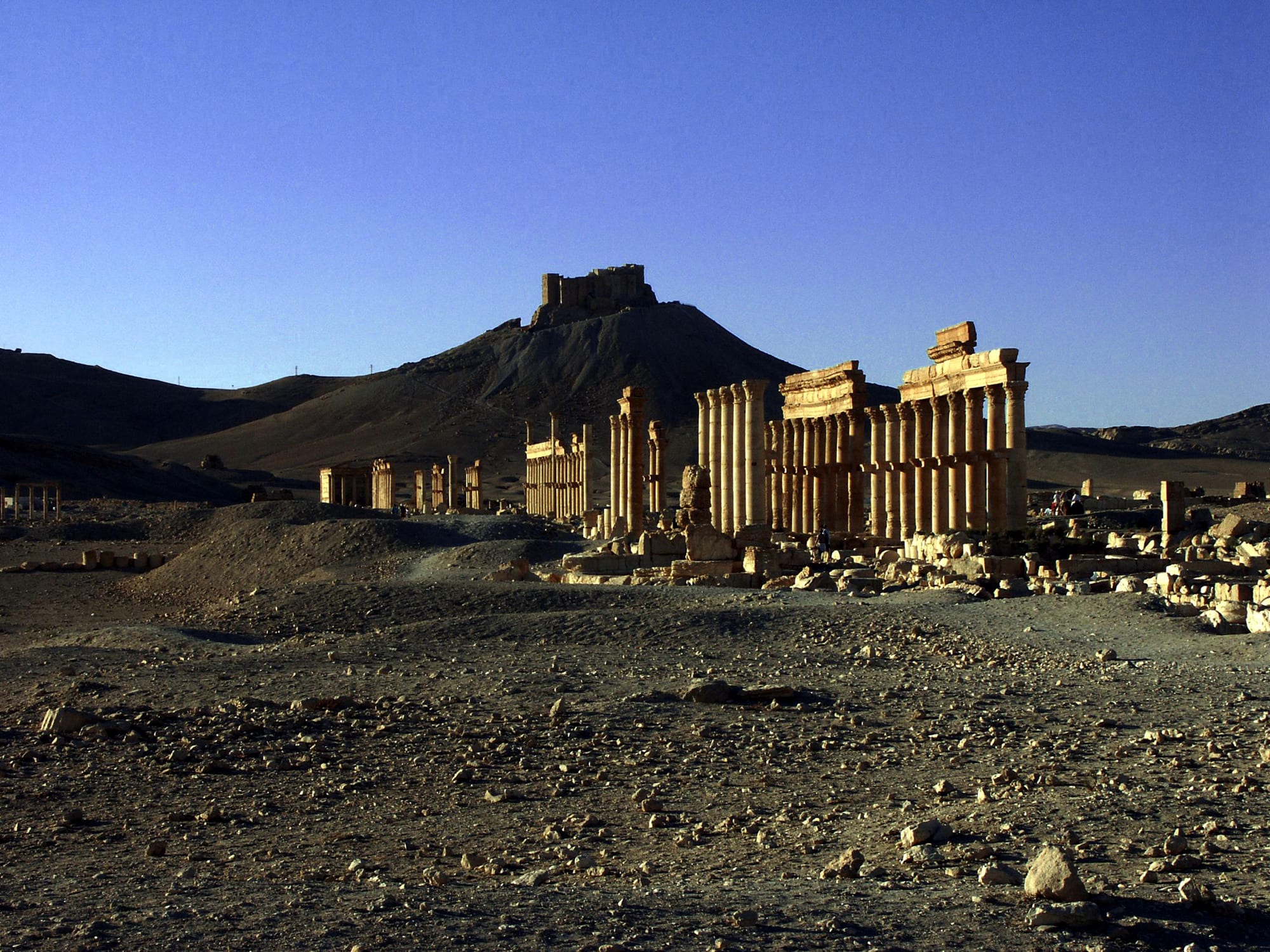
The archaeological site is flat but very large: the colonnaded street alone runs more than a kilometre, and the tombs and the castle lie further out, the castle up a steep hill. There is no shade, surfaces are broken stone and gravel, and the modern town begins about half a kilometre from the ruins. Water and a hat matter more here than anywhere else in the country.
🛡️ Safety
Most governments advise against all or all-but-essential travel to Syria. The desert around Palmyra has seen insurgent activity, the area is heavily contaminated with mines and unexploded ordnance after years of fighting, and parts of the modern town are ruined and unstable. Help is very far away and consular assistance is minimal or absent.
Do not travel for leisure; anyone who must go should use an experienced local fixer, keep out of the desert and away from ruined areas, and never touch debris. Check current official travel advice before travelling.
🌦️ Climate
A hot desert climate at about 400 metres, with very little rain, a wide gap between day and night temperatures, and dust carried on the wind in spring. Shade is scarce and the stone radiates heat late into the evening.
- Summer
- very hot and dry, often around 38°C by day in July and August, falling sharply at night
- Winter
- cool by day at around 13°C, with frosty nights and occasional snow on the steppe
🤝 Local Customs
This is a conservative desert town with strong tribal and family ties, and the customs of the surrounding Bedouin communities carry weight: formal greetings, insistent hospitality, coffee served in small cups from a long-spouted pot. Modest dress covering shoulders and knees is expected, and alcohol is not part of public life.
Ask before photographing people, and do not photograph soldiers, checkpoints or damaged areas; climbing on ruined or unstable stonework is unsafe as well as harmful to the site.
💳 Common Payment Methods
The currency is the Syrian pound, redenominated during 2026 with two zeros removed, but everything here is cash and US dollars are used for drivers and rooms. There is no dependable card acceptance or cash machine in the town; money is brought from Homs or Damascus.