💰 Budget
Tainan is among the cheapest major cities in Taiwan. Guesthouses and small hotels in the old city are good value, and eating is done in many small portions at snack shops rather than in expensive restaurants. Costs rise over Lunar New Year, at the Lantern Festival and on long holiday weekends.
- Daily Budget Midrange
- USD 90–170 (mid-range hotel or Tainan guesthouse, restaurant meals, a scooter, museum entry)
- Daily Budget Shoestring
- USD 30–55 (hostel or guesthouse bed, snack shops and night markets, buses and a hired bicycle)
Most temples are free; the main expenses are accommodation, museum tickets and transport to Anping and the coast.
📅 Best Time to Visit
November to April is the dry, sunny season and the most comfortable time in Tainan, with warm days and cool evenings. The Lantern Festival in late winter is the liveliest period and the busiest for accommodation. Summer from June to September is hot, humid and wet, with afternoon downpours and typhoons, though it is also mango season.
⏳ Suggested Number of Days
Two to three days covers the old city and Anping at a reasonable pace. Four or five allow the outer museums, the lagoon coast and trips into the hills or to neighbouring cities. Anyone coming mainly to eat tends to stay longer, since the snack shops are numerous and portions are small.
- First Visit
- 2–3 days
- With Surroundings
- 4–5 days
🚆 Transportation
Tainan has no metro. City buses run from the railway station and from the High Speed Rail station east of the city, which is linked to the centre by a short branch railway from Shalun, but services are infrequent by Taiwanese standards. Most residents use scooters, and visitors rely on a mix of buses, taxis, hired scooters and public bicycles. The old city is best covered on foot.
Distances between the old city, Anping and the outer museums are longer than they look on a map, so allow time or hire two wheels.
🛬 Airport & Station Connections
High Speed Rail trains from Taipei reach Tainan's high speed rail station, east of the centre, in about an hour and three quarters, with a shuttle train from the adjoining Shalun station on to Tainan railway station in the centre; conventional trains run along the west coast line and stop downtown. Tainan Airport, a few kilometres south of the centre, has domestic and limited regional flights, while most international arrivals come through Taoyuan or Kaohsiung.
🚶 Walkability
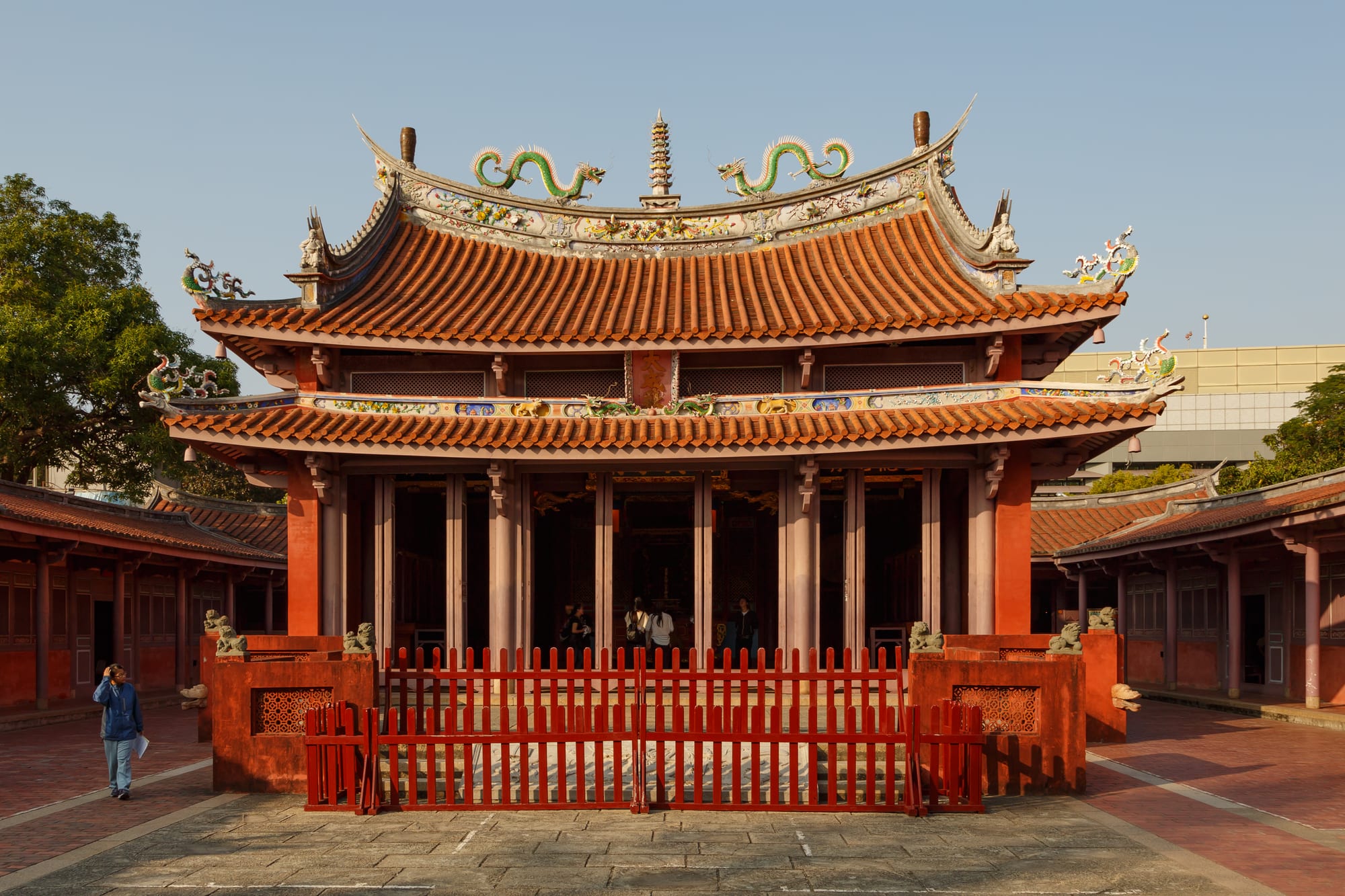
The old city is flat and compact, and its lanes are the best of Tainan on foot: the Confucius Temple, Chihkan Tower, the main temples and the snack streets lie within a couple of kilometres. Pavements are often blocked by parked scooters, and scooter traffic is heavy at junctions. Anping and the coastal districts are too far to walk to comfortably, and summer heat makes long midday walks hard going.
🛡️ Safety
Tainan is a very safe city, with little crime that affects visitors. The practical hazards are heavy scooter traffic and awkward crossings, summer heat and strong sun, and typhoons between July and October, which can bring flooding to low-lying districts. Earthquakes occur across Taiwan and the southern plain has been shaken in the past.
Cross at signalled junctions, wear a helmet if hiring a scooter, drink plenty of water in summer, and note the exits and stairs at the hotel. Check current official travel advice before travelling.
🌦️ Climate
A tropical climate with a marked wet and dry season. Almost all the rain falls between May and September, often in short heavy storms; from November to March the weather is dry and sunny with comfortable temperatures. Air quality on the plain can be poor in the dry months.
- Summer
- hot and humid, generally 28–34°C, with heavy afternoon rain and the risk of typhoons
- Winter
- dry, sunny and mild, generally 16–25°C, with cool evenings
🤝 Local Customs
Tipping is not customary in Taiwan. Taiwanese Hokkien is spoken widely in Tainan alongside Mandarin, and older residents may use it by default. Temples are working places of worship: dress modestly, avoid the central doorway where it is reserved, leave offerings and ritual objects alone, and ask before photographing people at prayer or a procession in the street.
Queue at snack shops and order small portions so several places can be tried, do not eat or drink on the metro-style shuttle trains or buses, and keep noise down inside temple halls.
💳 Common Payment Methods
The currency is the New Taiwan dollar. Hotels, department stores and chain shops take cards and mobile payment, but the small snack shops, market stalls and family restaurants that make up most of Tainan's eating are cash-only. ATMs in banks and convenience stores accept foreign cards, and a stored-value card is useful for buses and convenience stores.