💰 Budget
Dushanbe is the most expensive place in Tajikistan but remains cheap by European standards. Hotels aimed at business travellers set the upper end, while guesthouses and hostels are inexpensive, and bazaar or chaikhona meals cost very little. Hiring a car and driver for Hisor, Varzob or Iskanderkul is the other main expense.
- Daily Budget Midrange
- USD 70–150 (city hotel, restaurant meals, a hired car and driver for a day trip)
- Daily Budget Shoestring
- USD 25–50 (hostel or guesthouse, bazaar and chaikhona food, shared taxis and minibuses)
Change US dollars at bank branches or licensed exchange booths in the centre, keep somoni in cash for markets and taxis, and settle the price of a hired car before starting out.
📅 Best Time to Visit
April to June and September to October, when the parks are green, the bazaars are full of fruit and the heat is bearable. Nowruz in March brings the city's biggest public celebrations. July and August are hot and dusty in the valley, though they are the season for the mountains north and east of the city; winter is mild but grey, with power supply problems outside the capital.
⏳ Suggested Number of Days
Two days is enough for the avenue, the museums and the bazaars at a comfortable pace. Three to five allow the valley towns and the mountains within reach of the city, and longer if Dushanbe is the starting point for the Pamirs or the Fann.
- First Visit
- 2 days
- With Surroundings
- 3–5 days
🚆 Transportation
Minibuses and buses run set routes through the city for a flat cash fare, and taxis, arranged by phone app or agreed at the kerb, are cheap and the usual way to move around. Shared taxis for other regions leave from separate stands on the edge of the city, each serving one direction. Traffic is heavy along the avenue in the morning and early evening.
Have destinations written in Cyrillic or shown on a map, since route numbers and signs are rarely in English; drivers expect cash and small notes.
🛬 Airport & Station Connections
Dushanbe International Airport lies a few kilometres south-east of the centre and is the country's main gateway, with flights to Russia, Turkey, the Gulf and neighbouring capitals. Roads lead north to Khujand through the Anzob and Shahriston tunnels in a long day, south to Bokhtar and Kulob in two to four hours, and east along the Pamir Highway. The Uzbek border west of the city is the usual land crossing towards Samarkand and Tashkent.
🚶 Walkability
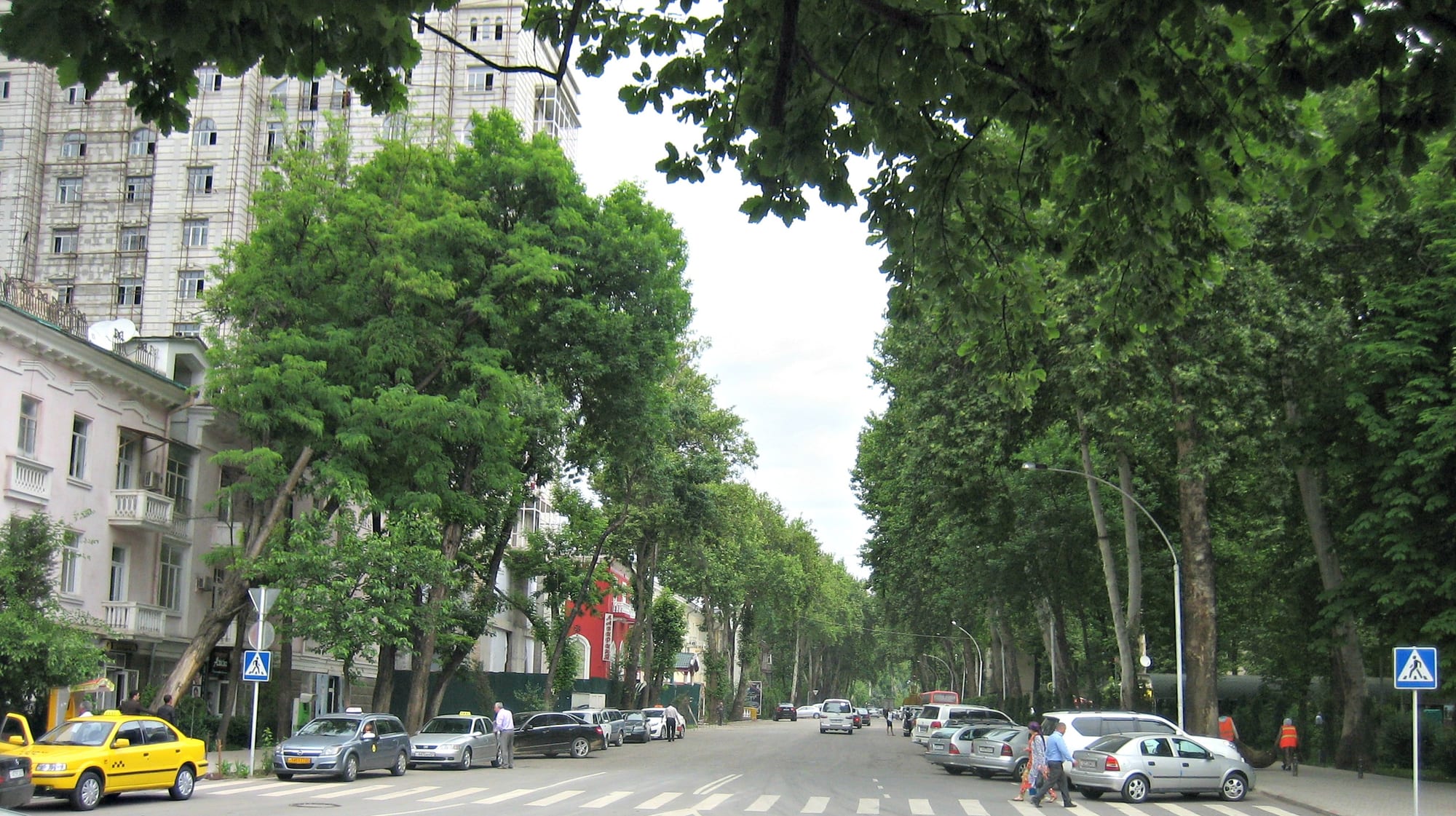
The centre is one of the most walkable in Central Asia: Rudaki Avenue is flat, shaded by plane trees and lined with parks, and the museums, squares and fountains are strung along a few kilometres of it. Distances look shorter on a map than they feel in the summer heat, crossings on the wide roads are far apart, and the bazaars and outer districts are better reached by taxi.
🛡️ Safety
Dushanbe is calm, with low street crime and a heavy police presence; identity checks happen and are usually routine. The practical risks are traffic, unlit vehicles and fast driving, and pickpocketing in crowded markets and minibuses. Photographing officials, government buildings or security installations causes trouble, and political subjects are best avoided in conversation.
Carry a passport at all times, avoid photographing officials, palaces or security buildings, avoid travelling by road after dark, and keep away from the Afghan border strip. Check current official travel advice before travelling.
🌦️ Climate
A continental climate with hot, very dry summers and mild, damp winters, sheltered by the mountains around the Hisor valley. Most rain falls between November and April, and spring brings green hills and blossom before the summer dust.
- Summer
- hot and dry, typically 33–38°C in the afternoon, with warm evenings and clear skies
- Winter
- mild, mostly 0–10°C by day, with rain, occasional snow that soon melts and colder nights
🤝 Local Customs
Tajik manners are formal and warm: a handshake with the right hand and a hand on the heart, enquiries after family, and shoes removed at the door of a home. Dress is smart and modest in the capital, and shoulders and knees covered is expected at mosques and shrines. Guests are served first and pressed to eat, and tea is poured for others before oneself. Religious practice is closely regulated by the state, and religion and politics are subjects to leave alone.
Ask before photographing people; alcohol is sold openly in the capital but drunk discreetly elsewhere, and tipping is not expected beyond rounding up a restaurant bill.
💳 Common Payment Methods
The currency is the Tajik somoni. Cash is used for markets, taxis, minibuses and small guesthouses, while hotels, supermarkets and larger restaurants in the centre take cards. Cash machines are common in the capital and scarce elsewhere, so it is worth drawing money before leaving the city; US dollars are the easiest currency to exchange and notes should be clean.